
🚀 宇宙の記憶・カレンダー検索
🚀 象徴的な写真:
APOD第1回
🚀 創造の柱
🚀 スピリット火星着陸
🚀 ハッブル超深宇宙
🚀 地球へようこそ|ブルー・マーブル
🚀 エンケラドス
🚀 ベテルギウス
🚀 火星着陸
🚀 青い夕焼け
🚀 冥王星のハート
🚀 皆既日食
🚀 アースライズ再構築
🚀 ブラックホール
🚀 ウェッブ初画像
🚀 アポロ11着陸
APOD30周年(2025年6月16日)
わし星雲の肖像
Portrait of the Eagle Nebula
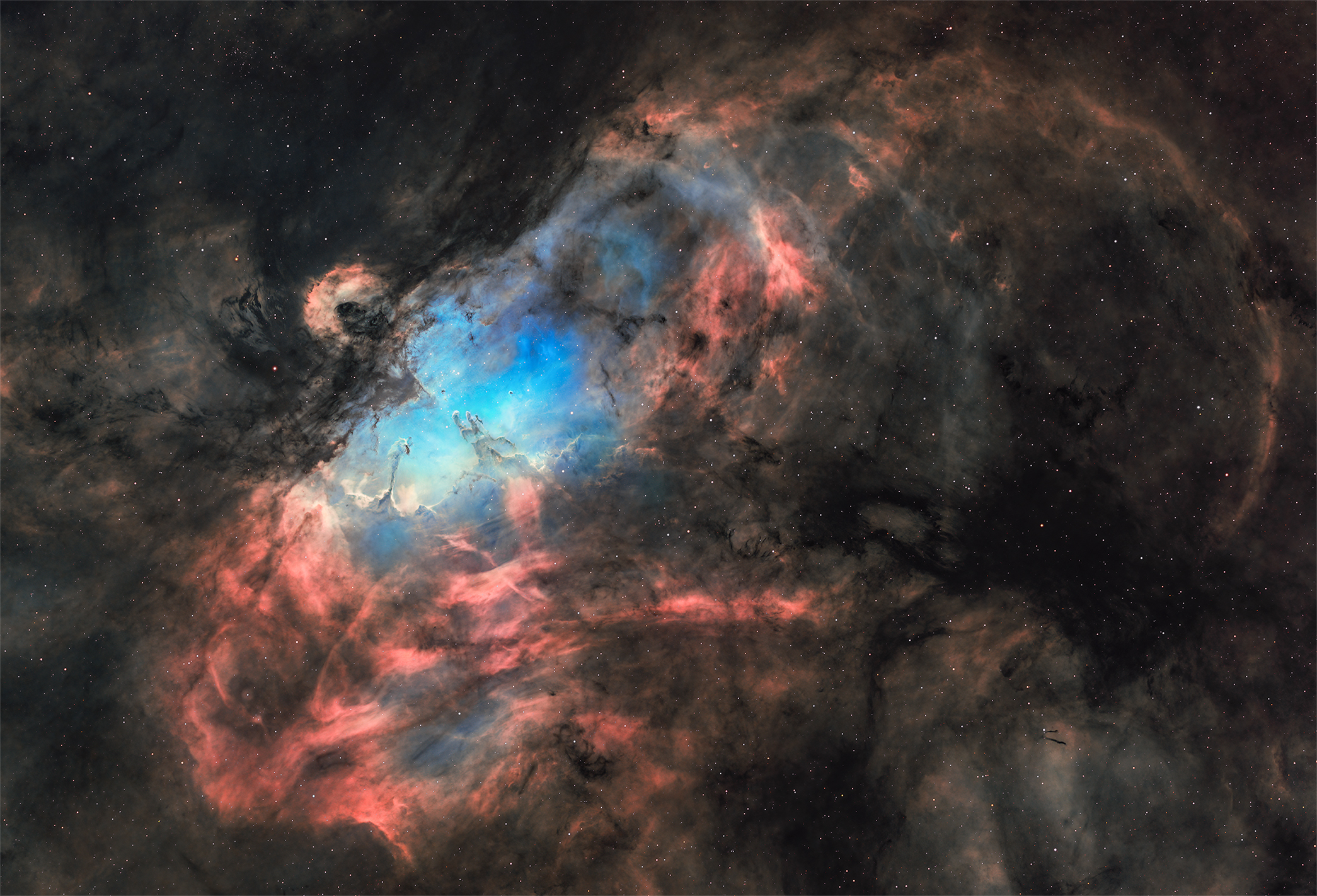
誕生したばかりの塵と輝くガスの雲に囲まれた、約200万歳の星団メシエ16(M16)は、わし星雲としても知られています。この領域の美しく詳細な画像は、ハッブル宇宙望遠鏡の色彩豊かなパレットを採用しており、ハッブル宇宙望遠鏡が星形成複合体をクローズアップした際に有名になった宇宙の彫刻が含まれています。象の鼻または創造の柱と表現される、中心付近にそびえ立つ密度の高い塵の柱は、光年の長さがありますが、重力によって収縮して星を形成しています。星団の星からの高エネルギー放射線が先端付近の物質を侵食し、最終的に埋め込まれた新しい星を露出させます。中心の左側にある明るい放射の尾根から伸びているのは、わし星雲の妖精として知られる別の塵の星形成柱です。M16は、約7,000光年離れたところにあり、分裂した星座であるへび座の尾の方向にある星雲が豊富な空域にあるため、双眼鏡や小型望遠鏡で簡単に観測できます。額装された状態でのこのわし星雲の望遠鏡像は、直径約70光年である。
原文(English)
A star cluster around 2 million years young surrounded by natal clouds of dust and glowing gas, Messier 16 (M16) is also known as The Eagle Nebula. This beautifully detailed image of the region adopts the colorful Hubble palette and includes cosmic sculptures made famous in Hubble Space Telescope close-ups of the starforming complex. Described as elephant trunks or Pillars of Creation, dense, dusty columns rising near the center are light-years in length but are gravitationally contracting to form stars. Energetic radiation from the cluster stars erodes material near the tips, eventually exposing the embedded new stars. Extending from the ridge of bright emission left of center is another dusty starforming column known as the Fairy of Eagle Nebula. M16 lies about 7,000 light-years away, an easy target for binoculars or small telescopes in a nebula rich part of the sky toward the split constellation Serpens Cauda (the tail of the snake). As framed, this telescopic portrait of the Eagle Nebula is about 70 light-years across.
\ この感動を宇宙仲間にシェア /
宇宙をXでシェア
© Charles Bonafilia / APOD