
🚀 宇宙の記憶・カレンダー検索
🚀 象徴的な写真:
APOD第1回
🚀 創造の柱
🚀 スピリット火星着陸
🚀 ハッブル超深宇宙
🚀 地球へようこそ|ブルー・マーブル
🚀 エンケラドス
🚀 ベテルギウス
🚀 火星着陸
🚀 青い夕焼け
🚀 冥王星のハート
🚀 皆既日食
🚀 アースライズ再構築
🚀 ブラックホール
🚀 ウェッブ初画像
🚀 アポロ11着陸
APOD30周年(2025年6月16日)
ペリカン星雲の星、塵、柱、そして噴出物
Stars, Dust, Pillars, and Jets in the Pelican Nebula
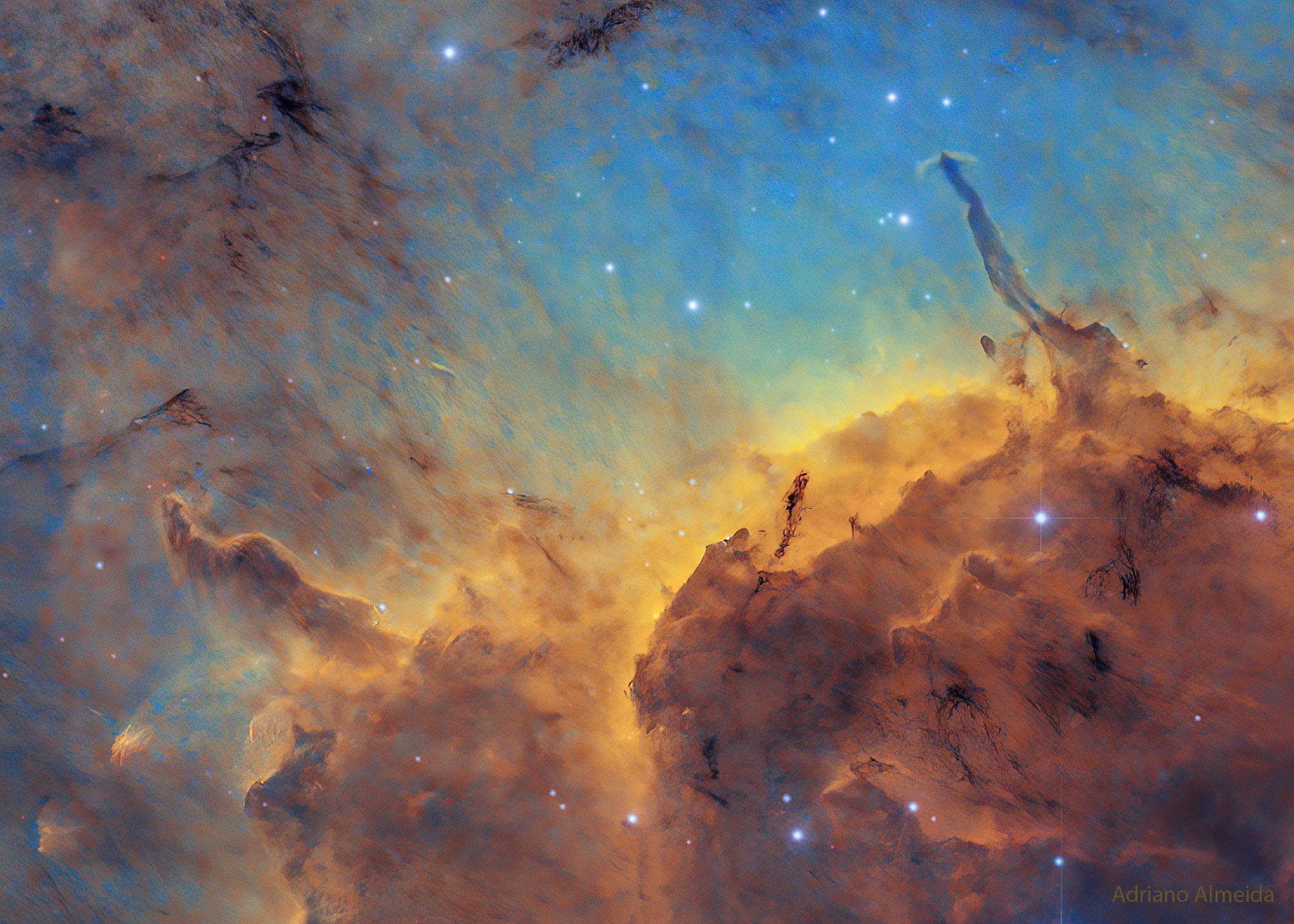
ペリカン星雲にはどのような暗い構造が見られるのでしょうか? 全体として、この星雲は鳥(ペリカン)のように見え、白鳥座(はくちょう座)の方向から見ることができます。しかし、ペリカン星雲の内部は、新しい星々によって照らされ、暗い塵で汚染された場所です。煙ほどの大きさの塵の粒は、若い星の冷たい大気で形成された単純な炭素化合物から始まりますが、恒星風や爆発によって拡散されます。右側の星HH 555から放出される2つの印象的なハービッグ・ハロー・ジェットが見られ、これらのジェットは、星を囲む1年間続く明るい塵の柱を破壊するのに役立っています。他の柱やジェットも見ることができます。掲載されている画像は、主に水素とヘリウムという軽い元素で構成される星雲の中で、少量の重い元素から放出される光を強調するために、科学的に着色されています。ペリカン星雲(IC 5067とIC 5070)は約2000光年離れており、明るい星デネブの北東に小型望遠鏡で見つけることができます。宇宙を探検しよう:ランダムAPODジェネレーター
原文(English)
What dark structures arise within the Pelican Nebula? On the whole, the nebula appears like a bird (a pelican) and is seen toward the constellation of a different bird: Cygnus, a Swan. But inside, the Pelican Nebula is a place lit up by new stars and befouled by dark dust. Smoke-sized dust grains start as simple carbon compounds formed in the cool atmospheres of young stars but are dispersed by stellar winds and explosions. Two impressive Herbig-Haro jets are seen emitted by the star HH 555 on the right, and these jets are helping to destroy the light year-long dust pillar that contains it. Other pillars and jets are also visible. The featured image was scientifically-colored to emphasize light emitted by small amounts of heavy elements in a nebula made predominantly of the light elements hydrogen and helium. The Pelican Nebula (IC 5067 and IC 5070) is about 2,000 light-years away and can be found with a small telescope to the northeast of the bright star Deneb. Explore Your Universe: Random APOD Generator
\ この感動を宇宙仲間にシェア /
宇宙をXでシェア
© Adriano Almeida / APOD