
🚀 宇宙の記憶・カレンダー検索
🚀 象徴的な写真:
APOD第1回
🚀 創造の柱
🚀 スピリット火星着陸
🚀 ハッブル超深宇宙
🚀 地球へようこそ|ブルー・マーブル
🚀 エンケラドス
🚀 ベテルギウス
🚀 火星着陸
🚀 青い夕焼け
🚀 冥王星のハート
🚀 皆既日食
🚀 アースライズ再構築
🚀 ブラックホール
🚀 ウェッブ初画像
🚀 アポロ11着陸
APOD30周年(2025年6月16日)
Ou4:巨大イカ星雲
Ou4: The Giant Squid Nebula
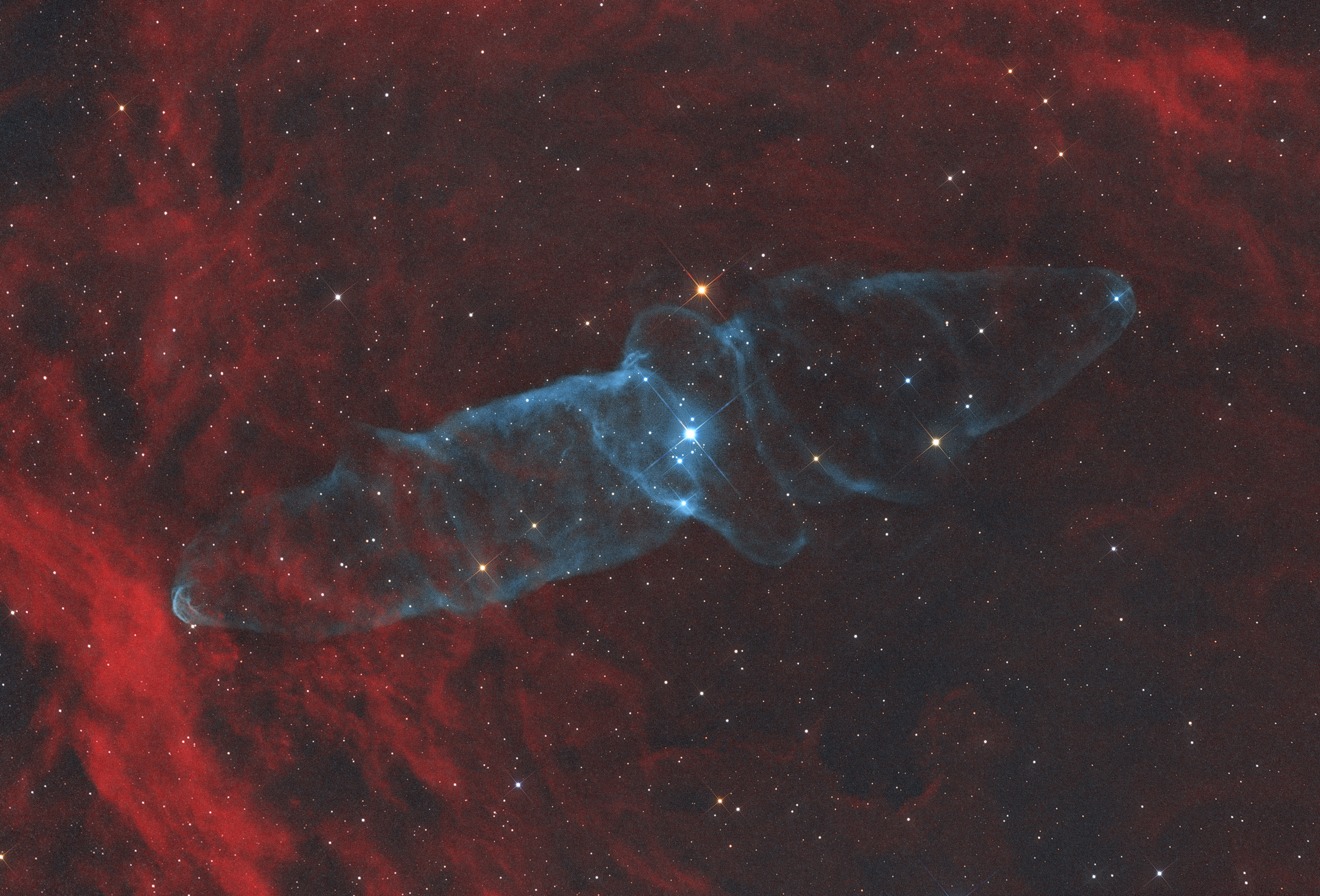
謎めいたイカのような宇宙の雲であるこの星雲は、地球の空では非常に淡いが、非常に大きい。30 時間分の狭帯域画像データで構成されたこの画像では、王家の星座ケフェウス座に向かってほぼ満月 3 回分に及ぶ。2011 年にフランスの天体写真家ニコラ・ウーターズによって発見されたイカ星雲の双極性の形状は、二重に電離した酸素原子からの特徴的な青緑色の放射によって区別される。赤みがかった水素の放射領域 Sh2-129 に囲まれているように見えるが、イカ星雲の実際の距離と性質を決定するのは困難だった。しかし、より最近の調査では、Ou4 は実際には約 2,300 光年離れた Sh2-129 内にあることが示唆されている。そのシナリオに合致すると、この宇宙イカは、星雲の中心付近に見られるHR8119というカタログ番号で知られる、高温で質量のある三重星系によって引き起こされる、壮大な物質流出を表していることになる。もしそうだとすれば、この真に巨大なイカ型星雲は、物理的に50光年以上の大きさになるだろう。
原文(English)
A mysterious squid-like cosmic cloud, this nebula is very faint, but also very large in planet Earth's sky. In the image, composed with 30 hours of narrowband image data, it spans nearly three full moons toward the royal constellation Cepheus. Discovered in 2011 by French astro-imager Nicolas Outters, the Squid Nebula's bipolar shape is distinguished here by the telltale blue-green emission from doubly ionized oxygen atoms. Though apparently surrounded by the reddish hydrogen emission region Sh2-129, the true distance and nature of the Squid Nebula have been difficult to determine. Still, a more recent investigation suggests Ou4 really does lie within Sh2-129 some 2,300 light-years away. Consistent with that scenario, the cosmic squid would represent a spectacular outflow of material driven by a triple system of hot, massive stars, cataloged as HR8119, seen near the center of the nebula. If so, this truly giant squid nebula would physically be over 50 light-years across.
\ この感動を宇宙仲間にシェア /
宇宙をXでシェア
© Tommy Lease / APOD