
🚀 宇宙の記憶・カレンダー検索
🚀 象徴的な写真:
APOD第1回
🚀 創造の柱
🚀 スピリット火星着陸
🚀 ハッブル超深宇宙
🚀 地球へようこそ|ブルー・マーブル
🚀 エンケラドス
🚀 ベテルギウス
🚀 火星着陸
🚀 青い夕焼け
🚀 冥王星のハート
🚀 皆既日食
🚀 アースライズ再構築
🚀 ブラックホール
🚀 ウェッブ初画像
🚀 アポロ11着陸
APOD30周年(2025年6月16日)
創造の柱
Pillars of Creation
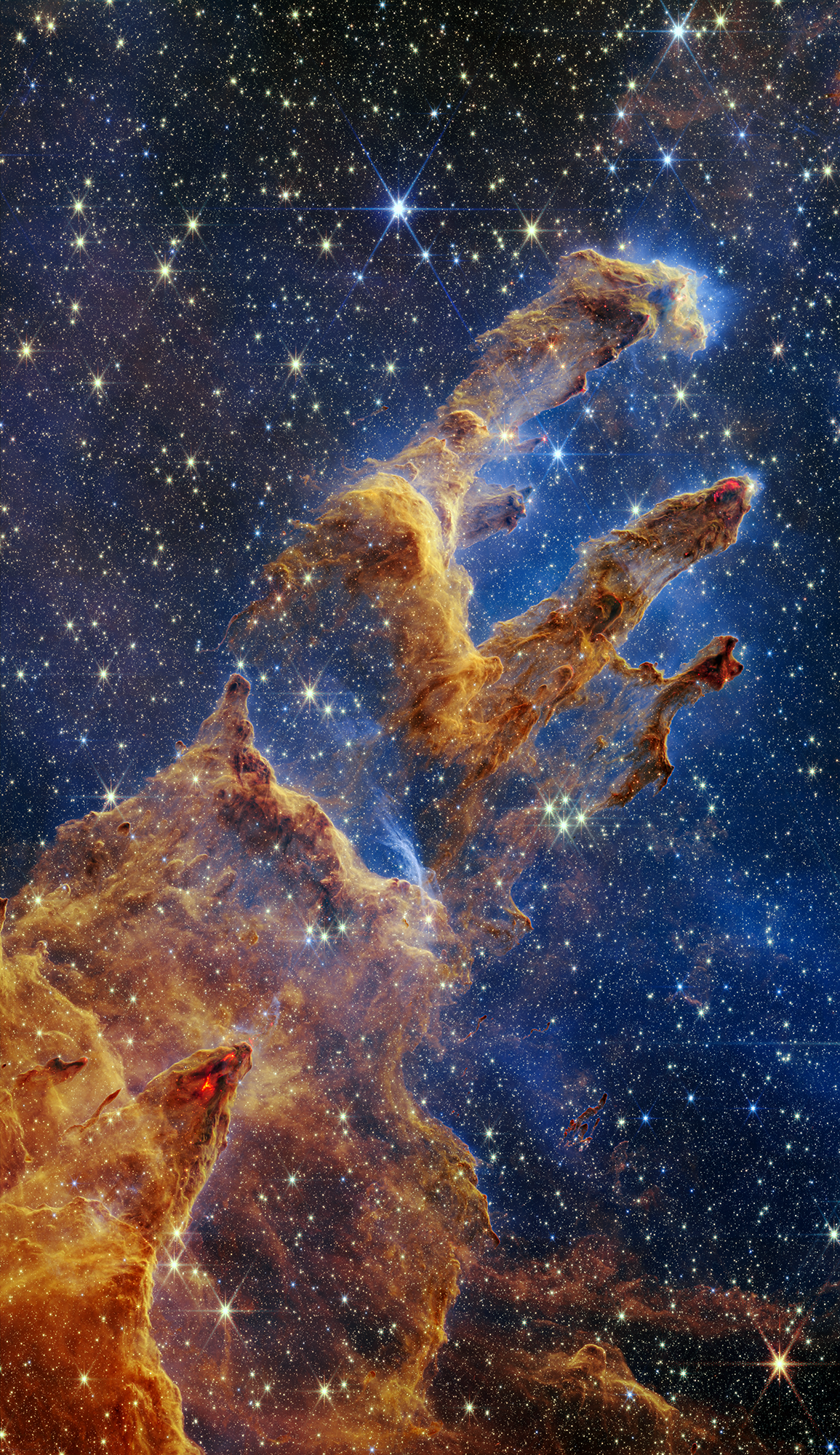
ハッブル宇宙望遠鏡が撮影した有名な画像には、M16(わし星雲)内部にある、星形成中の冷たいガスと塵の柱が光年単位で写っており、「創造の柱」と呼ばれています。このジェームズ・ウェッブ宇宙望遠鏡のNIRCam画像は、ハッブルによるこの領域の探査を、象徴的な星形成領域の内部でより詳細かつ深く拡張しています。ウェッブの近赤外線画像で特に印象的なのは、誕生した星雲の中で重力崩壊を起こして星を形成している物質の塊から発せられる特徴的な赤みがかった放射です。わし星雲は約6,500光年離れています。より大きな明るい輝線星雲自体は、双眼鏡や小型望遠鏡で簡単に観測できます。M16は、私たちの天の川銀河の平面に沿って、星雲が豊富な空の領域にあり、分裂した星座であるへび座の尾の方向に位置しています。
原文(English)
A now famous picture from the Hubble Space Telescope featured these star forming columns of cold gas and dust light-years long inside M16, the Eagle Nebula, dubbed the Pillars of Creation. This James Webb Space Telescope NIRCam image expands Hubble's exploration of that region in greater detail and depth inside the iconic stellar nursery. Particularly stunning in Webb's near infrared view is the telltale reddish emission from knots of material undergoing gravitational collapse to form stars within the natal clouds. The Eagle Nebula is some 6,500 light-years distant. The larger bright emission nebula is itself an easy target for binoculars or small telescopes. M16 lies along the plane of our Milky Way galaxy in a nebula rich part of the sky, toward the split constellation Serpens Cauda (the tail of the snake).
\ この感動を宇宙仲間にシェア /
宇宙をXでシェア
© NASA / APOD