
🚀 宇宙の記憶・カレンダー検索
🚀 象徴的な写真:
APOD第1回
🚀 創造の柱
🚀 スピリット火星着陸
🚀 ハッブル超深宇宙
🚀 地球へようこそ|ブルー・マーブル
🚀 エンケラドス
🚀 ベテルギウス
🚀 火星着陸
🚀 青い夕焼け
🚀 冥王星のハート
🚀 皆既日食
🚀 アースライズ再構築
🚀 ブラックホール
🚀 ウェッブ初画像
🚀 アポロ11着陸
APOD30周年(2025年6月16日)
彗星2022 E3 (ZTF)
Comet 2022 E3 (ZTF)
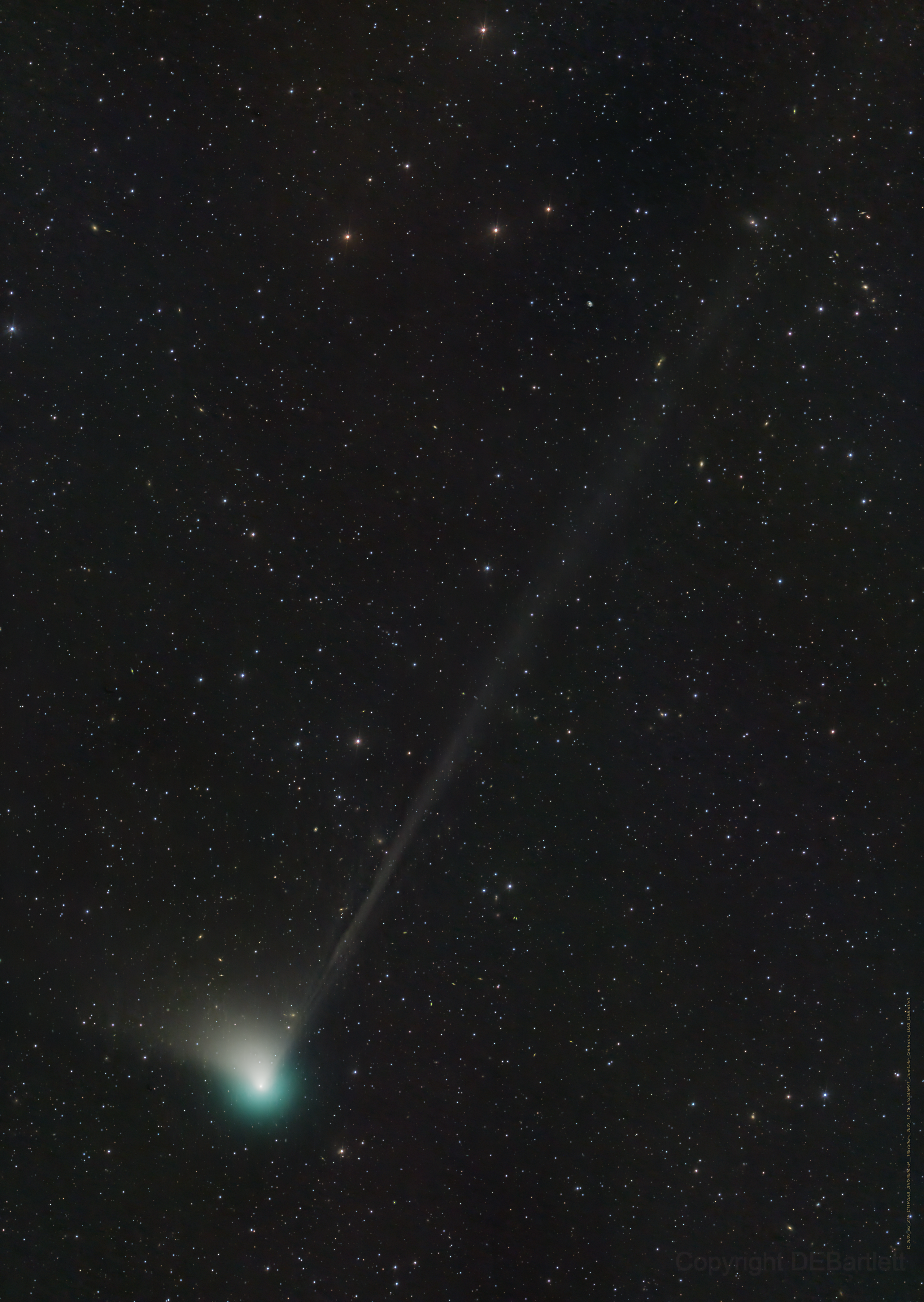
彗星C/2022 E3(ZTF)は、今年3月初旬にズウィッキー・トランジェント・ファシリティの広視野サーベイカメラを使用して天文学者によって発見されました。それ以来、この新しい長周期彗星は大幅に明るくなり、現在は夜明け前の空で北の星座であるかんむり座を横切っています。しかし、望遠鏡なしではまだ暗すぎて見えません。しかし、12月19日に撮影されたこの素晴らしい望遠鏡画像には、彗星の明るくなった緑がかったコマ、短く幅の広い塵の尾、そして2.5度の視野に広がる長くかすかなイオンの尾が写っています。太陽系内を旅する彗星2022 E3は、新年の1月12日に近日点(太陽に最も近づく地点)に達し、2月1日には近地点(地球に最も近づく地点)に達します。彗星の明るさは予測が非常に難しいことで知られていますが、その頃にはC/2022 E3(ZTF)は暗い夜空でかろうじて肉眼で見える程度になるかもしれません。
原文(English)
Comet C/2022 E3 (ZTF) was discovered by astronomers using the wide-field survey camera at the Zwicky Transient Facility this year in early March. Since then the new long-period comet has brightened substantially and is now sweeping across the northern constellation Corona Borealis in predawn skies. It's still too dim to see without a telescope though. But this fine telescopic image from December 19 does show the comet's brighter greenish coma, short broad dust tail, and long faint ion tail stretching across a 2.5 degree wide field-of-view. On a voyage through the inner Solar System comet 2022 E3 will be at perihelion, its closest to the Sun, in the new year on January 12 and at perigee, its closest to our fair planet, on February 1. The brightness of comets is notoriously unpredictable, but by then C/2022 E3 (ZTF) could become only just visible to the eye in dark night skies.
\ この感動を宇宙仲間にシェア /
宇宙をXでシェア
© Dan Bartlett / APOD