
🚀 宇宙の記憶・カレンダー検索
🚀 象徴的な写真:
APOD第1回
🚀 創造の柱
🚀 スピリット火星着陸
🚀 ハッブル超深宇宙
🚀 地球へようこそ|ブルー・マーブル
🚀 エンケラドス
🚀 ベテルギウス
🚀 火星着陸
🚀 青い夕焼け
🚀 冥王星のハート
🚀 皆既日食
🚀 アースライズ再構築
🚀 ブラックホール
🚀 ウェッブ初画像
🚀 アポロ11着陸
APOD30周年(2025年6月16日)
マケマケの月
Moon over Makemake
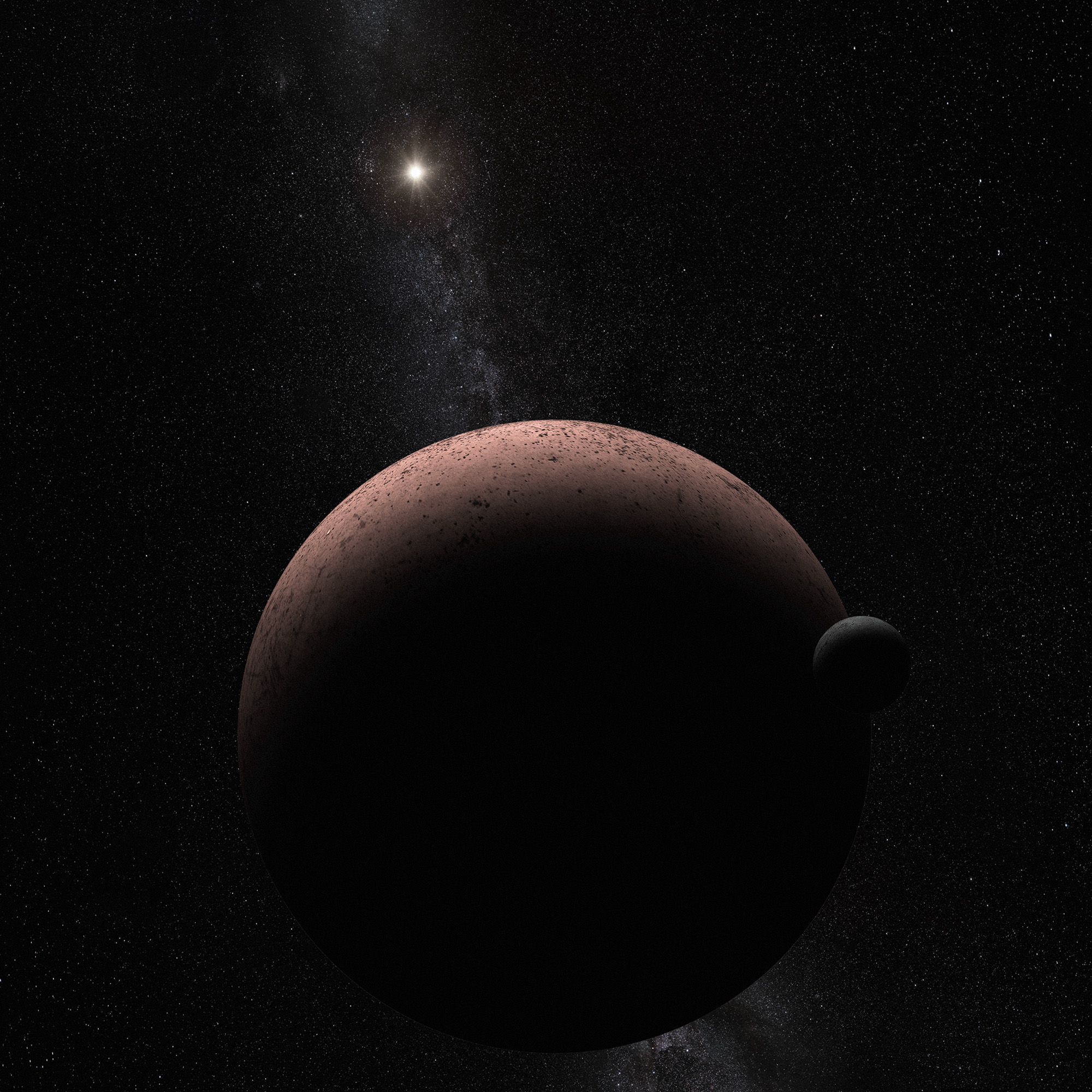
カイパーベルトで2番目に明るい準惑星マケマケ(発音はMAH-kay MAH-kay)には衛星があります。MK2という愛称で呼ばれるマケマケの衛星は、炭のように暗い表面で太陽光を反射し、母天体よりも約1,300倍暗くなっています。それでも、2016年にハッブル宇宙望遠鏡による観測で発見されました。この観測は、冥王星の小さな衛星を発見したのと同じ手法で、暗い伴星を探すことを目的としていました。冥王星とその衛星の場合と同様に、マケマケと周回する衛星のさらなる観測によって、この系の質量と密度が測定され、遠方の世界のより広い理解が可能になります。直径約160キロメートル(100マイル)のMK2は、直径1,400キロメートルのマケマケに比べて、相対的な大きさとコントラストがこのアーティストの想像図に示されています。太陽系の未踏の辺境を想像したこの光景は、宇宙船から振り返ると、かすかな太陽が天の川に沿って輝いている様子を描いている。もちろん、太陽はマケマケから地球よりも50倍以上も遠い。
原文(English)
Makemake (sounds like MAH-kay MAH-kay), second brightest dwarf planet of the Kuiper belt, has a moon. Nicknamed MK2, Makemake's moon reflects sunlight with a charcoal-dark surface, about 1,300 times fainter than its parent body. Still, in 2016 it was spotted in Hubble Space Telescope observations intended to search for faint companions with the same technique used to find the small satellites of Pluto. Just as for Pluto and its satellites, further observations of Makemake and orbiting moon will measure the system's mass and density and allow a broader understanding of the distant worlds. About 160 kilometers (100 miles) across compared to Makemake's 1,400 kilometer diameter, MK2's relative size and contrast are shown in this artist's vision. An imagined scene of an unexplored frontier of the Solar System, it looks back from a spacecraft's vantage as the dim Sun shines along the Milky Way. Of course, the Sun is over 50 times farther from Makemake than it is from planet Earth.
\ この感動を宇宙仲間にシェア /
宇宙をXでシェア
© NASA / APOD