
🚀 宇宙の記憶・カレンダー検索
🚀 象徴的な写真:
APOD第1回
🚀 創造の柱
🚀 スピリット火星着陸
🚀 ハッブル超深宇宙
🚀 地球へようこそ|ブルー・マーブル
🚀 エンケラドス
🚀 ベテルギウス
🚀 火星着陸
🚀 青い夕焼け
🚀 冥王星のハート
🚀 皆既日食
🚀 アースライズ再構築
🚀 ブラックホール
🚀 ウェッブ初画像
🚀 アポロ11着陸
APOD30周年(2025年6月16日)
太陽系最大の岩石
The Largest Rock in our Solar System
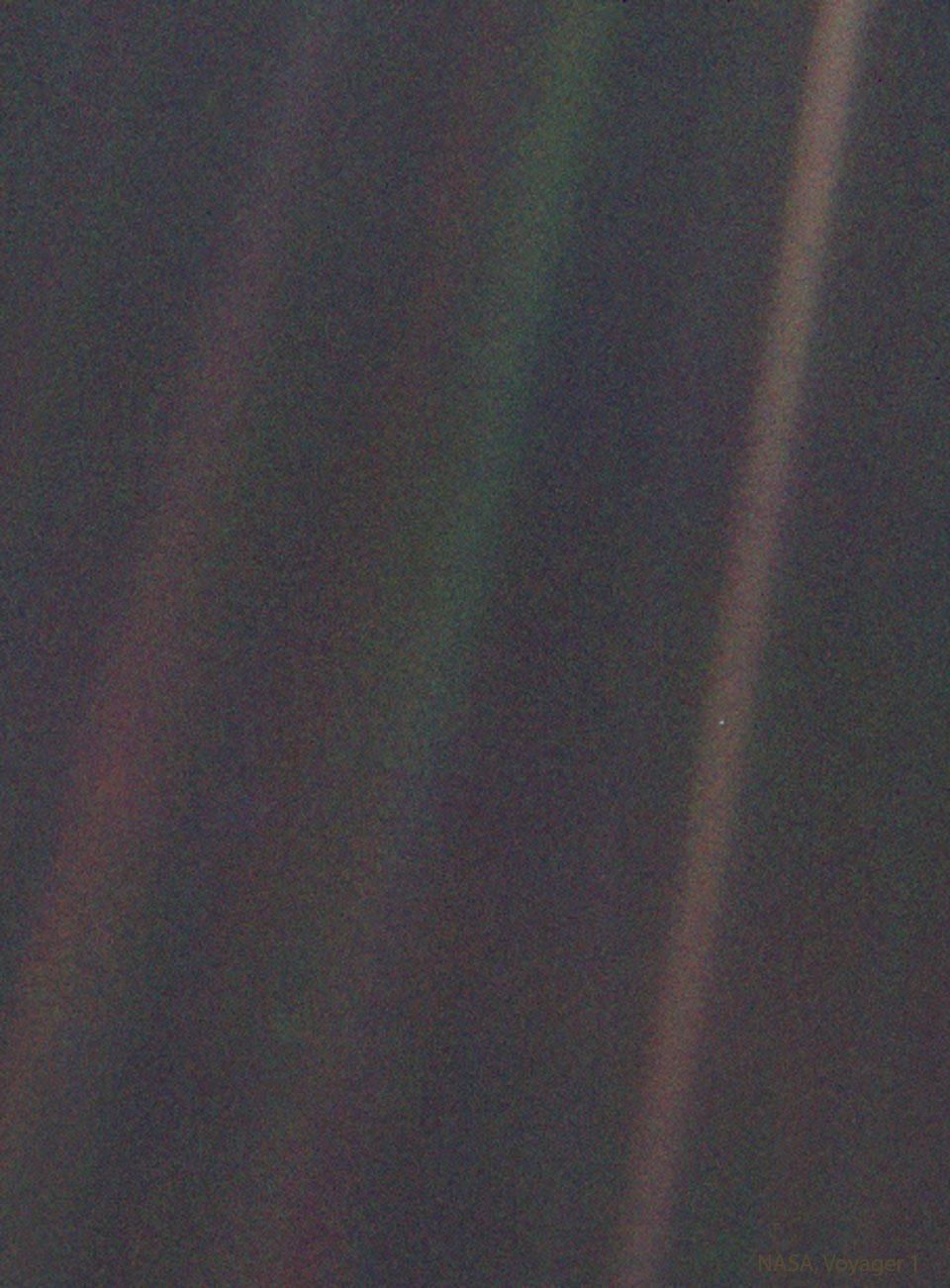
右側のあの点、それが太陽系で知られている最大の岩石です。既知の小惑星、衛星、彗星の核よりも大きく、近隣の岩石惑星よりも大きいのです。この岩石は非常に大きいため、重力によって大きな球状になり、表面近くに重いガスが溜まっています。(最近、他の恒星を周回する高密度の巨大惑星が発見されるまでは、あらゆる種類の岩石の中で最大のものでした。)ボイジャー1号探査機は、1990年に太陽系外縁部からこの巨大な宇宙岩石の有名な写真(「ペールブルードット」と呼ばれる)を撮影しました。今日、この岩石は親星の周りを約50億回目の周回軌道で回り始め、1回の周回で350回以上自転します。地球と呼ばれるこの岩石に住むすべての人々に、グレゴリオ暦の新年おめでとうございます。
原文(English)
There, that dot on the right, that's the largest rock known in our Solar System. It is larger than every known asteroid, moon, and comet nucleus. It is larger than any other local rocky planet. This rock is so large its gravity makes it into a large ball that holds heavy gases near its surface. (It used to be the largest known rock of any type until the recent discoveries of large dense planets orbiting other stars.) The Voyager 1 spacecraft took the featured picture -- famously called Pale Blue Dot -- of this giant space rock in 1990 from the outer Solar System. Today, this rock starts another orbit around its parent star, for roughly the 5 billionth time, spinning over 350 times during each trip. Happy Gregorian Calendar New Year to all inhabitants of this rock we call Earth.
\ この感動を宇宙仲間にシェア /
宇宙をXでシェア
© NASA / APOD