
🚀 宇宙の記憶・カレンダー検索
🚀 象徴的な写真:
APOD第1回
🚀 創造の柱
🚀 スピリット火星着陸
🚀 ハッブル超深宇宙
🚀 地球へようこそ|ブルー・マーブル
🚀 エンケラドス
🚀 ベテルギウス
🚀 火星着陸
🚀 青い夕焼け
🚀 冥王星のハート
🚀 皆既日食
🚀 アースライズ再構築
🚀 ブラックホール
🚀 ウェッブ初画像
🚀 アポロ11着陸
APOD30周年(2025年6月16日)
M1:ハッブル宇宙望遠鏡で撮影したかに星雲
M1: The Crab Nebula from Hubble
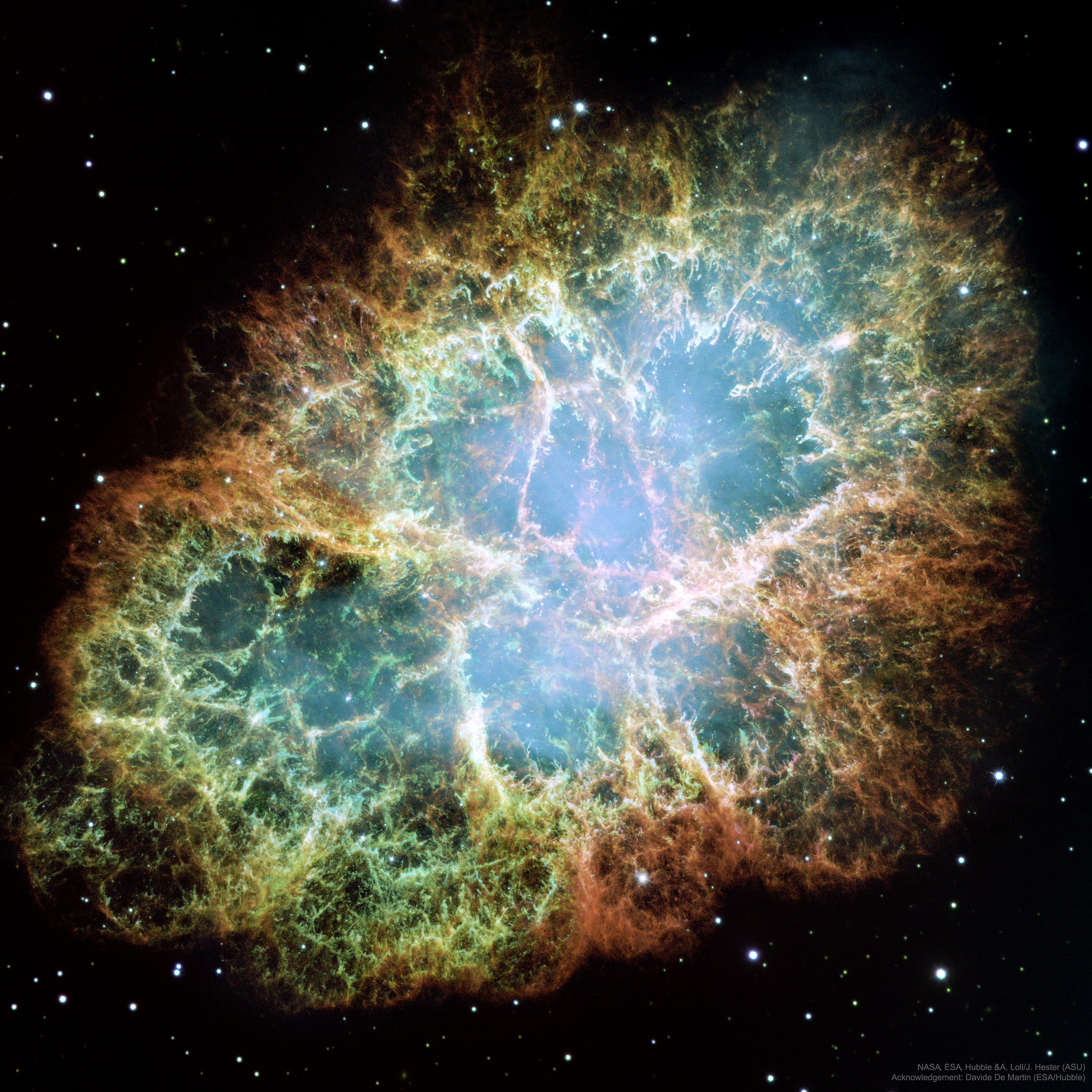
これは星が爆発した後に残る残骸です。西暦1054年に観測された超新星爆発の結果であるかに星雲は、謎めいたフィラメントで満たされています。これらのフィラメントは非常に複雑なだけでなく、元の超新星爆発で放出された質量よりも少なく、自由爆発から予想されるよりも高速で移動しているようです。ハッブル宇宙望遠鏡で撮影されたこの画像は、科学的関心に基づいて選ばれた3色で表示されています。かに星雲は約10光年にわたって広がっています。星雲の中心にはパルサーがあります。パルサーとは、太陽と同じくらいの質量を持つ中性子星ですが、大きさは小さな町ほどしかありません。かにパルサーは毎秒約30回転しています。発見+アウトリーチ:APODの大学院生研究員を募集しています
原文(English)
This is the mess that is left when a star explodes. The Crab Nebula, the result of a supernova seen in 1054 AD, is filled with mysterious filaments. The filaments are not only tremendously complex, but appear to have less mass than expelled in the original supernova and a higher speed than expected from a free explosion. The featured image, taken by the Hubble Space Telescope, is presented in three colors chosen for scientific interest. The Crab Nebula spans about 10 light-years. In the nebula's very center lies a pulsar: a neutron star as massive as the Sun but with only the size of a small town. The Crab Pulsar rotates about 30 times each second. Discovery + Outreach: Graduate student research position open for APOD
\ この感動を宇宙仲間にシェア /
宇宙をXでシェア
© NASA / APOD