
🚀 宇宙の記憶・カレンダー検索
🚀 象徴的な写真:
APOD第1回
🚀 創造の柱
🚀 スピリット火星着陸
🚀 ハッブル超深宇宙
🚀 地球へようこそ|ブルー・マーブル
🚀 エンケラドス
🚀 ベテルギウス
🚀 火星着陸
🚀 青い夕焼け
🚀 冥王星のハート
🚀 皆既日食
🚀 アースライズ再構築
🚀 ブラックホール
🚀 ウェッブ初画像
🚀 アポロ11着陸
APOD30周年(2025年6月16日)
月面強化
Moon Enhanced
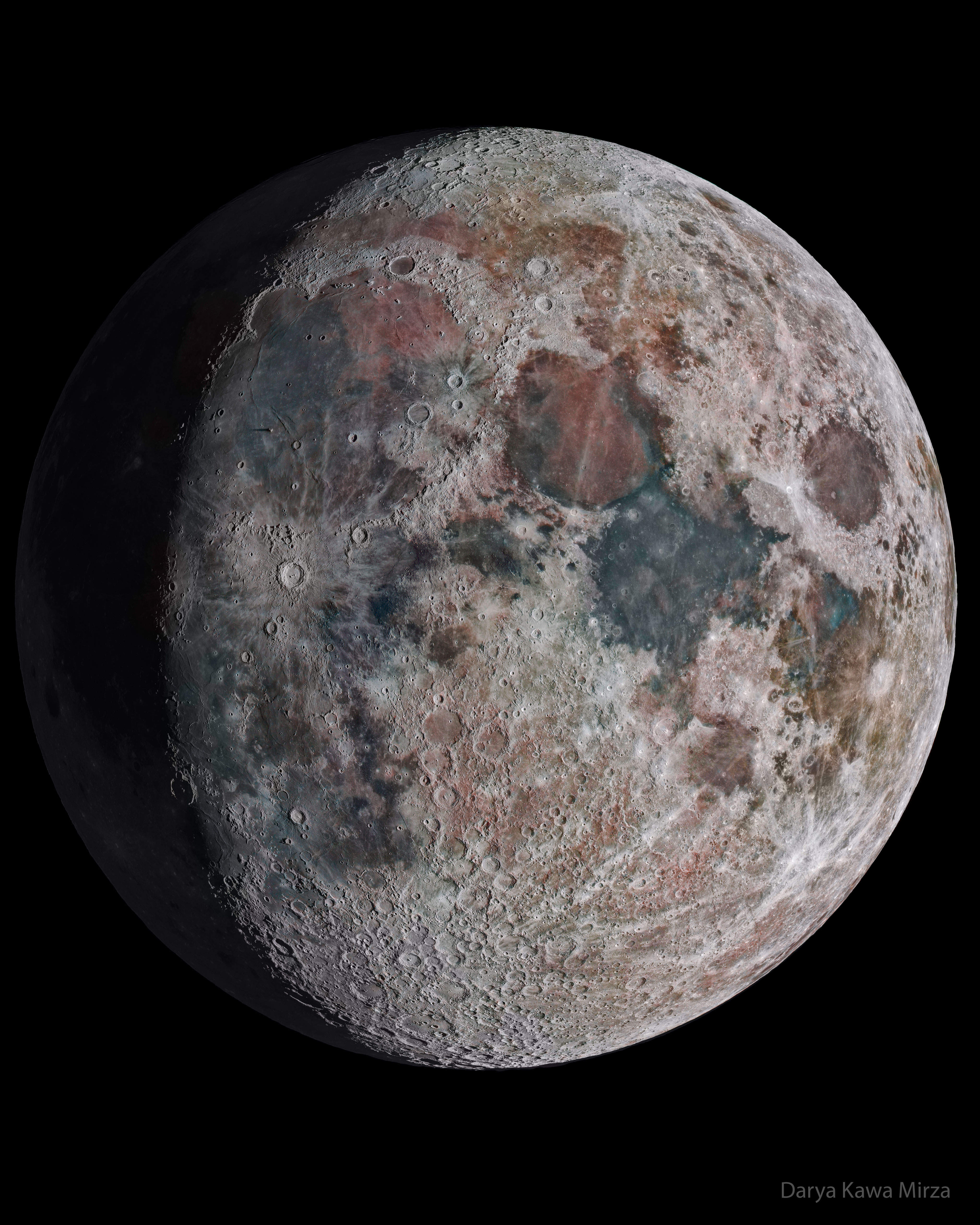
私たちの月は実際にはこのような姿ではありません。地球の月、ルナは、本来このような豊かな質感は持ち合わせておらず、色ももっと繊細です。しかし、このデジタル画像は現実に基づいています。掲載されている画像は複数の画像を合成し、実際の表面の特徴を際立たせるように加工したものです。例えば、加工によって、46億年の歴史の中で月が受けてきた激しい衝突を示すクレーターがより鮮明に映し出されています。マリアと呼ばれる暗い領域にはクレーターが少なく、かつては溶岩の海でした。さらに、画像の色は月の実際の組成に基づいているものの、変更され誇張されています。ここでは、青色は鉄分が豊富な領域を示し、オレンジ色はアルミニウムがわずかに多い領域を示しています。月は何十億年もの間、地球に対して同じ面を映し続けてきましたが、現代の技術によって人類は月について、そして月が地球にどのような影響を与えているかについて、より多くのことを知ることができるようになりました。
原文(English)
Our Moon doesn't really look like this. Earth's Moon, Luna, doesn't naturally show this rich texture, and its colors are more subtle. But this digital creation is based on reality. The featured image is a composite of multiple images and enhanced to bring up real surface features. The enhancements, for example, show more clearly craters that illustrate the tremendous bombardment our Moon has been through during its 4.6-billion-year history. The dark areas, called maria, have fewer craters and were once seas of molten lava. Additionally, the image colors, although based on the moon's real composition, are changed and exaggerated. Here, a blue hue indicates a region that is iron rich, while orange indicates a slight excess of aluminum. Although the Moon has shown the same side to the Earth for billions of years, modern technology is allowing humanity to learn much more about it -- and how it affects the Earth.
\ この感動を宇宙仲間にシェア /
宇宙をXでシェア
© Darya Kawa Mirza / APOD