
🚀 宇宙の記憶・カレンダー検索
🚀 象徴的な写真:
APOD第1回
🚀 創造の柱
🚀 スピリット火星着陸
🚀 ハッブル超深宇宙
🚀 地球へようこそ|ブルー・マーブル
🚀 エンケラドス
🚀 ベテルギウス
🚀 火星着陸
🚀 青い夕焼け
🚀 冥王星のハート
🚀 皆既日食
🚀 アースライズ再構築
🚀 ブラックホール
🚀 ウェッブ初画像
🚀 アポロ11着陸
APOD30周年(2025年6月16日)
バーナード68:暗黒分子雲
Barnard 68: Dark Molecular Cloud
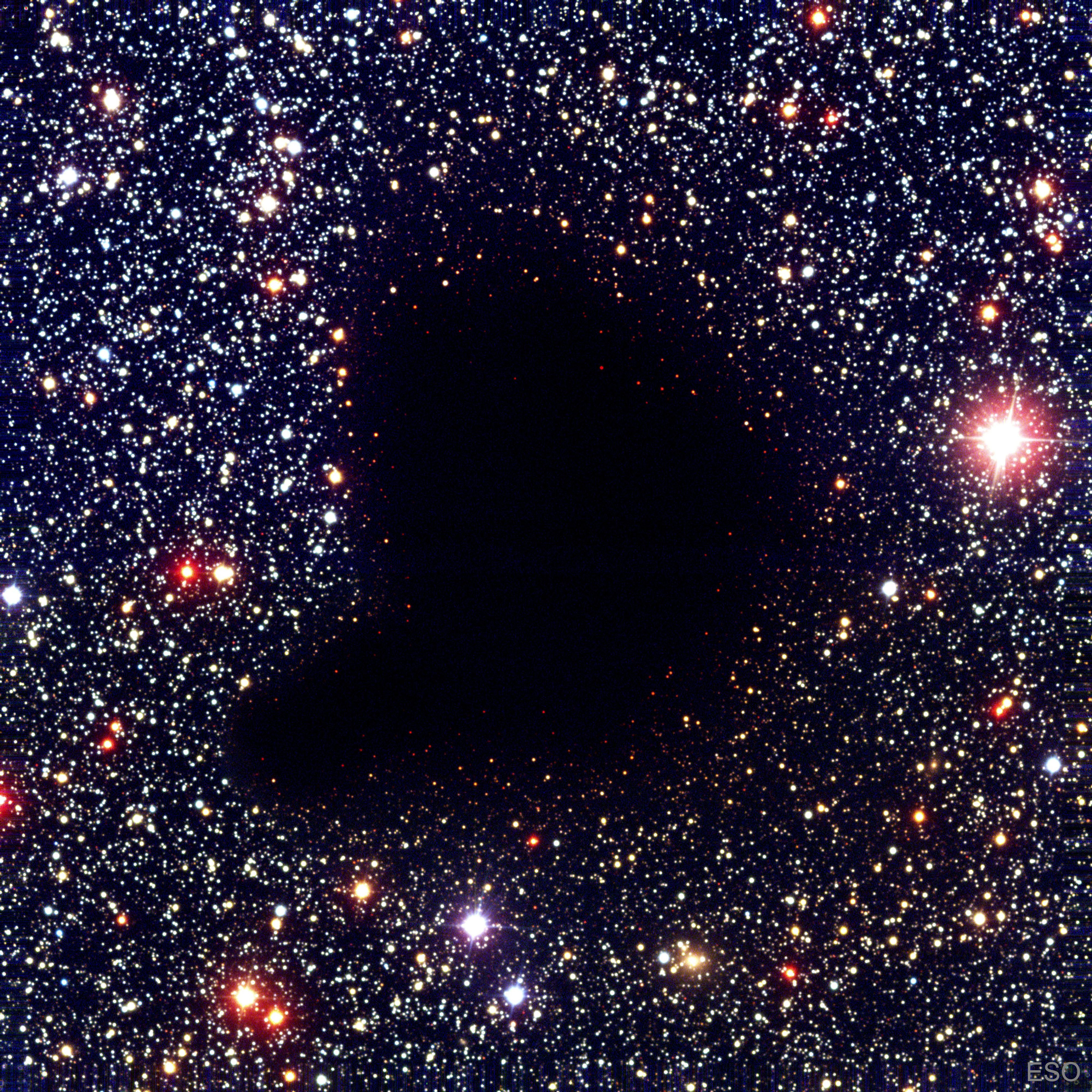
星はどこへ行ってしまったのでしょうか?かつては空の穴と考えられていたものが、今では天文学者によって暗黒分子雲として知られています。ここでは、高濃度の塵と分子ガスが背景の星から放出される可視光のほぼすべてを吸収します。不気味なほど暗い周囲は、分子雲の内部を宇宙で最も寒く、最も孤立した場所の一つにしています。これらの暗黒吸収星雲の中で最も注目すべきものの1つが、へびつかい座の方向にあるバーナード68と呼ばれる雲で、ここに写真が掲載されています。中心部に星が見えないことから、バーナード68は比較的近くにあり、測定によると約500光年離れており、直径は約0.5光年です。バーナード68のような分子雲がどのように形成されるかは正確にはわかっていませんが、これらの雲自体が新しい星が形成される可能性が高い場所であることがわかっています。実際、バーナード68自体が崩壊して新しい星系を形成する可能性が高いことがわかっています。赤外線で雲を透視することは可能です。宇宙からのポストカード2022:APOD年間レビュー
原文(English)
Where did all the stars go? What used to be considered a hole in the sky is now known to astronomers as a dark molecular cloud. Here, a high concentration of dust and molecular gas absorb practically all the visible light emitted from background stars. The eerily dark surroundings help make the interiors of molecular clouds some of the coldest and most isolated places in the universe. One of the most notable of these dark absorption nebulae is a cloud toward the constellation Ophiuchus known as Barnard 68, pictured here. That no stars are visible in the center indicates that Barnard 68 is relatively nearby, with measurements placing it about 500 light-years away and half a light-year across. It is not known exactly how molecular clouds like Barnard 68 form, but it is known that these clouds are themselves likely places for new stars to form. In fact, Barnard 68 itself has been found likely to collapse and form a new star system. It is possible to look right through the cloud in infrared light. Postcards from the Universe 2022: APOD Year in Review
\ この感動を宇宙仲間にシェア /
宇宙をXでシェア
© NASA / APOD