
🚀 宇宙の記憶・カレンダー検索
🚀 象徴的な写真:
APOD第1回
🚀 創造の柱
🚀 スピリット火星着陸
🚀 ハッブル超深宇宙
🚀 地球へようこそ|ブルー・マーブル
🚀 エンケラドス
🚀 ベテルギウス
🚀 火星着陸
🚀 青い夕焼け
🚀 冥王星のハート
🚀 皆既日食
🚀 アースライズ再構築
🚀 ブラックホール
🚀 ウェッブ初画像
🚀 アポロ11着陸
APOD30周年(2025年6月16日)
コケの中のクマムシ
Tardigrade in Moss
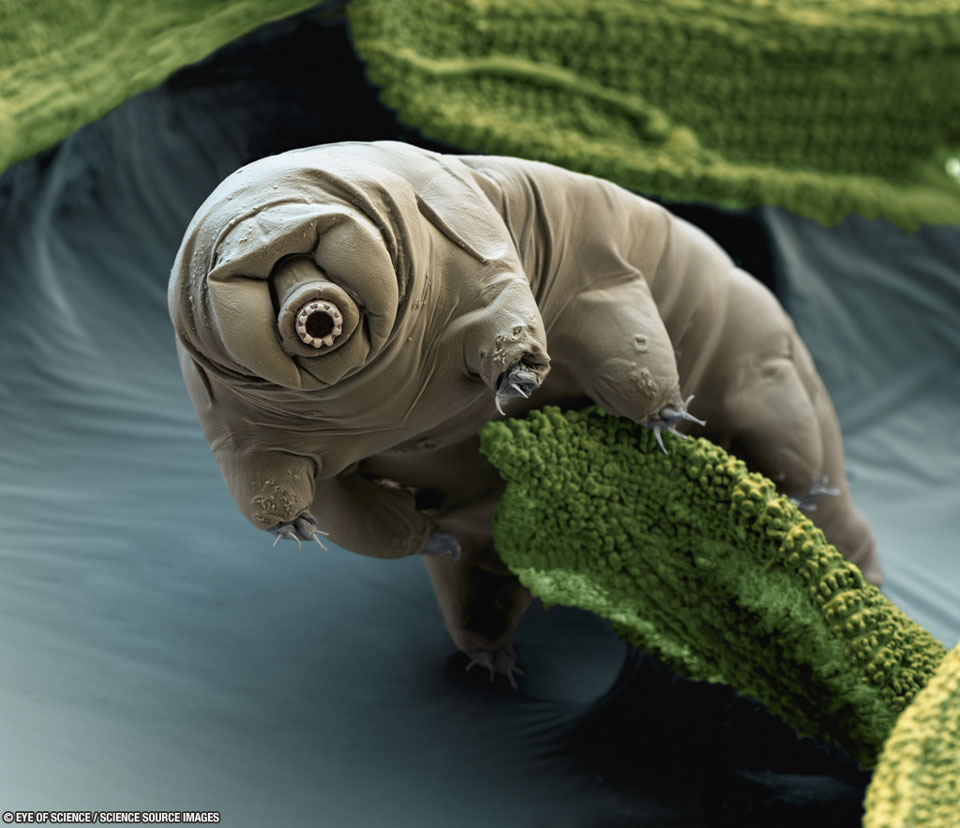
これは宇宙人でしょうか?おそらく違うでしょうが、地球上の動物の中でクマムシが最も有力な候補かもしれません。クマムシは、何十年も食べ物や水なしで生き延びることができ、絶対零度に近い温度から水の沸点をはるかに超える温度まで、ゼロに近い圧力から海底の圧力をはるかに超える圧力まで、そして危険な放射線に直接さらされても生き延びることができることが知られています。これらの極限環境生物の広範囲にわたる生存能力は、2011年に軌道上のスペースシャトルの外でテストされました。クマムシがこれほど丈夫なのは、DNAを自己修復し、体内の水分含有量を数パーセントまで減らすことができるためです。これらの小さなクマムシの一部は、2011年に火星の衛星フォボスに向けて打ち上げられたとき、そして2021年に地球の月に向けて打ち上げられたとき、地球外生命体になりかけましたが、前者の打ち上げは失敗し、後者の着陸は墜落しました。クマムシは、地球上のほとんどの場所で人間よりも多く生息しています。ここにカラー強調電子顕微鏡写真で写っているのは、体長1ミリメートルのクマムシがコケの上を這っている様子です。あなたの誕生日サプライズ:APODはあなたの誕生日にどんな写真を掲載しましたか?(1995年以降)
原文(English)
Is this an alien? Probably not, but of all the animals on Earth, the tardigrade might be the best candidate. That's because tardigrades are known to be able to go for decades without food or water, to survive temperatures from near absolute zero to well above the boiling point of water, to survive pressures from near zero to well above that on ocean floors, and to survive direct exposure to dangerous radiations. The far-ranging survivability of these extremophiles was tested in 2011 outside an orbiting space shuttle. Tardigrades are so durable partly because they can repair their own DNA and reduce their body water content to a few percent. Some of these miniature water-bears almost became extraterrestrials in 2011 when they were launched toward to the Martian moon Phobos, and again in 2021 when they were launched toward Earth's own moon, but the former launch failed, and the latter landing crashed. Tardigrades are more common than humans across most of the Earth. Pictured here in a color-enhanced electron micrograph, a millimeter-long tardigrade crawls on moss. Your Sky Surprise: What picture did APOD feature on your birthday? (post 1995)
\ この感動を宇宙仲間にシェア /
宇宙をXでシェア
© Nicole Ottawa & Oliver Meckes / Eye of Science /
Science Source Images / APOD