
🚀 宇宙の記憶・カレンダー検索
🚀 象徴的な写真:
APOD第1回
🚀 創造の柱
🚀 スピリット火星着陸
🚀 ハッブル超深宇宙
🚀 地球へようこそ|ブルー・マーブル
🚀 エンケラドス
🚀 ベテルギウス
🚀 火星着陸
🚀 青い夕焼け
🚀 冥王星のハート
🚀 皆既日食
🚀 アースライズ再構築
🚀 ブラックホール
🚀 ウェッブ初画像
🚀 アポロ11着陸
APOD30周年(2025年6月16日)
近傍の渦巻銀河M101で超新星が発見される
Supernova Discovered in Nearby Spiral Galaxy M101
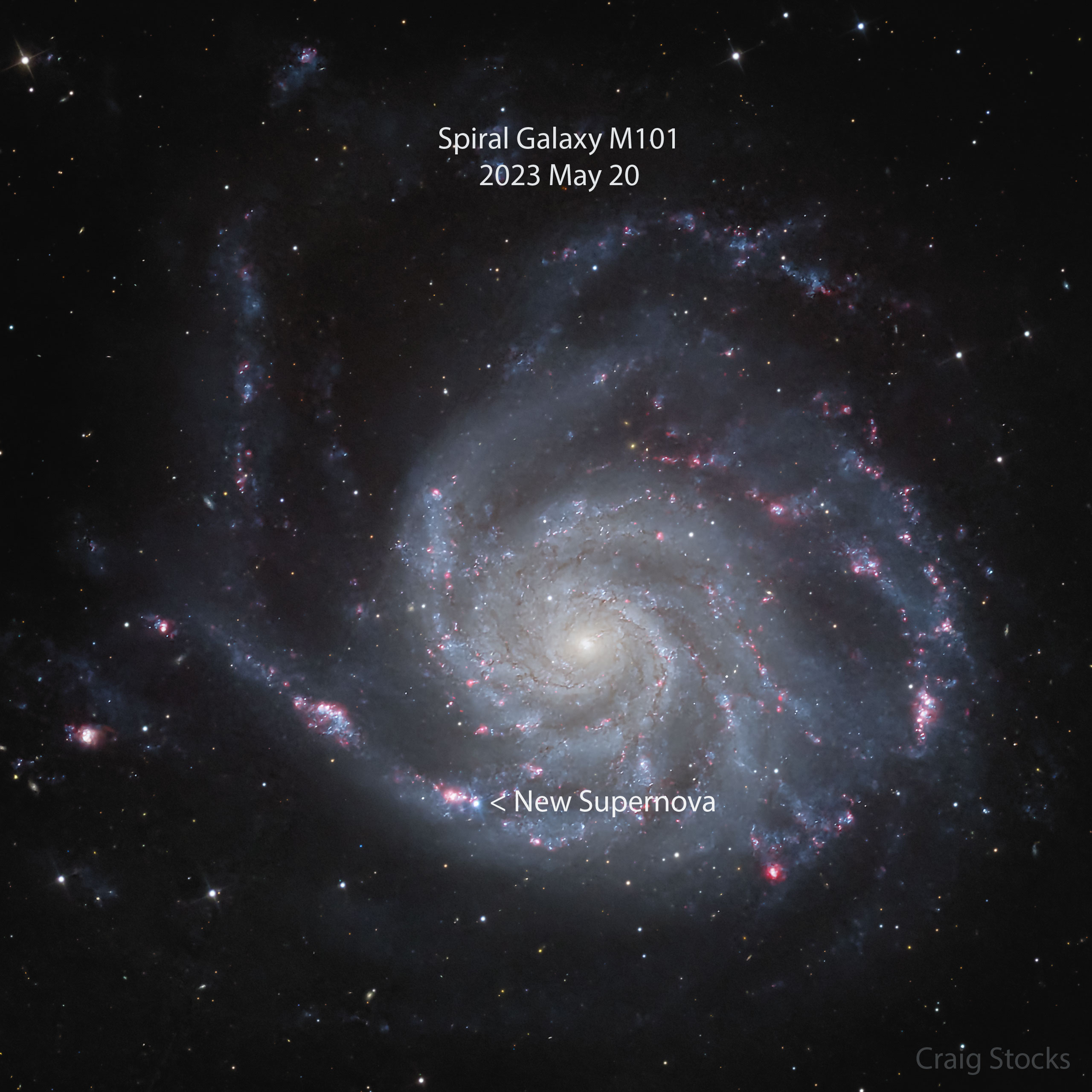
近くの星が爆発し、人類の望遠鏡がその観測に向けられている。SN 2023ixfと名付けられたこの超新星は、3日前に日本の天文学者板垣光一氏によって発見され、その後2日前にはズウィッキー・トランジェント・ファシリティの自動画像上で位置が特定された。SN 2023ixfは、わずか約2100万光年しか離れていない、写真映えする渦巻き銀河M101で発生した。これは過去5年間で最も近い超新星であり、過去10年間で2番目に近く、過去15年間でM101で発見された2番目の超新星である。迅速な追跡観測により、SN 2023ixfはII型超新星であることがすでに示されている。II型超新星とは、大質量星が核燃料を使い果たして崩壊した後に発生する爆発である。掲載画像は、2日前の渦巻き銀河で、超新星が強調表示されている。ロールオーバー画像は、1か月前の同じ銀河を示している。 SN 2023ixfは今後数ヶ月間、明るさを増し、望遠鏡で観測可能となる見込みです。このような近距離にある若いII型超新星を研究することで、大質量星とその爆発メカニズムに関する新たな手がかりが得られるかもしれません。
原文(English)
A nearby star has exploded and humanity's telescopes are turning to monitor it. The supernova, dubbed SN 2023ixf, was discovered by Japanese astronomer Koichi Itagaki three days ago and subsequently located on automated images from the Zwicky Transient Facility two days earlier. SN 2023ixf occurred in the photogenic Pinwheel Galaxy M101, which, being only about 21 million light years away, makes it the closest supernova seen in the past five years, the second closest in the past 10 years, and the second supernova found in M101 in the past 15 years. Rapid follow up observations already indicate that SN 2023ixf is a Type II supernova, an explosion that occurs after a massive star runs out of nuclear fuel and collapses. The featured image shows home spiral galaxy two days ago with the supernova highlighted, while the roll-over image shows the same galaxy a month before. SN 2023ixf will likely brighten and remain visible to telescopes for months. Studying such a close and young Type II supernova may yield new clues about massive stars and how they explode.
\ この感動を宇宙仲間にシェア /
宇宙をXでシェア
© Craig Stocks / APOD