
🚀 宇宙の記憶・カレンダー検索
🚀 象徴的な写真:
APOD第1回
🚀 創造の柱
🚀 スピリット火星着陸
🚀 ハッブル超深宇宙
🚀 地球へようこそ|ブルー・マーブル
🚀 エンケラドス
🚀 ベテルギウス
🚀 火星着陸
🚀 青い夕焼け
🚀 冥王星のハート
🚀 皆既日食
🚀 アースライズ再構築
🚀 ブラックホール
🚀 ウェッブ初画像
🚀 アポロ11着陸
APOD30周年(2025年6月16日)
クレセント・ネプチューンとトリトン
Crescent Neptune and Triton
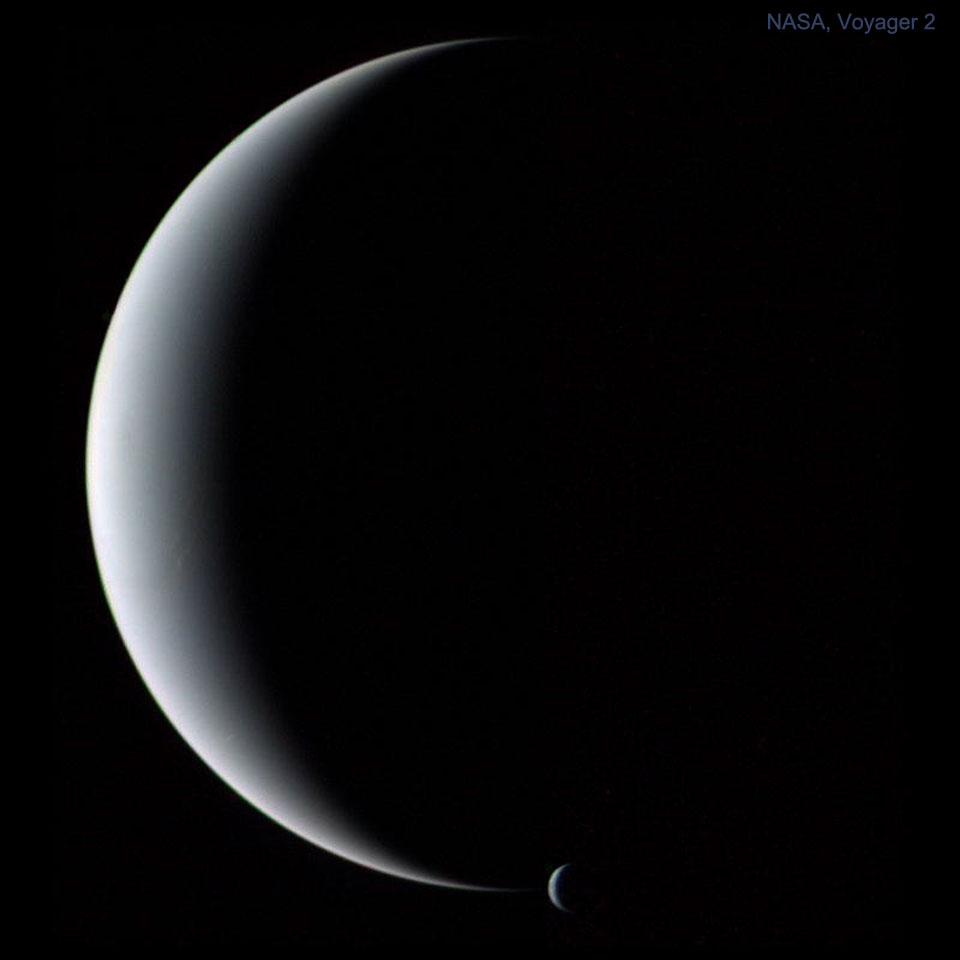
1989年、太陽系の外縁部を航行していたボイジャー2号は、太陽の方角を向いて、最も遠い惑星である海王星とその衛星トリトンが三日月形をしているこの光景を発見した。氷の巨大惑星と最大の衛星の優美な画像は、ボイジャーが最接近した直後に、背後から撮影されたものだ。地球から撮影することは不可能だった。なぜなら、最も遠い惑星である海王星は、太陽の方角から見ると三日月形には見えないからだ。太陽圏界面へと向かうボイジャー2号の最後の視点では、海王星はおなじみの青色を失ってしまう。
原文(English)
Gliding through the outer Solar System, in 1989 the Voyager 2 spacecraft looked toward the Sun to find this view of most distant planet Neptune and its moon Triton together in a crescent phase. The elegant image of ice-giant planet and largest moon was taken from behind just after Voyager's closest approach. It could not have been taken from Earth because the most distant planet never shows a crescent phase to sunward eyes. Heading for the heliopause and beyond, the spacecraft's parting vantage point also robs Neptune of its familiar blue hue.
\ この感動を宇宙仲間にシェア /
宇宙をXでシェア
© NASA / APOD