
🚀 宇宙の記憶・カレンダー検索
🚀 象徴的な写真:
APOD第1回
🚀 創造の柱
🚀 スピリット火星着陸
🚀 ハッブル超深宇宙
🚀 地球へようこそ|ブルー・マーブル
🚀 エンケラドス
🚀 ベテルギウス
🚀 火星着陸
🚀 青い夕焼け
🚀 冥王星のハート
🚀 皆既日食
🚀 アースライズ再構築
🚀 ブラックホール
🚀 ウェッブ初画像
🚀 アポロ11着陸
APOD30周年(2025年6月16日)
銀河巻雲:マンデル・ウィルソン9
Galactic Cirrus: Mandel Wilson 9
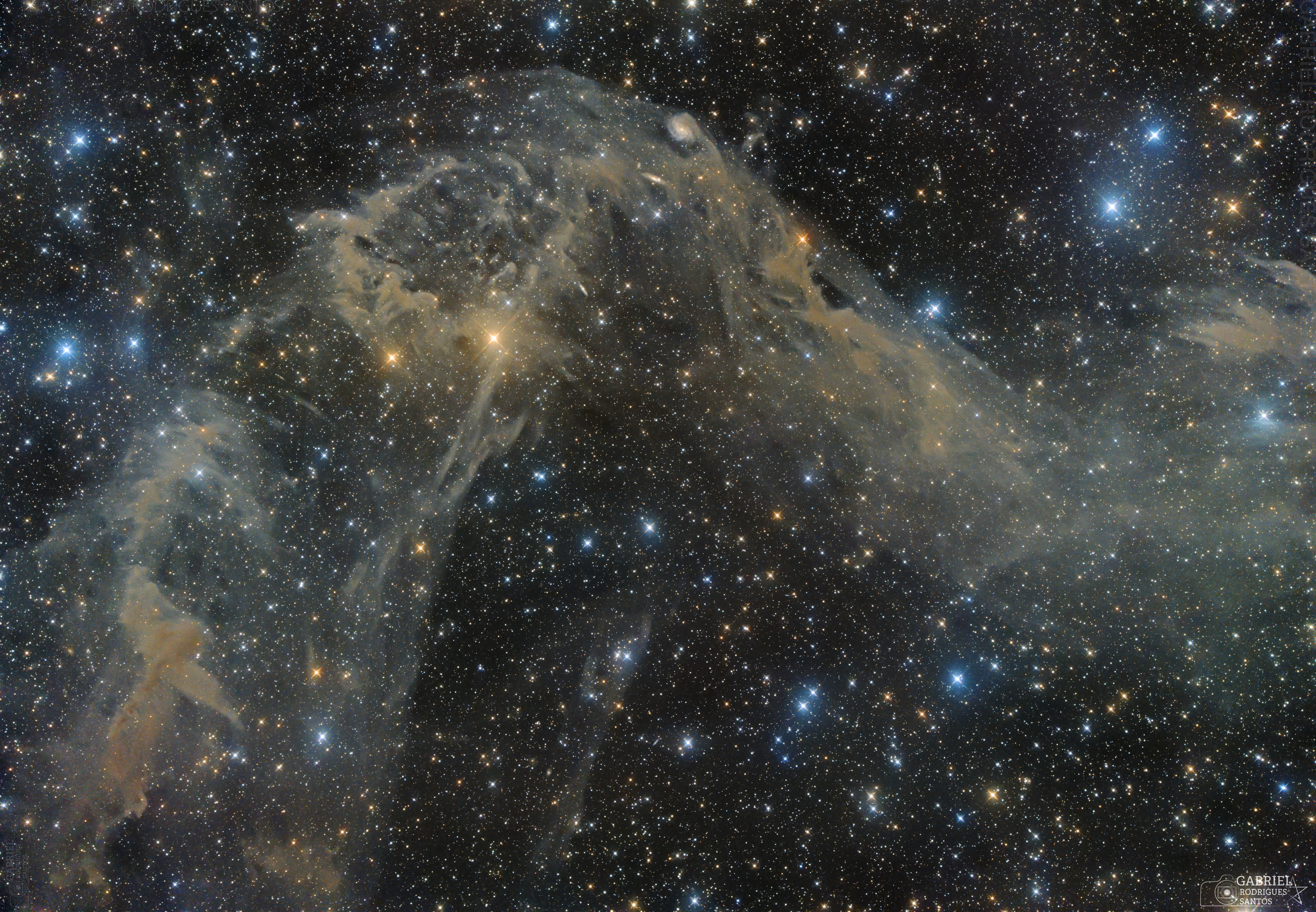
天の川に沿った星々の光が合わさって、銀河面から300光年ほど上空に広がるこれらの宇宙塵雲に反射されます。統合フラックス星雲として知られ、銀河の高緯度でよく見られるこれらの塵の銀河巻雲は、かすかです。しかし、北極と南極の方向に向かって、空の広い領域にわたって追跡することができます。星の光の反射に加えて、星間塵の粒子が目に見えない紫外線を可視の赤色光に変換することで、塵雲がかすかな赤みを帯びた発光を生み出すことが研究で示されています。近くの天の川の星や遠くの背景の銀河も捉えたこの驚くほど深く広い視野の画像は、マンデル・ウィルソン9として知られるかすかな銀河巻雲の複合体を探索しています。それは地球の空を3度以上にわたって南の星座アプスに向かって広がっています。
原文(English)
The combined light of stars along the Milky Way are reflected by these cosmic dust clouds that soar 300 light-years or so above the plane of our galaxy. Known to some as integrated flux nebulae and commonly found at high galactic latitudes, the dusty galactic cirrus clouds are faint. But they can be traced over large regions of the sky toward the North and South Galactic poles. Along with the reflection of starlight, studies indicate the dust clouds produce a faint reddish luminescence as interstellar dust grains convert invisible ultraviolet radiation to visible red light. Also capturing nearby Milky Way stars and distant background galaxies, this remarkably deep, wide-field image explores a complex of faint galactic cirrus known as Mandel Wilson 9. It spans over three degrees across planet Earth's skies toward the far southern constellation Apus.
\ この感動を宇宙仲間にシェア /
宇宙をXでシェア
© Gabriel Rodrigues Santos / APOD