
🚀 宇宙の記憶・カレンダー検索
🚀 象徴的な写真:
APOD第1回
🚀 創造の柱
🚀 スピリット火星着陸
🚀 ハッブル超深宇宙
🚀 地球へようこそ|ブルー・マーブル
🚀 エンケラドス
🚀 ベテルギウス
🚀 火星着陸
🚀 青い夕焼け
🚀 冥王星のハート
🚀 皆既日食
🚀 アースライズ再構築
🚀 ブラックホール
🚀 ウェッブ初画像
🚀 アポロ11着陸
APOD30周年(2025年6月16日)
隕石が崩壊する際に化学物質が発光する
Chemicals Glow as a Meteor Disintegrates
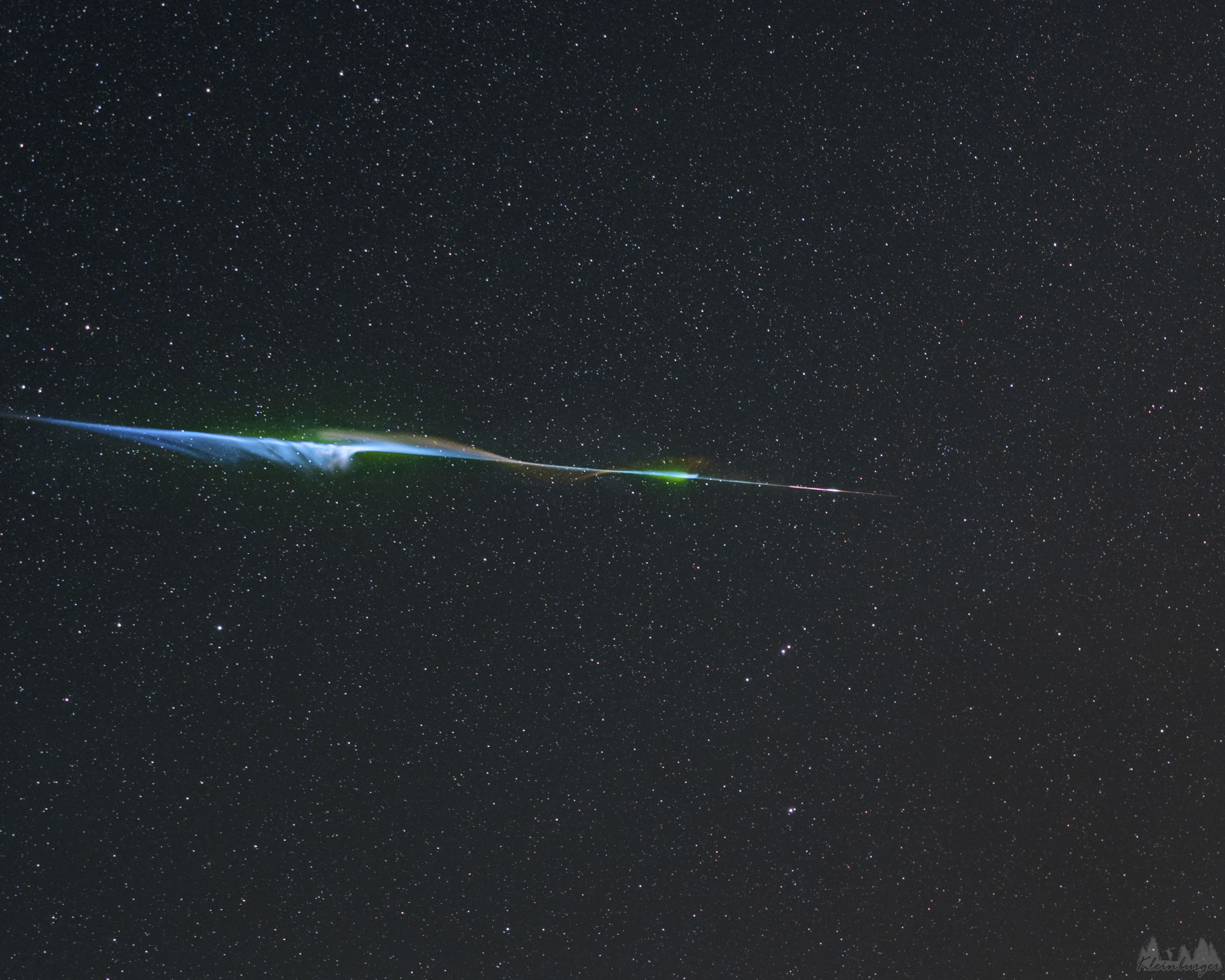
流星は色鮮やかなものになり得る。人間の目は通常多くの色を識別できないが、カメラはしばしばそれを捉えることができる。ここに写っているのは、崩壊していく流星の火球で、写真家がこれまで見た中で最も明るい流星の一つであるだけでなく、色鮮やかな流星でもあった。この流星は、7月中旬にオーストリアのホッホカル山に設置されたカメラで偶然撮影されたもので、天の川銀河の中心帯を撮影するために設置されていた。おそらくずっと昔に彗星か小惑星から放出されたこの輝く塵は、不運にも地球の大気圏に突入した。流星の色は通常、流星が崩壊する際に放出されるイオン化された化学元素に由来し、青緑色はマグネシウム、紫色はカルシウム、緑色はニッケルに由来する。しかし、赤色は通常、地球の大気中のエネルギーを受けた窒素と酸素に由来する。この明るい流星の火球は一瞬のうちに消え去ったが、風に吹かれたイオン化の痕跡を残し、それはほぼ1分間見え続けた。
原文(English)
Meteors can be colorful. While the human eye usually cannot discern many colors, cameras often can. Pictured here is a fireball, a disintegrating meteor that was not only one of the brightest the photographer has ever seen, but colorful. The meteor was captured by chance in mid-July with a camera set up on Hochkar Mountain in Austria to photograph the central band of our Milky Way galaxy. The radiant grit, likely cast off by a comet or asteroid long ago, had the misfortune to enter Earth's atmosphere. Colors in meteors usually originate from ionized chemical elements released as the meteor disintegrates, with blue-green typically originating from magnesium, calcium radiating violet, and nickel glowing green. Red, however, typically originates from energized nitrogen and oxygen in the Earth's atmosphere. This bright meteoric fireball was gone in a flash -- less than a second -- but it left a wind-blown ionization trail that remained visible for almost a minute.
\ この感動を宇宙仲間にシェア /
宇宙をXでシェア
© Michael Kleinburger / APOD