
🚀 宇宙の記憶・カレンダー検索
🚀 象徴的な写真:
APOD第1回
🚀 創造の柱
🚀 スピリット火星着陸
🚀 ハッブル超深宇宙
🚀 地球へようこそ|ブルー・マーブル
🚀 エンケラドス
🚀 ベテルギウス
🚀 火星着陸
🚀 青い夕焼け
🚀 冥王星のハート
🚀 皆既日食
🚀 アースライズ再構築
🚀 ブラックホール
🚀 ウェッブ初画像
🚀 アポロ11着陸
APOD30周年(2025年6月16日)
ピスタチオ星雲
The Pistachio Nebula
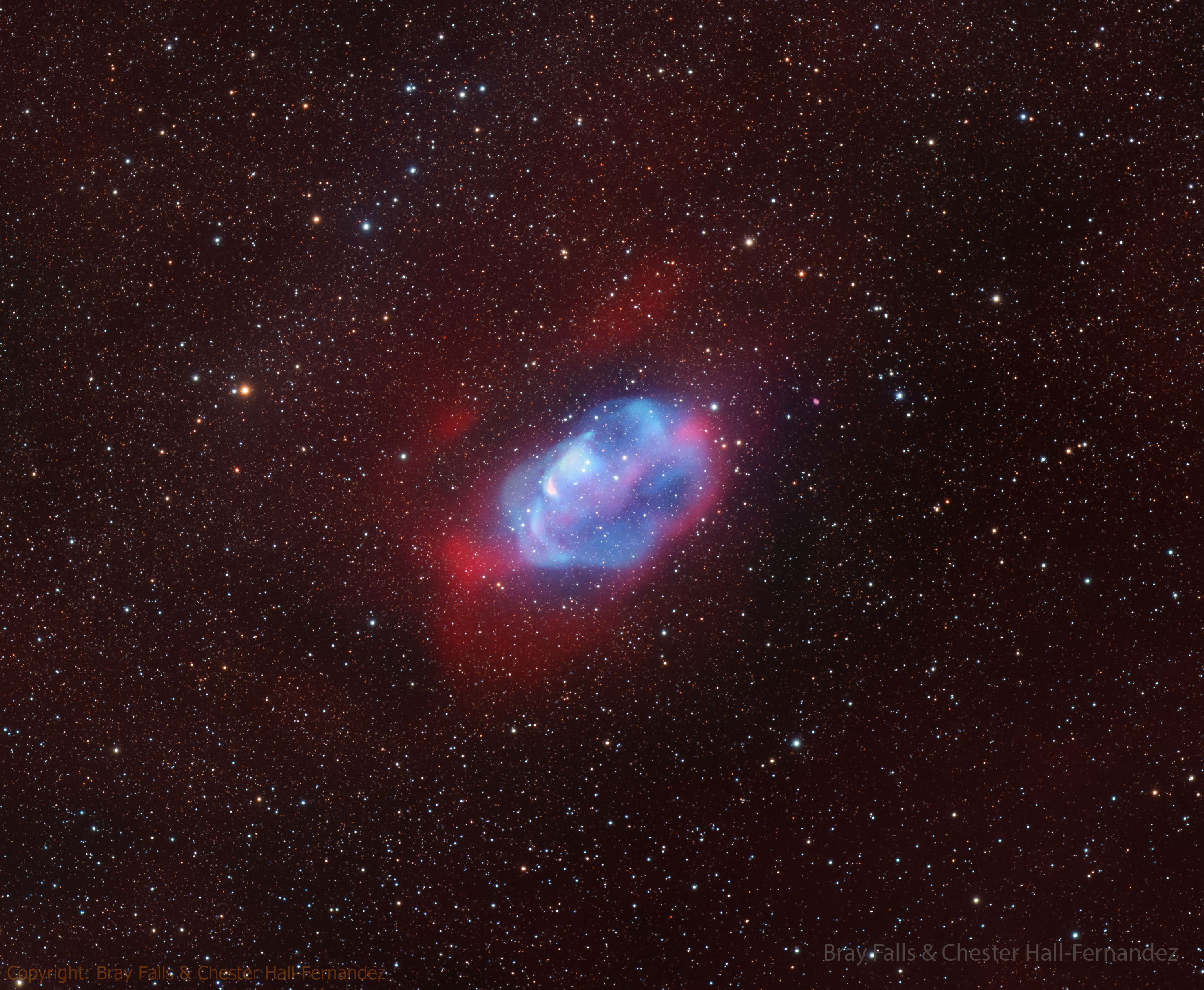
この星雲はこれまで一度も観測されたことがありませんでした。新しく発見された星雲は通常、角が小さく、専門家が大型望遠鏡を使って発見します。対照的に、ピスタチオ星雲は熱心なアマチュアによって発見され、かすかではありますが、ほぼ満月ほどの大きさです。現代では、小型望遠鏡を持つアマチュアでも、ほとんどのプロ用望遠鏡では見ることのできない広大な空域を長時間露光で撮影することができます。そのため、既知の天体の周囲に広がる未知の放射領域だけでなく、星雲のような全く未知の天体も発見することができます。掲載されているピスタチオ星雲は、酸素輝線(青)と水素輝線(赤)で示されています。中心にある高温の星の性質は現在不明であり、白色矮星であることが判明すれば、惑星状星雲に分類される可能性があります。掲載されている画像は、6月初旬にナミビアの暗い夜空の下で撮影された70時間以上の露光画像を合成したものです。
原文(English)
This nebula had never been noted before. Newly discovered nebulas are usually angularly small and found by professionals using large telescopes. In contrast, the Pistachio Nebula was discovered by dedicated amateurs and, although faint, is nearly the size of the full Moon. In modern times, amateurs with even small telescopes can create long exposures over sky areas much larger than most professional telescopes can see. They can therefore discover both previously unknown areas of extended emission around known objects, as well as entirely unknown objects, like nebulas. The pictured Pistachio Nebula is shown in oxygen emission (blue) and hydrogen emission (red). The nature of the hot central star is currently unknown, and the nebula might be labeled a planetary nebula if it turns out to be a white dwarf star. The featured image is a composite of over 70 hours of exposure taken in early June under the dark skies of Namibia.
\ この感動を宇宙仲間にシェア /
宇宙をXでシェア
© Bray Falls &
Chester Hall-Fernandez / APOD