
🚀 宇宙の記憶・カレンダー検索
🚀 象徴的な写真:
APOD第1回
🚀 創造の柱
🚀 スピリット火星着陸
🚀 ハッブル超深宇宙
🚀 地球へようこそ|ブルー・マーブル
🚀 エンケラドス
🚀 ベテルギウス
🚀 火星着陸
🚀 青い夕焼け
🚀 冥王星のハート
🚀 皆既日食
🚀 アースライズ再構築
🚀 ブラックホール
🚀 ウェッブ初画像
🚀 アポロ11着陸
APOD30周年(2025年6月16日)
流星と銀河
The Meteor and the Galaxy
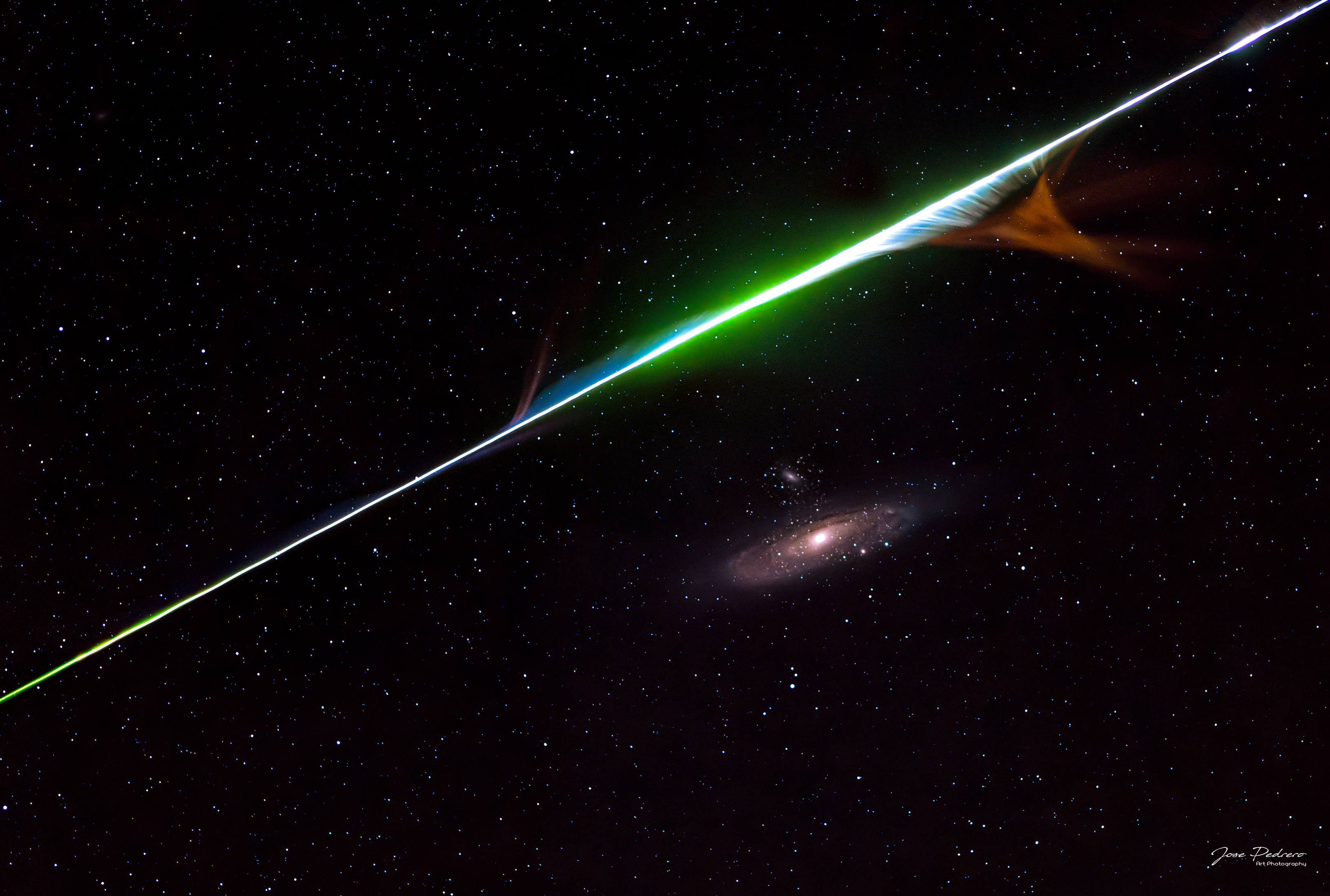
それは宇宙からやってきた。この場合、砂粒ほどの大きさの彗星の核の破片は、何年も前に太陽を周回していたスウィフト・タットル彗星から放出されたものと思われるが、その後は単独で太陽の周りを周回し続けた。地球がこの軌道を横切ったとき、この彗星の破片が地球の大気に衝突し、流星として観測された。この流星は劣化し、構成元素が発する色で光るガスを放出した。掲載されている画像は先週、スペインのカスティーリャ・ラ・マンチャでペルセウス座流星群のピークの夜に撮影された。絵のように美しい流星の筋は、アンドロメダ銀河も写っている50枚のフレームのうち唯一のフレームに偶然写っていた。フレームには星が点在しており、それぞれが流星よりもはるかに遠くにある。星と比べると、アンドロメダ銀河(M31)はやはりはるかに遠くにある。
原文(English)
It came from outer space. It -- in this case a sand-sized bit of a comet nucleus -- was likely ejected many years ago from Sun-orbiting Comet Swift-Tuttle, but then continued to orbit the Sun alone. When the Earth crossed through this orbit, the piece of comet debris impacted the atmosphere of our fair planet and was seen as a meteor. This meteor deteriorated, causing gases to be emitted that glowed in colors emitted by its component elements. The featured image was taken last week from Castilla La Mancha, Spain, during the peak night of the Perseids meteor shower. The picturesque meteor streak happened to appear in the only one of 50 frames that also included the Andromeda galaxy. Stars dot the frame, each much further away than the meteor. Compared to the stars, the Andromeda galaxy (M31) is, again, much further away.
\ この感動を宇宙仲間にシェア /
宇宙をXでシェア
© Jose Pedrero / APOD