
🚀 宇宙の記憶・カレンダー検索
🚀 象徴的な写真:
APOD第1回
🚀 創造の柱
🚀 スピリット火星着陸
🚀 ハッブル超深宇宙
🚀 地球へようこそ|ブルー・マーブル
🚀 エンケラドス
🚀 ベテルギウス
🚀 火星着陸
🚀 青い夕焼け
🚀 冥王星のハート
🚀 皆既日食
🚀 アースライズ再構築
🚀 ブラックホール
🚀 ウェッブ初画像
🚀 アポロ11着陸
APOD30周年(2025年6月16日)
シュワスマン・ワハマン彗星 3 の破片
Comet Schwassmann-Wachmann 3 Fragments
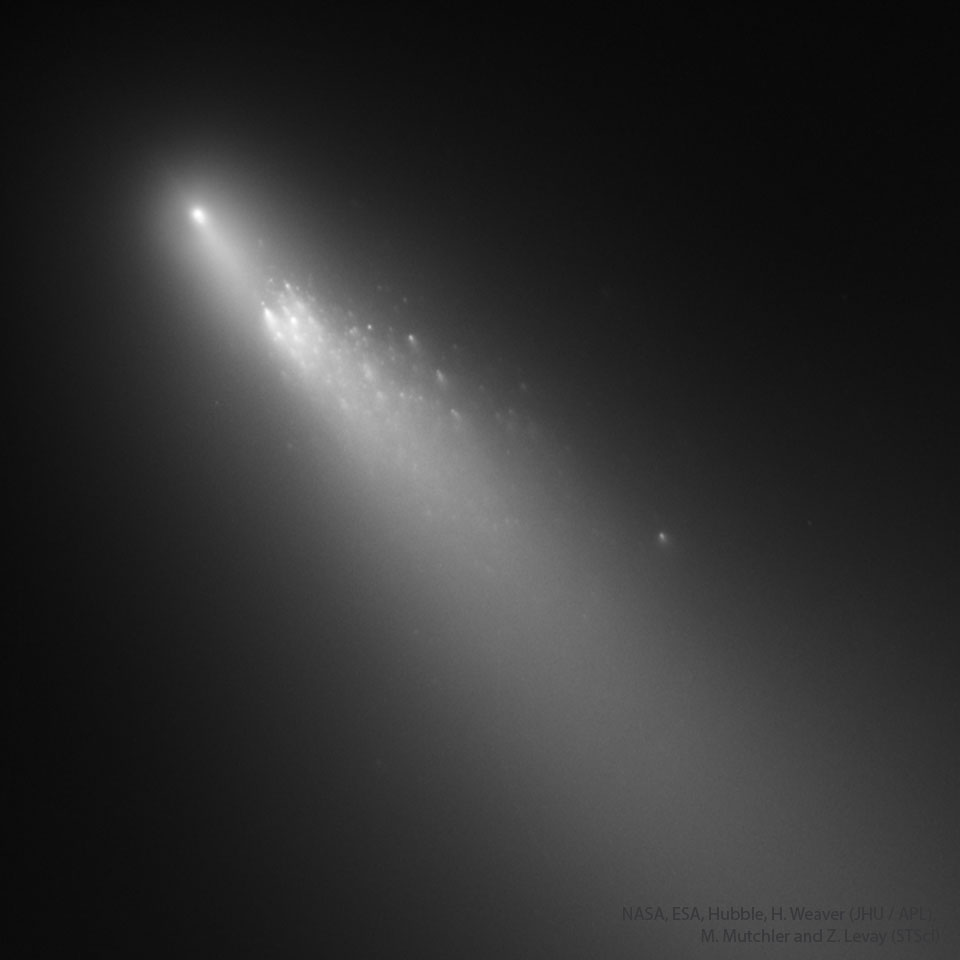
周期彗星73P/シュワスマン・ヴァハマン3は、少なくとも2回分裂している。初期の太陽系から残された氷と塵の宇宙のスフレであるこの彗星は、1995年に軌道が地球に接近した際に、いくつかの大きな破片に分裂することが初めて観測された。しかし、2006年の通過時には、数十個の破片に崩壊し、空に数度にわたって広がった。彗星は比較的壊れやすいため、例えば熱、重力、ガス放出によるストレスが、高温の太陽に近づく際に、このような劇的な方法で分裂する傾向の原因となっている可能性がある。ハッブル宇宙望遠鏡は2006年に、多数の小さな破片を引き連れた、特徴的な鮮明な破片Bを記録した。それぞれの破片には独自の彗星のコマと尾がある。この画像は、地球から3200万キロメートル離れた彗星から3000キロメートル以上にわたって広がっている。
原文(English)
Periodic comet 73P/Schwassmann-Wachmann 3 has broken up at least twice. A cosmic souffle of ice and dust left over from the early solar system, this comet was first seen to split into several large pieces during the close-in part of its orbit in 1995. However, in the 2006 passage, it disintegrated into dozens of fragments that stretched several degrees across the sky. Since comets are relatively fragile, stresses from heat, gravity and outgassing, for example, could be responsible for their tendency to break up in such a spectacular fashion when they near the hot Sun. The Hubble Space Telescope recorded, in 2006, the featured sharp view of prolific Fragment B, itself trailing a multitude of smaller pieces, each with its own cometary coma and tail. The picture spans over 3,000 kilometers at the comet's distance of 32 million kilometers from planet Earth.
\ この感動を宇宙仲間にシェア /
宇宙をXでシェア
© NASA / APOD