
🚀 宇宙の記憶・カレンダー検索
🚀 象徴的な写真:
APOD第1回
🚀 創造の柱
🚀 スピリット火星着陸
🚀 ハッブル超深宇宙
🚀 地球へようこそ|ブルー・マーブル
🚀 エンケラドス
🚀 ベテルギウス
🚀 火星着陸
🚀 青い夕焼け
🚀 冥王星のハート
🚀 皆既日食
🚀 アースライズ再構築
🚀 ブラックホール
🚀 ウェッブ初画像
🚀 アポロ11着陸
APOD30周年(2025年6月16日)
翻訳エラー: Exception: 1 日にサービス translate を実行した回数が多すぎます。
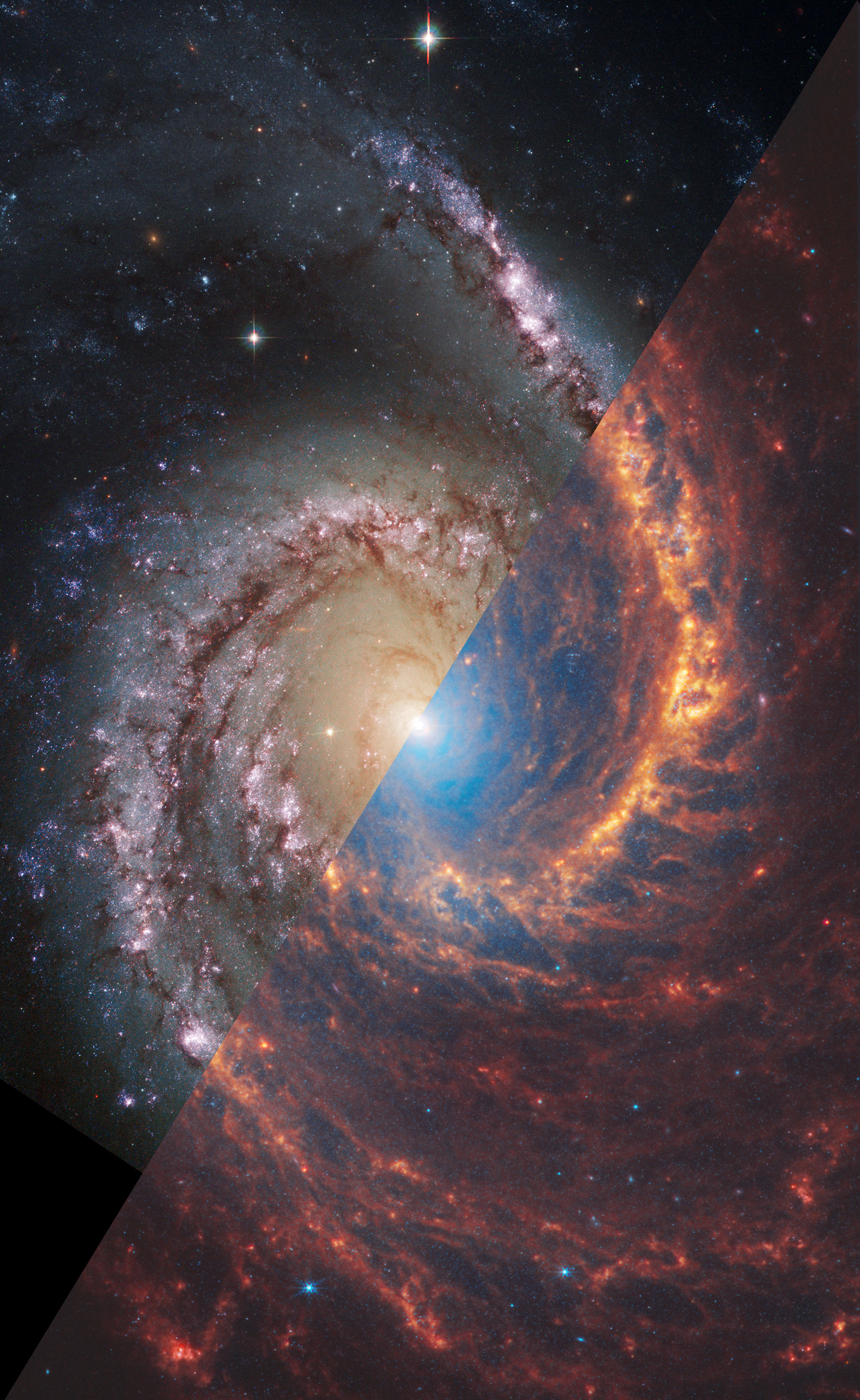
NGC 1566: A Spiral Galaxy from Webb and Hubble
翻訳エラー: Exception: 1 日にサービス translate を実行した回数が多すぎます。
原文(English)
What's different about this galaxy? Very little, which makes the Spanish Dancer galaxy, NGC 1566, one of the most typical and photogenic spirals on the sky. There is something different about this galaxy image, though, because it is a diagonal combination of two images: one by the Hubble Space Telescope on the upper left, and the other by the James Webb Space Telescope on the lower right. The Hubble image was taken in ultraviolet light and highlights the locations of bright blue stars and dark dust along the galaxy's impressive spiral arms. In contrast, the Webb image was taken in infrared light and highlights where the same dust emits more light than it absorbed. In the rollover image, the other two sides of these images are revealed. Blinking between the two images shows which stars are particularly hot because they glow brighter in ultraviolet light, and the difference between seemingly empty space and infrared-glowing dust. Image Crunching Opportunity: Take NASA's Astrophoto Challenge
\ この感動を宇宙仲間にシェア /
宇宙をXでシェア
©
NASA,
ESA,
CSA,
STScI,
J. Lee (STScI),
T. Williams (Oxford),
R. Chandar (UToledo),
D. Calzetti (UMass),
PHANGS Team
/ APOD