
🚀 宇宙の記憶・カレンダー検索
🚀 象徴的な写真:
APOD第1回
🚀 創造の柱
🚀 スピリット火星着陸
🚀 ハッブル超深宇宙
🚀 地球へようこそ|ブルー・マーブル
🚀 エンケラドス
🚀 ベテルギウス
🚀 火星着陸
🚀 青い夕焼け
🚀 冥王星のハート
🚀 皆既日食
🚀 アースライズ再構築
🚀 ブラックホール
🚀 ウェッブ初画像
🚀 アポロ11着陸
APOD30周年(2025年6月16日)
翻訳エラー: Exception: 1 日にサービス translate を実行した回数が多すぎます。
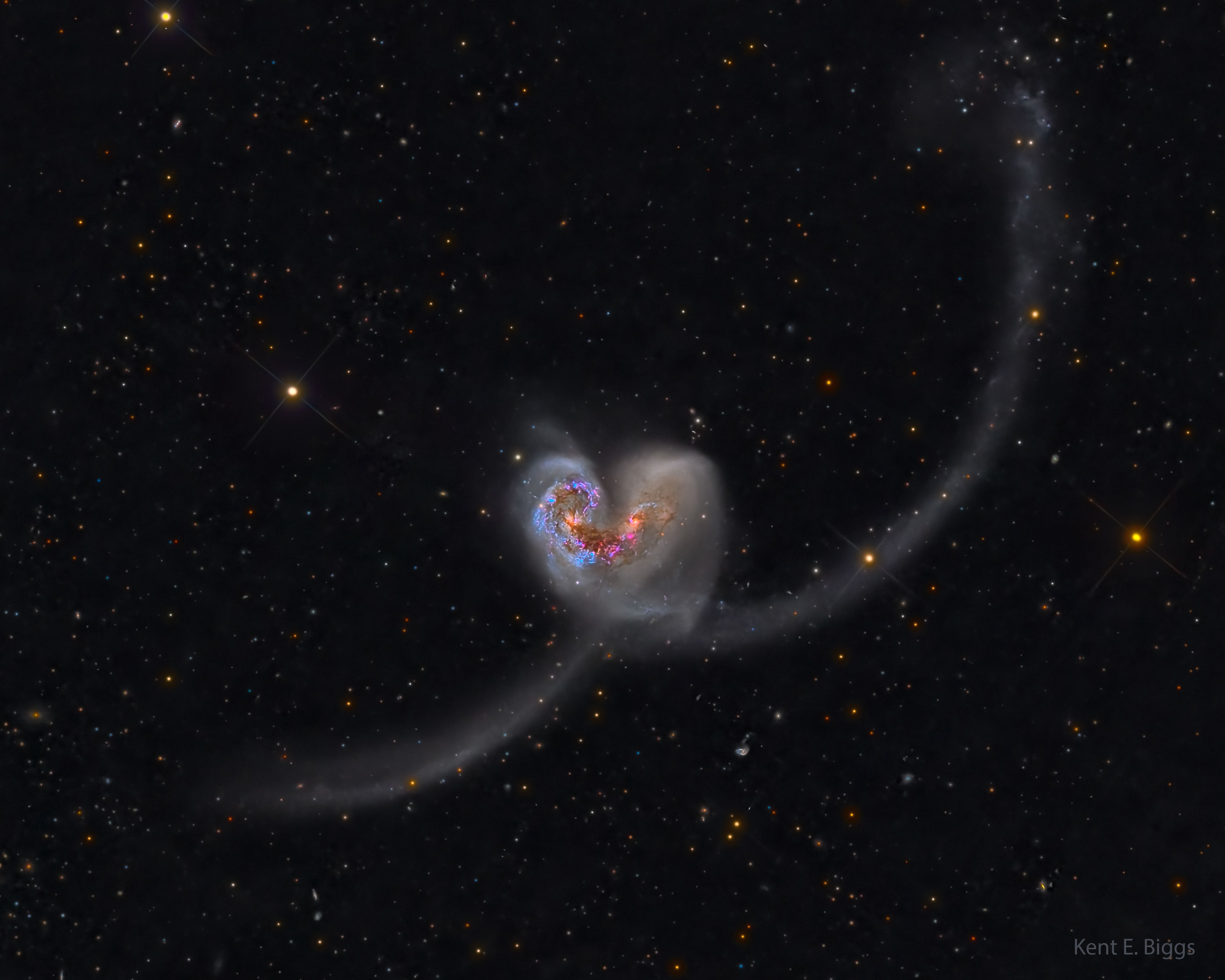
The Heart Shaped Antennae Galaxies
翻訳エラー: Exception: 1 日にサービス translate を実行した回数が多すぎます。
原文(English)
Are these two galaxies really attracted to each other? Yes, gravitationally, and the result appears as an enormous iconic heart -- at least for now. Pictured is the pair of galaxies cataloged as NGC 4038 and NGC 4039,known as the Antennae Galaxies. Because they are only 60 million light years away, close by intergalactic standards, the pair is one of the best studied interacting galaxies on the night sky. Their strong attraction began about a billion years ago when they passed unusually close to each other. As the two galaxies interact, their stars rarely collide, but new stars are formed when their interstellar gases crash together. Some new stars have already formed, for example, in the long antennae seen extending out from the sides of the dancing duo. By the time the galaxy merger is complete, likely over a billion years from now, billions of new stars may have formed. Open Science: Browse 3,300+ codes in the Astrophysics Source Code Library
\ この感動を宇宙仲間にシェア /
宇宙をXでシェア
©
Kent E. Biggs
/ APOD