
🚀 宇宙の記憶・カレンダー検索
🚀 象徴的な写真:
APOD第1回
🚀 創造の柱
🚀 スピリット火星着陸
🚀 ハッブル超深宇宙
🚀 地球へようこそ|ブルー・マーブル
🚀 エンケラドス
🚀 ベテルギウス
🚀 火星着陸
🚀 青い夕焼け
🚀 冥王星のハート
🚀 皆既日食
🚀 アースライズ再構築
🚀 ブラックホール
🚀 ウェッブ初画像
🚀 アポロ11着陸
APOD30周年(2025年6月16日)
クネティツェ城上空のオルバース彗星
Comet Olbers over Kunetice Castle
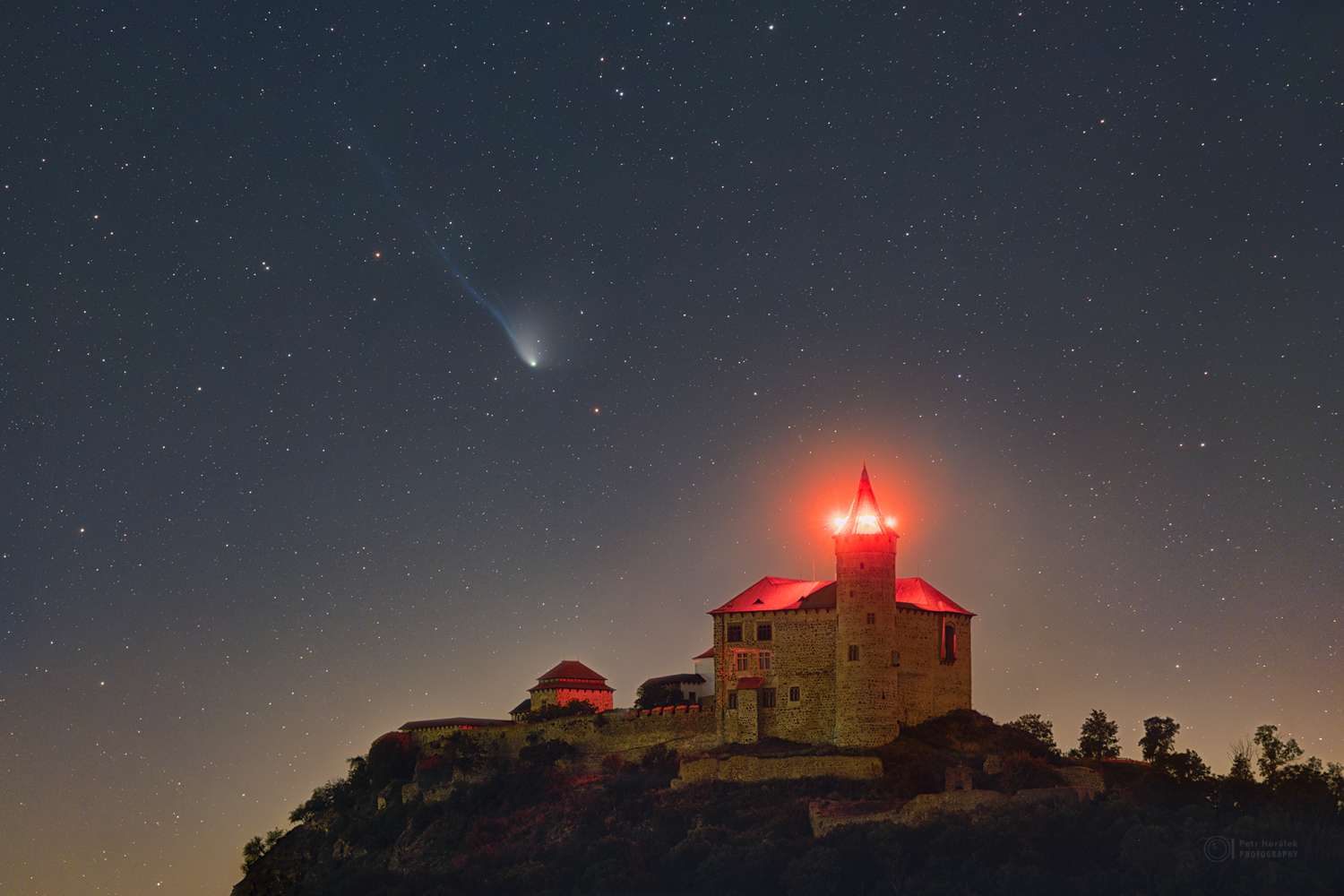
約70年ごとに太陽系内側を訪れる彗星13P/オルバースは、6月30日に直近の近日点、つまり太陽への最接近点に達しました。現在、遠く離れたオールトの雲への帰還の旅にあるこのハレー型彗星は、チェコ共和国の歴史的なクネティツェ城の上空を夏の夜空を横切る様子がここに記録されています。彗星と空の追跡露光を合成した画像には、太陽からの嵐や風に翻弄される彗星の広い塵の尾、より明るいコマ、長いイオンの尾が写っており、前景の風景は固定露光で撮影されています。この画像は7月28日に撮影されました。彗星は城から約16光分離れたところにあり、北天の星座であるおおぐま座の下のかすかな背景の星々を背に見えています。丘の上の城は15世紀に建てられたもので、ハインリヒ・オルバースが彗星を発見したのは1815年のことです。日没直後の北西の空低くに捉えられたこの写真のオルバース彗星は、今のところ地球上の天文ファンに望遠鏡や双眼鏡で楽しめる素晴らしい眺めを提供しています。13P/オルバース彗星の次の近日点通過は2094年です。
原文(English)
A visitor to the inner solar system every 70 years or so, Comet 13P/Olbers reached its most recent perihelion, or closest approach to the Sun, on June 30. Now on a return voyage to the distant Oort Cloud, the Halley-type comet is recorded here sweeping through northern summer night skies over historic Kunetice Castle, Czech Republic. The composite of tracked exposures for comet and sky, showing the comet's broad dust tail, brighter coma, and long ion tail buffeted by storms and winds from the Sun, and fixed exposures for foreground landscape was recorded on July 28. The comet is about 16 light-minutes beyond the castle and seen against faint background stars below the northern constellation Ursa Major. The hilltop castle dates to the 15th century, while Heinrich Olbers discovered the comet in 1815. Captured here low in northwestern skies just after sunset Comet Olbers, for now, offers skywatchers on planet Earth rewarding telescopic and binocular views. Comet 13P/Olbers' next perihelion passage will be in 2094.
\ この感動を宇宙仲間にシェア /
宇宙をXでシェア
© Petr Horálek / APOD