
🚀 宇宙の記憶・カレンダー検索
🚀 象徴的な写真:
APOD第1回
🚀 創造の柱
🚀 スピリット火星着陸
🚀 ハッブル超深宇宙
🚀 地球へようこそ|ブルー・マーブル
🚀 エンケラドス
🚀 ベテルギウス
🚀 火星着陸
🚀 青い夕焼け
🚀 冥王星のハート
🚀 皆既日食
🚀 アースライズ再構築
🚀 ブラックホール
🚀 ウェッブ初画像
🚀 アポロ11着陸
APOD30周年(2025年6月16日)
スコーピウスのダークタワー
The Dark Tower in Scorpius
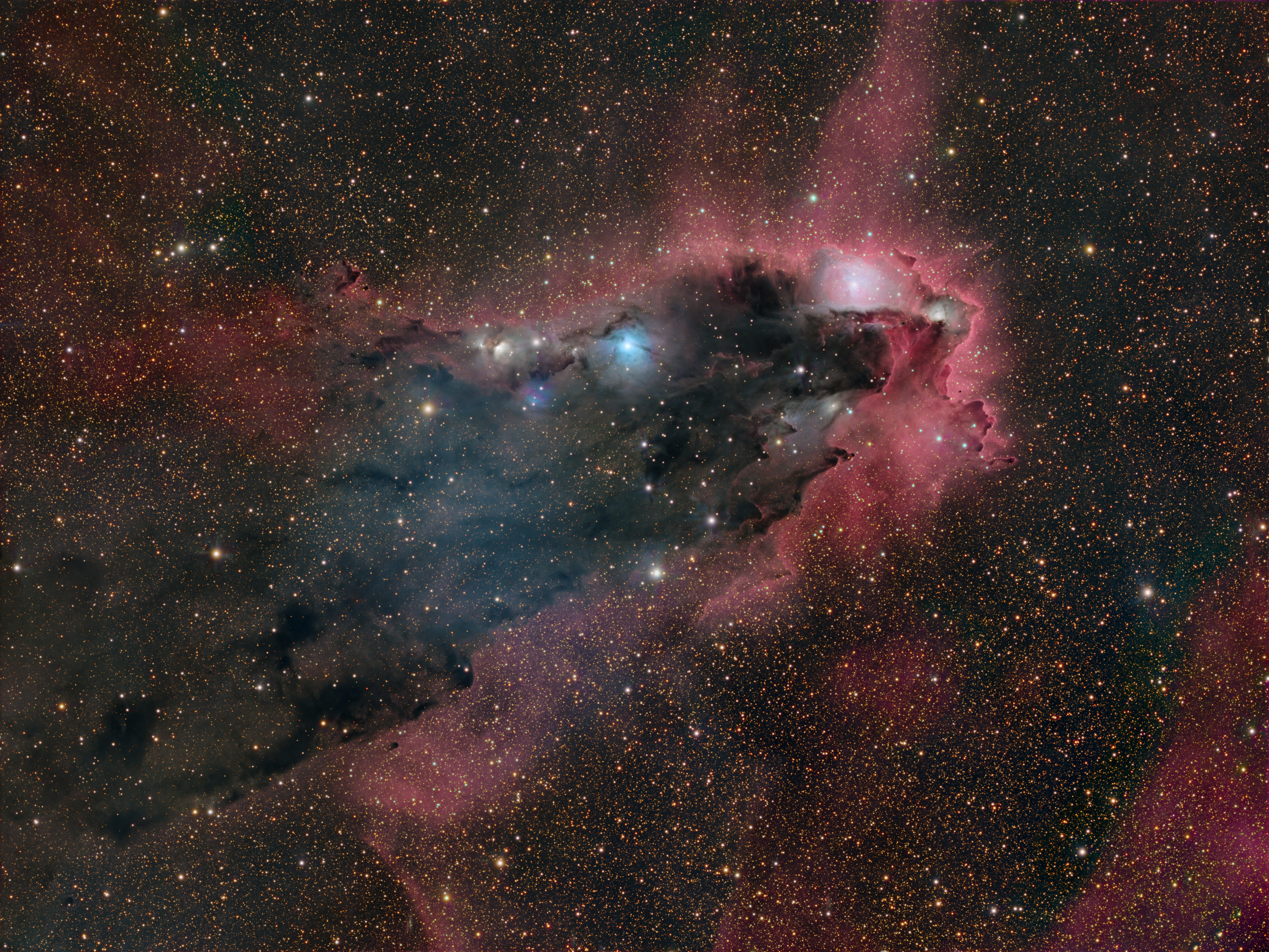
さそり座の尾に沿って密集した星野を背景にシルエットとなって浮かび上がるこの塵に覆われた宇宙雲は、不気味な暗黒の塔を連想させる。実際、この美しい望遠鏡像に映し出された暗黒星雲の中には、巨大な塵と分子ガスの塊が崩壊して星を形成している可能性がある。この星雲は、約40光年にわたって広がっている。彗星の球状体であるこの後退した雲は、画面右上隅にあるNGC 6231のOBアソシエーションの非常に高温の星々からの強烈な紫外線放射によって形作られている。この強力な紫外線は、球状体の境界にある水素ガスの赤みがかった輝きも生み出している。塵の中に埋め込まれた高温の星は、青みがかった反射星雲として見ることができる。この暗黒の塔とそれに付随する星雲は、地球から約5000光年離れている。ギャラリー:2024年8月に月が土星を食する
原文(English)
In silhouette against a crowded star field along the tail of the arachnological constellation Scorpius, this dusty cosmic cloud evokes for some the image of an ominous dark tower. In fact, monstrous clumps of dust and molecular gas collapsing to form stars may well lurk within the dark nebula, a structure that spans almost 40 light-years across this gorgeous telescopic portrait. A cometary globule, the swept-back cloud is shaped by intense ultraviolet radiation from the OB association of very hot stars in NGC 6231, off the upper right corner of the scene. That energetic ultraviolet light also powers the globule's bordering reddish glow of hydrogen gas. Hot stars embedded in the dust can be seen as bluish reflection nebulae. This dark tower and associated nebulae are about 5,000 light-years away. Growing Gallery: Moon Eclipses Saturn in August 2024
\ この感動を宇宙仲間にシェア /
宇宙をXでシェア
© Mike Selby / APOD