
🚀 宇宙の記憶・カレンダー検索
🚀 象徴的な写真:
APOD第1回
🚀 創造の柱
🚀 スピリット火星着陸
🚀 ハッブル超深宇宙
🚀 地球へようこそ|ブルー・マーブル
🚀 エンケラドス
🚀 ベテルギウス
🚀 火星着陸
🚀 青い夕焼け
🚀 冥王星のハート
🚀 皆既日食
🚀 アースライズ再構築
🚀 ブラックホール
🚀 ウェッブ初画像
🚀 アポロ11着陸
APOD30周年(2025年6月16日)
超新星残骸 CTA 1
Supernova Remnant CTA 1
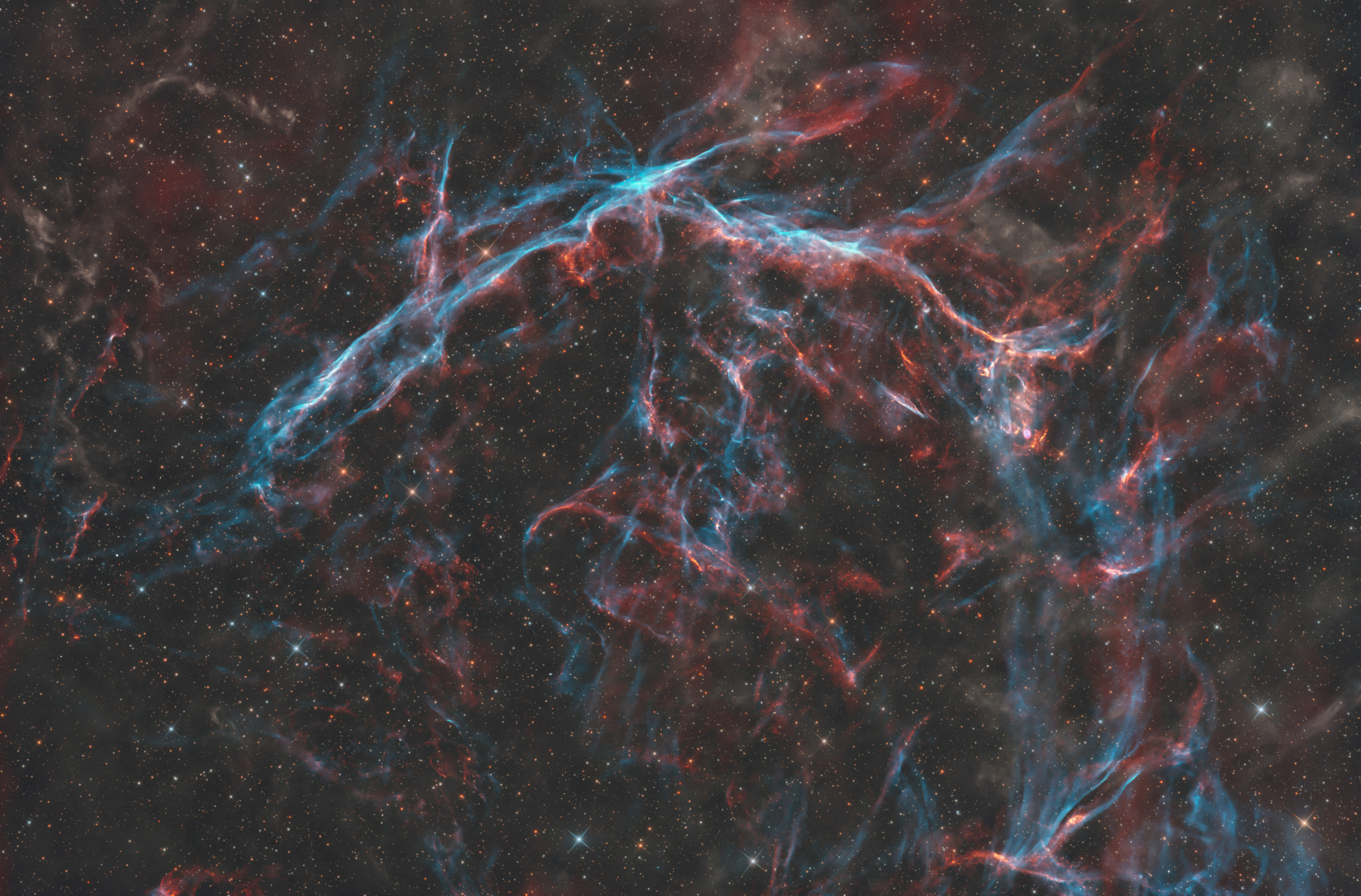
CTA 1 の中心には静かなパルサーがあります。この超新星残骸は、1960 年に天文学者によって電波波長での放射源として発見され、その後、大質量星の死の爆発の結果であると特定されました。しかし、予想されていたパルサー、つまり大質量星の崩壊した中心核の回転する中性子星残骸からは、電波パルスは検出されませんでした。最初の超新星爆発から約 1 万年後に観測された星間残骸の雲は、可視光波長ではかすかです。この深宇宙望遠鏡画像では、まだ膨張している衝撃波面からの CTA 1 の可視波長放射が明らかになっています。この画像は、北天のケフェウス座の星野を約 2 度にわたって捉えたものです。その後、電波波長ではパルサーは発見されていませんが、2008 年にフェルミ ガンマ線宇宙望遠鏡が CTA 1 からのパルス放射を検出し、超新星残骸の回転する中性子星を特定しました。この天体は、電波波長では静穏だが高エネルギーのガンマ線をパルス状に放出する、増加傾向にあるパルサーの最初の例として認識されている。
原文(English)
There is a quiet pulsar at the heart of CTA 1. The supernova remnant was discovered as a source of emission at radio wavelengths by astronomers in 1960 and since identified as the result of the death explosion of a massive star. But no radio pulses were detected from the expected pulsar, the rotating neutron star remnant of the massive star's collapsed core. Seen about 10,000 years after the initial supernova explosion, the interstellar debris cloud is faint at optical wavelengths. CTA 1's visible wavelength emission from still expanding shock fronts is revealed in this deep telescopic image, a frame that spans about 2 degrees across a starfield in the northern constellation of Cepheus. While no pulsar has since been found at radio wavelengths, in 2008 the Fermi Gamma-ray Space Telescope detected pulsed emission from CTA 1, identifying the supernova remnant's rotating neutron star. The source has been recognized as the first in a growing class of pulsars that are quiet at radio wavelengths but pulse in high-energy gamma-rays.
\ この感動を宇宙仲間にシェア /
宇宙をXでシェア
© Thomas Lelu / APOD