
🚀 宇宙の記憶・カレンダー検索
🚀 象徴的な写真:
APOD第1回
🚀 創造の柱
🚀 スピリット火星着陸
🚀 ハッブル超深宇宙
🚀 地球へようこそ|ブルー・マーブル
🚀 エンケラドス
🚀 ベテルギウス
🚀 火星着陸
🚀 青い夕焼け
🚀 冥王星のハート
🚀 皆既日食
🚀 アースライズ再構築
🚀 ブラックホール
🚀 ウェッブ初画像
🚀 アポロ11着陸
APOD30周年(2025年6月16日)
若い星団NGC 1333
Young Star Cluster NGC 1333
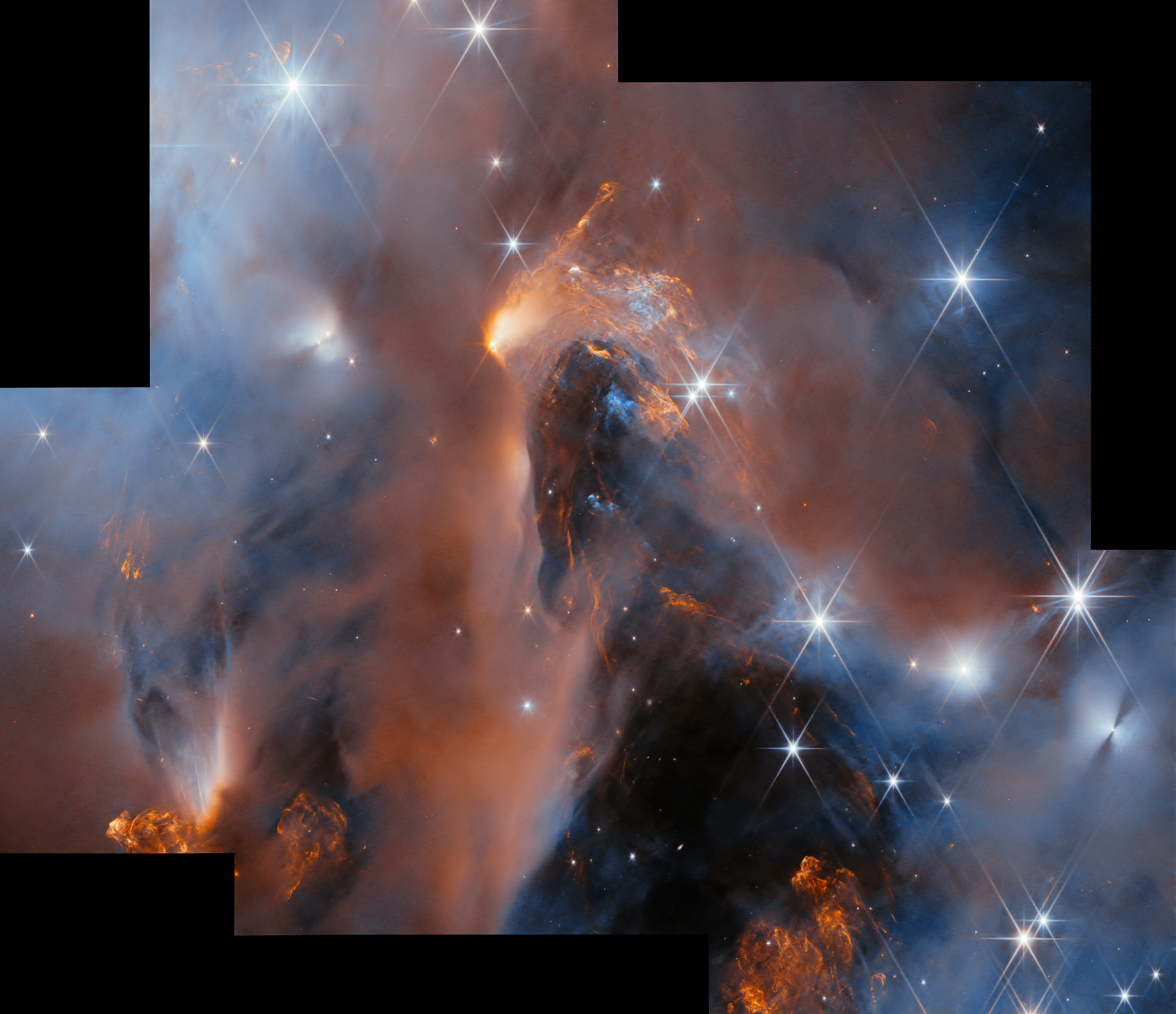
ジェームズ・ウェッブ宇宙望遠鏡によるこの壮大なモザイク画像は、若い星団NGC 1333の中心部を覗き込んでいる。英雄的なペルセウス座の方向へわずか1,000光年離れたこの星団は、巨大なペルセウス分子雲の端に位置している。ウェッブ宇宙望遠鏡は、低質量褐色矮星や自由浮遊惑星を特定するためにこの領域を深く探査しており、その視野は塵に覆われた星団の激動する星形成領域を約2光年にわたって捉えている。実際、NGC 1333には100万年未満の星が存在することが知られているが、そのほとんどは広範囲に広がる星間塵によって光学望遠鏡では見えない。この混沌とした環境は、45億年以上前に私たちの太陽が形成された環境に似ている可能性がある。
原文(English)
This spectacular mosaic of images from the James Webb Space Telescope peers into the heart of young star cluster NGC 1333. A mere 1,000 light-years distant toward the heroic constellation Perseus, the nearby star cluster lies at the edge of the large Perseus molecular cloud. Part of Webb's deep exploration of the region to identify low mass brown dwarf stars and free floating planets, the space telescope's combined field of view spans nearly 2 light-years across the dusty cluster's turbulent stellar nursery. In fact, NGC 1333 is known to harbor stars less than a million years old, though most are hidden from optical telescopes by the pervasive stardust. The chaotic environment may be similar to one in which our own Sun formed over 4.5 billion years ago.
\ この感動を宇宙仲間にシェア /
宇宙をXでシェア
© NASA / APOD