
🚀 宇宙の記憶・カレンダー検索
🚀 象徴的な写真:
APOD第1回
🚀 創造の柱
🚀 スピリット火星着陸
🚀 ハッブル超深宇宙
🚀 地球へようこそ|ブルー・マーブル
🚀 エンケラドス
🚀 ベテルギウス
🚀 火星着陸
🚀 青い夕焼け
🚀 冥王星のハート
🚀 皆既日食
🚀 アースライズ再構築
🚀 ブラックホール
🚀 ウェッブ初画像
🚀 アポロ11着陸
APOD30周年(2025年6月16日)
オーロラ・オーストラリスと国際宇宙ステーション
Aurora Australis and the International Space Station
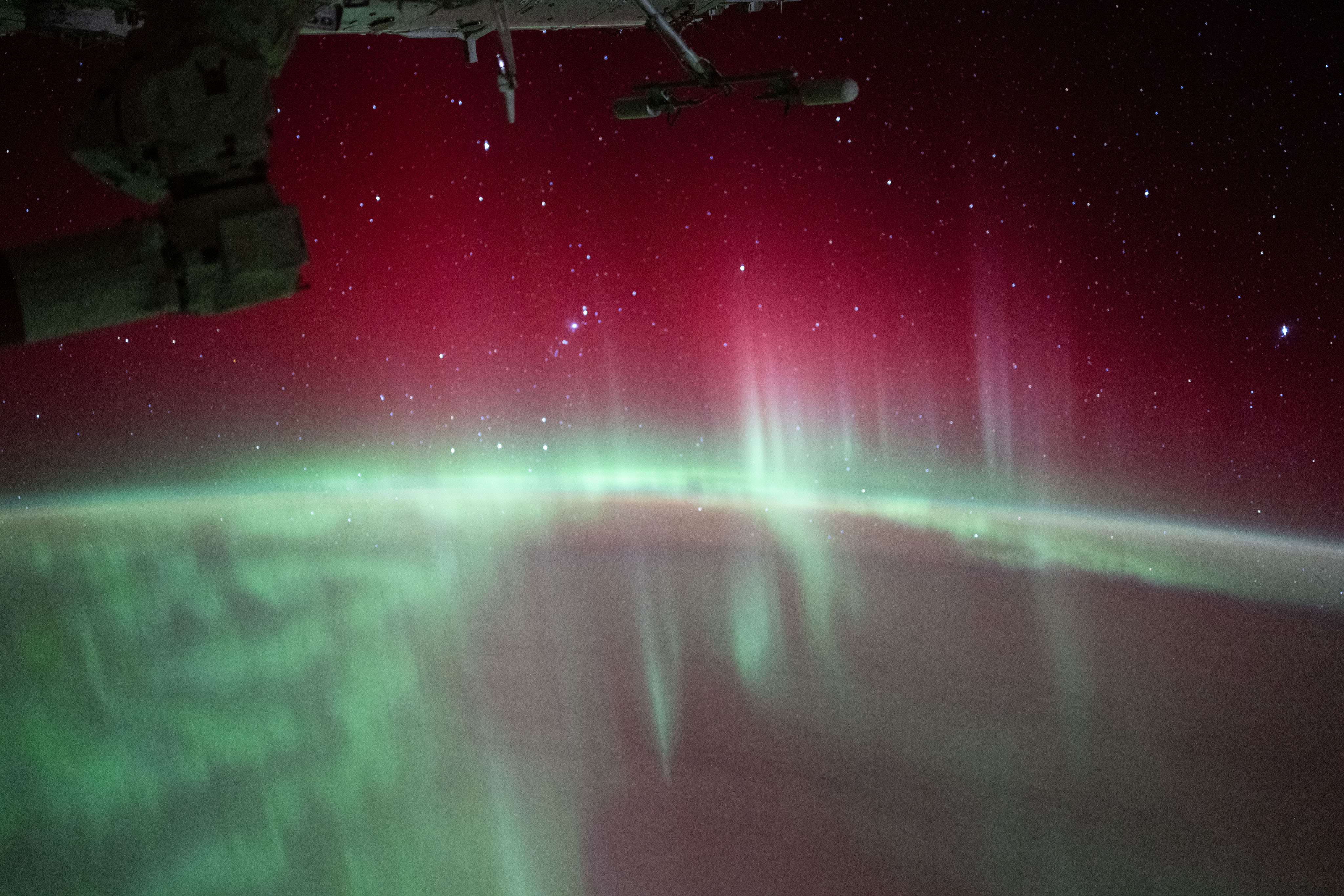
国際宇宙ステーションから撮影されたこの写真は、8月11日に地球南半球のインド洋上空約430キロメートルを周回中に撮影されました。この壮大な眺めは、南東方向、地球の地平線に向かって、赤と緑のオーロラのカーテンを通して見渡せます。オーロラの光は、周回する宇宙ステーションの高度にまだ存在する極めて希薄な上層大気中の励起された酸素原子からの発光によって引き起こされます。高度100~250キロメートルでは原子状酸素からの緑色の発光が支配的ですが、原子状酸素からの赤色の発光は高度500キロメートルまで達することがあります。これらの南半球の光の輝きの向こうには、地球低軌道からのこの眺めが南半球の視点から見た星空を明らかにしています。オリオン座の三つ星とオリオン大星雲は、地球の縁のすぐ左中央付近にあります。おおいぬ座のアルファ星であり、地球の夜空で最も明るい星であるシリウスは、南半球の軌道上の空の景色の右端に沿って中央より上にあります。空を見上げる:国際月観測夜
原文(English)
This snapshot from the International Space Station was taken on August 11 while orbiting about 430 kilometers above the Indian Ocean, Southern Hemisphere, planet Earth. The spectacular view looks south and east, down toward the planet's horizon and through red and green curtains of aurora australis. The auroral glow is caused by emission from excited oxygen atoms in the extremely rarefied upper atmosphere still present at the level of the orbiting outpost. Green emission from atomic oxygen dominates this scene at altitudes of 100 to 250 kilometers, while red emission from atomic oxygen can extend as high as 500 kilometers altitude. Beyond the glow of these southern lights, this view from low Earth orbit reveals the starry sky from a southern hemisphere perspective. Stars in Orion's belt and the Orion Nebula are near the Earth's limb just left of center. Sirius, alpha star of Canis Major and brightest star in planet Earth's night is above center along the right edge of the southern orbital skyscape. Looking Up: International Observe the Moon Night
\ この感動を宇宙仲間にシェア /
宇宙をXでシェア
© NASA / APOD