
🚀 宇宙の記憶・カレンダー検索
🚀 象徴的な写真:
APOD第1回
🚀 創造の柱
🚀 スピリット火星着陸
🚀 ハッブル超深宇宙
🚀 地球へようこそ|ブルー・マーブル
🚀 エンケラドス
🚀 ベテルギウス
🚀 火星着陸
🚀 青い夕焼け
🚀 冥王星のハート
🚀 皆既日食
🚀 アースライズ再構築
🚀 ブラックホール
🚀 ウェッブ初画像
🚀 アポロ11着陸
APOD30周年(2025年6月16日)
マクノート彗星の壮大な尾
The Magnificent Tail of Comet McNaught
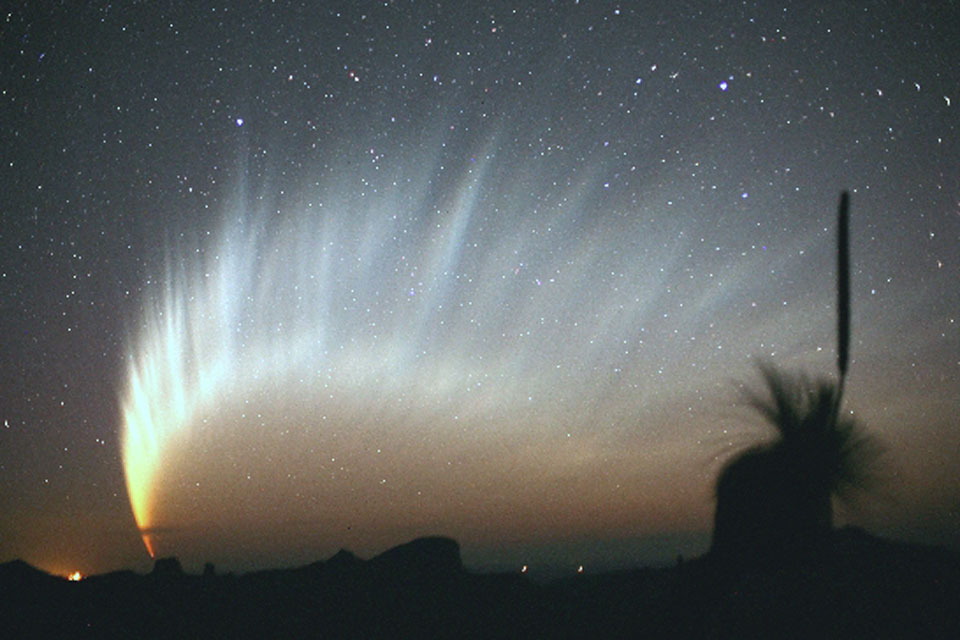
2007年の大彗星マクノート彗星は、驚くほど長くフィラメント状の尾を伸ばしました。この壮大な尾は空に広がり、南半球の観測者からは日没直後に数日間見ることができました。この驚くべきイオンの尾は、長時間広角カメラで撮影すると最大範囲を示しました。北半球の多くの観測者にとっても、尾自体が地平線のすぐ上に見える時もありました。最高光度が-5等級(マイナス5)に達したと推定される彗星C/2006 P1(マクノート)は、2007年1月にオーストラリアのサイディング・スプリング天文台から日没直後に彗星の発見者によって特集画像に捉えられました。数十年で最も明るい彗星であったマクノート彗星は、その後、南の空へと移動し、太陽と地球から遠ざかるにつれて暗くなっていきました。次の1か月間、2024年の大彗星の候補であるツチンシャン・アトラス彗星は、地球から見える最も壮大な尾を見せるはずです。
原文(English)
Comet McNaught, the Great Comet of 2007, grew a spectacularly long and filamentary tail. The magnificent tail spread across the sky and was visible for several days to Southern Hemisphere observers just after sunset. The amazing ion tail showed its greatest extent on long-duration, wide-angle camera exposures. During some times, just the tail itself was visible just above the horizon for many northern observers as well. Comet C/2006 P1 (McNaught), estimated to have attained a peak brightness of magnitude -5 (minus five), was caught by the comet's discoverer in the featured image just after sunset in January 2007 from Siding Spring Observatory in Australia. Comet McNaught, the brightest comet in decades, then faded as it moved further into southern skies and away from the Sun and Earth. Over the next month, Comet Tsuchinshan–ATLAS, a candidate for the Great Comet of 2024, should display its most spectacular tails visible from the Earth.
\ この感動を宇宙仲間にシェア /
宇宙をXでシェア
© Robert H. McNaught / APOD