
🚀 宇宙の記憶・カレンダー検索
🚀 象徴的な写真:
APOD第1回
🚀 創造の柱
🚀 スピリット火星着陸
🚀 ハッブル超深宇宙
🚀 地球へようこそ|ブルー・マーブル
🚀 エンケラドス
🚀 ベテルギウス
🚀 火星着陸
🚀 青い夕焼け
🚀 冥王星のハート
🚀 皆既日食
🚀 アースライズ再構築
🚀 ブラックホール
🚀 ウェッブ初画像
🚀 アポロ11着陸
APOD30周年(2025年6月16日)
UGC 1810:ハッブル宇宙望遠鏡が捉えた激しく相互作用する銀河
UGC 1810: Wildly Interacting Galaxy from Hubble
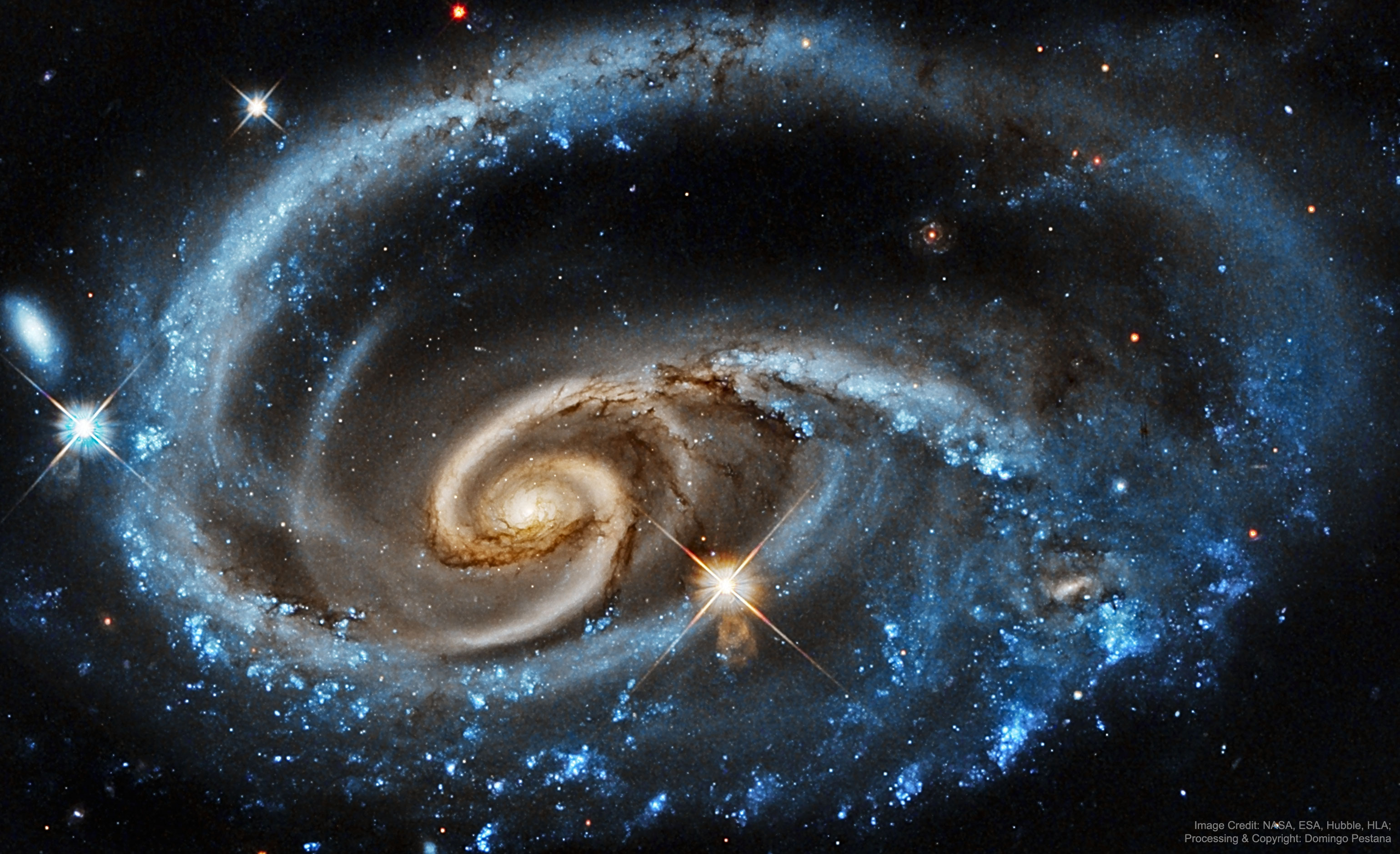
この渦巻銀河に何が起こっているのでしょうか?詳細は不明ですが、間違いなく、より小さな隣の銀河との絶え間ない衝突に関係しています。この銀河は単独ではUGC 1810と呼ばれていますが、衝突相手と合わせてArp 273として知られています。UGC 1810の全体的な形状、特に青い外側のリングは、激しい重力相互作用の結果であると考えられます。このリングの青色は、過去数百万年で形成された青く高温の巨大な星によるものです。内側の銀河はより古く、赤みを帯びており、冷たいフィラメント状の塵が走っています。UGC 1810とは関係のない明るい星がいくつか前景によく見え、背景にはいくつかの銀河がよく見えます。Arp 273はアンドロメダ座の方向に約3億光年離れたところにあります。 UGC 1810は今後10億年かけて銀河の仲間を飲み込み、典型的な渦巻き銀河の形に落ち着く可能性が非常に高い。
原文(English)
What's happening to this spiral galaxy? Although details remain uncertain, it surely has to do with an ongoing battle with its smaller galactic neighbor. The featured galaxy is labelled UGC 1810 by itself, but together with its collisional partner is known as Arp 273. The overall shape of UGC 1810 -- in particular its blue outer ring -- is likely a result of wild and violent gravitational interactions. This ring's blue color is caused by massive stars that are blue hot and have formed only in the past few million years. The inner galaxy appears older, redder, and threaded with cool filamentary dust. A few bright stars appear well in the foreground, unrelated to UGC 1810, while several galaxies are visible well in the background. Arp 273 lies about 300 million light years away toward the constellation of Andromeda. Quite likely, UGC 1810 will devour its galactic sidekick over the next billion years and settle into a classic spiral form.
\ この感動を宇宙仲間にシェア /
宇宙をXでシェア
© Domingo Pestana / APOD