
🚀 宇宙の記憶・カレンダー検索
🚀 象徴的な写真:
APOD第1回
🚀 創造の柱
🚀 スピリット火星着陸
🚀 ハッブル超深宇宙
🚀 地球へようこそ|ブルー・マーブル
🚀 エンケラドス
🚀 ベテルギウス
🚀 火星着陸
🚀 青い夕焼け
🚀 冥王星のハート
🚀 皆既日食
🚀 アースライズ再構築
🚀 ブラックホール
🚀 ウェッブ初画像
🚀 アポロ11着陸
APOD30周年(2025年6月16日)
宇宙から見たマニクアガン衝突クレーター
Manicouagan Impact Crater from Space
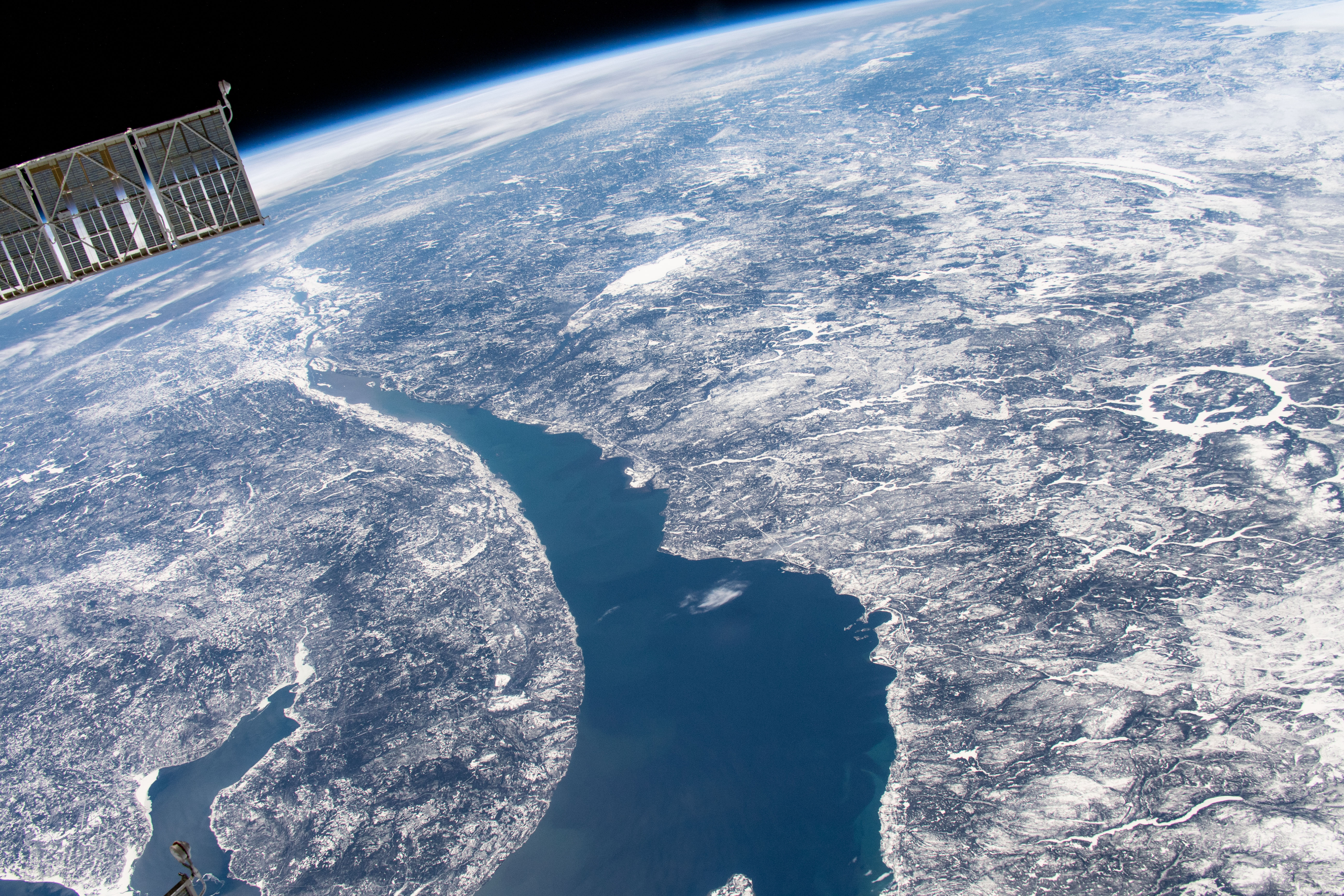
カナダのケベック上空400キロメートルを周回する国際宇宙ステーション第59次長期滞在クルーは、2019年4月11日に、広大なセントローレンス川と奇妙な円形のマニクアガン湖のこのスナップショットを撮影しました。中央右にある環状の湖は、直径100キロメートルの古代の衝突クレーターの浸食された残骸の中にある現代の貯水池です。この古代のクレーターは軌道上から非常に目立ち、地球が宇宙からの岩石に対して脆弱であることを視覚的に思い出させます。2億年以上前のマニクアガン・クレーターは、直径約5キロメートルの岩石天体の衝突によって形成されたと考えられています。現在、次の世紀に地球に衝突する可能性が高い小惑星は知られていません。NASAの惑星防衛調整室は毎月、地球近傍天体の接近に関する最新の数値や、地球に衝突する可能性のある彗星や小惑星に関するその他の事実を特集した更新情報を公開しています。
原文(English)
Orbiting 400 kilometers above Quebec, Canada, planet Earth, the International Space Station Expedition 59 crew captured this snapshot of the broad St. Lawrence River and curiously circular Lake Manicouagan on April 11, 2019. Right of center, the ring-shaped lake is a modern reservoir within the eroded remnant of an ancient 100 kilometer diameter impact crater. The ancient crater is very conspicuous from orbit, a visible reminder that Earth is vulnerable to rocks from space. Over 200 million years old, the Manicouagan crater was likely caused by the impact of a rocky body about 5 kilometers in diameter. Currently, there is no known asteroid with a significant probability of impacting Earth in the next century. Each month, NASA’s Planetary Defense Coordination Office releases an update featuring the most recent figures on near-Earth object close approaches, and other facts about comets and asteroids that could pose a potential impact hazard with Earth.
\ この感動を宇宙仲間にシェア /
宇宙をXでシェア
© NASA / APOD