
🚀 宇宙の記憶・カレンダー検索
🚀 象徴的な写真:
APOD第1回
🚀 創造の柱
🚀 スピリット火星着陸
🚀 ハッブル超深宇宙
🚀 地球へようこそ|ブルー・マーブル
🚀 エンケラドス
🚀 ベテルギウス
🚀 火星着陸
🚀 青い夕焼け
🚀 冥王星のハート
🚀 皆既日食
🚀 アースライズ再構築
🚀 ブラックホール
🚀 ウェッブ初画像
🚀 アポロ11着陸
APOD30周年(2025年6月16日)
白鳥、白鳥、ワシ
SWAN, Swan, Eagle
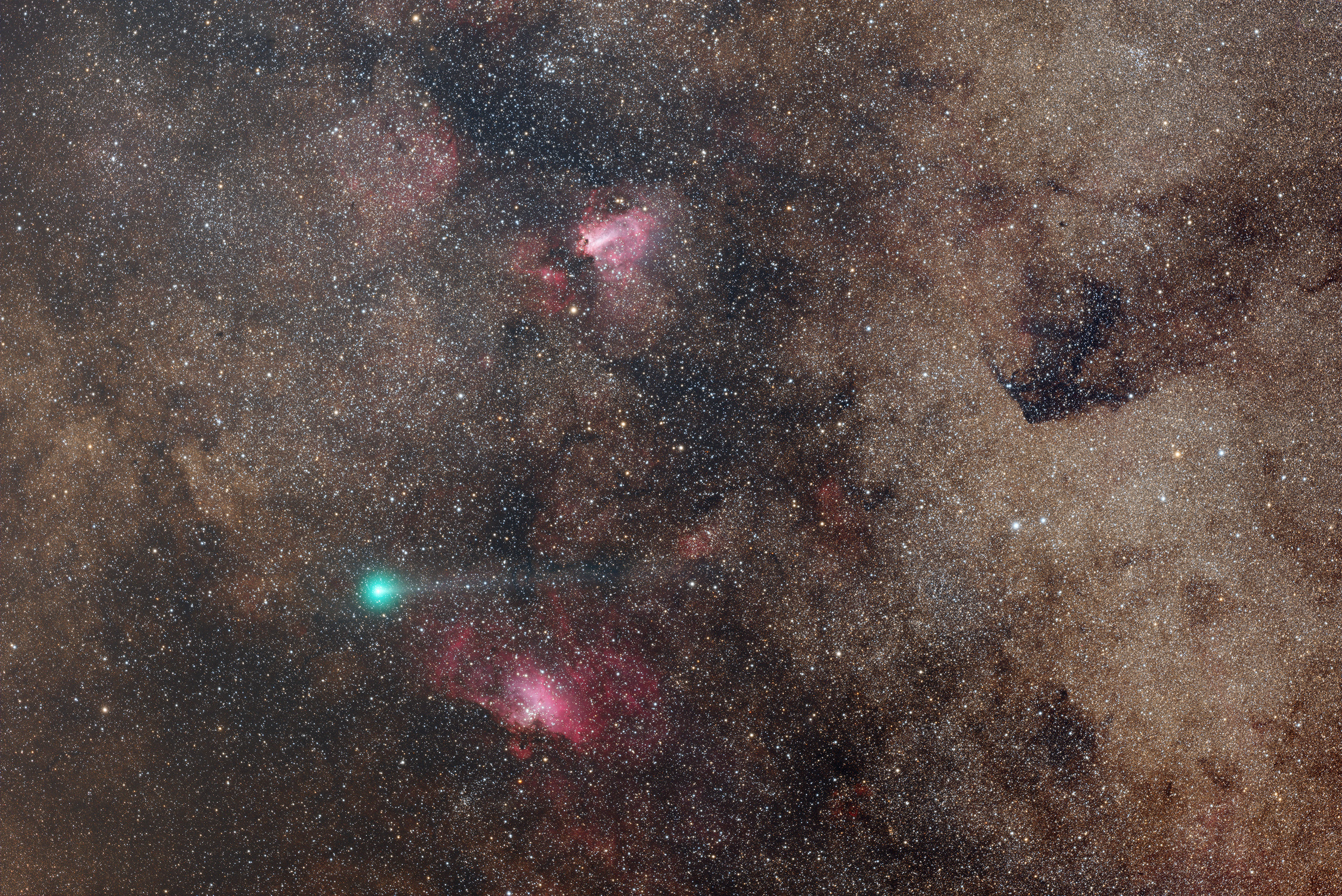
彗星 C/2025 R2 (SWAN) は、緑がかったコマとそれより淡い尾を持ち、10 月 17 日に望遠鏡で撮影された 7 度の視野では、星の集まりと塵の星間雲を背景に見えます。この日、太陽系内側に新たに訪れたこの彗星は、天の川の中心付近に見える他の 2 つの天体と仲良く並んでいました。フレームの下の方にあるメシエ 16 とメシエ 17 は、深宇宙観測者の間ではワシ星雲と白鳥星雲としても知られています。画像に記録された彗星のコマの緑がかった輝きは、太陽光で蛍光を発する二原子炭素ガスによるものですが、約 5,000 光年離れた星形成領域である星雲に見られる赤みがかった色合いは、電離水素ガスの特徴です。スワン彗星は現在地球から遠ざかっていますが、北半球の夕方の空、南の地平線近くを双眼鏡や小型望遠鏡で観測するには依然として良い彗星です。C/2025 R2(スワン彗星)は10月20日に地球に最も接近し、わずか2.2光分の距離でした。
原文(English)
Comet C/2025 R2 (SWAN) sports a greenish coma and fainter tail, seen against congeries of stars and dusty interstellar clouds in this 7 degree wide telescopic field of view from October 17. On that date, the new visitor to the inner Solar System obligingly posed with two other celestial birds seen toward the center of our Milky Way. Messier 16, near the bottom of the frame, and Messier 17 are also known to deep skywatchers as the Eagle and the Swan nebulae. While the comet coma's greenish glow recorded in the image is due to diatomic carbon gas fluorescing in sunlight, reddish hues seen in the nebulae, star forming regions some 5,000 light-years distant, are characteristic of ionized hydrogen gas. Comet SWAN is outbound now but still a good comet for binoculars and small telescopes that can look close to the southern horizon in the northern hemisphere's early evening skies. C/2025 R2 (SWAN) was closest to our fair planet on October 20, a mere 2.2 light-minutes away.
\ この感動を宇宙仲間にシェア /
宇宙をXでシェア
© Adam Block / APOD