
🚀 宇宙の記憶・カレンダー検索
🚀 象徴的な写真:
APOD第1回
🚀 創造の柱
🚀 スピリット火星着陸
🚀 ハッブル超深宇宙
🚀 地球へようこそ|ブルー・マーブル
🚀 エンケラドス
🚀 ベテルギウス
🚀 火星着陸
🚀 青い夕焼け
🚀 冥王星のハート
🚀 皆既日食
🚀 アースライズ再構築
🚀 ブラックホール
🚀 ウェッブ初画像
🚀 アポロ11着陸
APOD30周年(2025年6月16日)
3I/ATLAS:地球からの眺め
3I/ATLAS: A View from Planet Earth
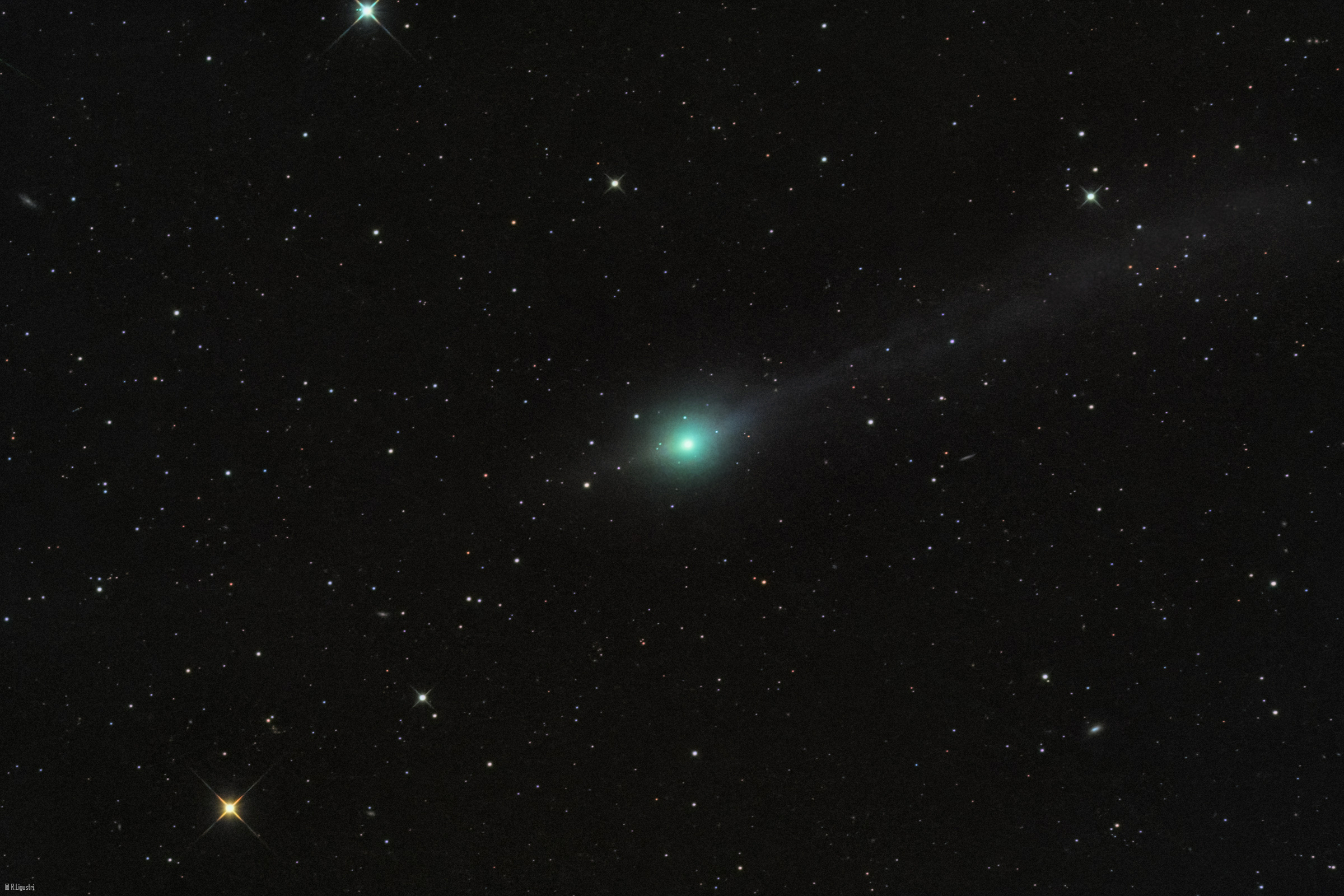
10月29日に近日点、つまり太陽に最も接近した後、現在太陽系外へ向かっている彗星3I/ATLASは、私たちの美しい太陽系を通過したことが知られている3番目の恒星間天体です。11月14日に小型望遠鏡で撮影された地球からのこの画像では、おとめ座の星々を背景に、その緑がかったコマとかすかな尾が見えます。しかし、この恒星間侵入者は、地球軌道から火星の表面、そしてその先まで、宇宙船と宇宙望遠鏡が参加する、前例のない太陽系全体の観測キャンペーンの対象となっています。また、別の恒星系から来たこの彗星は最近明るくなりましたが、地球から3I/ATLASを見るには、まだ望遠鏡が必要です。現在、11月の朝の空では地平線上にあり、12月19日頃に地球に最も接近し、その距離は快適な2億7000万キロメートルになります。
原文(English)
Now outbound after its perihelion or closest approach to the Sun on October 29, Comet 3I/ATLAS is only the third known interstellar object to pass through our fair Solar System. Its greenish coma and faint tails are seen against a background of stars in the constellation Virgo in this view from planet Earth, recorded with a small telescope on November 14. But this interstellar interloper is the subject of an on-going, unprecedented Solar System-wide observing campaign involving spacecraft and space telescopes from Earth orbit to the surface of Mars and beyond. And while the comet from another star-system has recently grown brighter, you'll still need a telescope if you want to see 3I/ATLAS from planet Earth. It's now above the horizon in November morning skies and will make its closest approach to Earth, a comfortable 270 million kilometers distant, around December 19.
\ この感動を宇宙仲間にシェア /
宇宙をXでシェア
© Rolando Ligustri / APOD