
🚀 宇宙の記憶・カレンダー検索
🚀 象徴的な写真:
APOD第1回
🚀 創造の柱
🚀 スピリット火星着陸
🚀 ハッブル超深宇宙
🚀 地球へようこそ|ブルー・マーブル
🚀 エンケラドス
🚀 ベテルギウス
🚀 火星着陸
🚀 青い夕焼け
🚀 冥王星のハート
🚀 皆既日食
🚀 アースライズ再構築
🚀 ブラックホール
🚀 ウェッブ初画像
🚀 アポロ11着陸
APOD30周年(2025年6月16日)
オリオン座と嵐の海
Orion and the Ocean of Storms
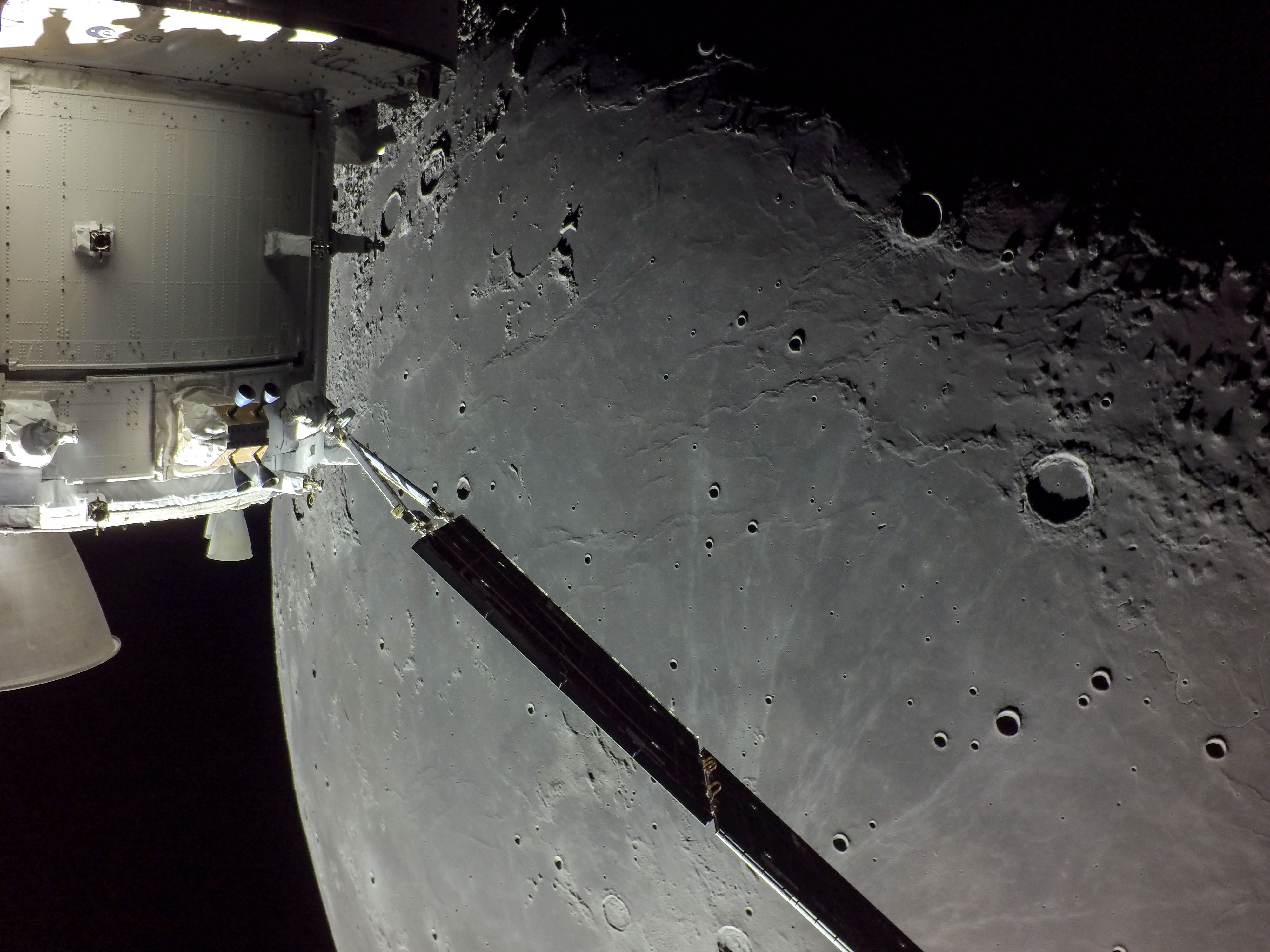
2022年12月5日、無人オリオン宇宙船に搭載されたカメラが、オリオンが月への帰還フライバイに接近した際にこの光景を捉えました。オリオンの拡張された太陽電池アレイの1つの向こうには、嵐の大洋の西端に沿って暗く滑らかな地形が広がっています。月の表側で目立つ嵐の大洋は、溶岩で満たされた月の海の中で最大のものです。月の明暗境界線、つまり月の夜と昼の境界線は、このフレームの左側に沿って走っています。直径41キロメートルのクレーター、マリウスが画面上部中央にあり、光線クレーター、ケプラーが太陽電池アレイの翼のすぐ右側の端に顔を覗かせています。ケプラーの明るい光線は北と西に伸び、暗い底のマリウスに届いています。2022年12月11日までに、オリオン宇宙船は地球に帰還しました。歴史的なアルテミス1号ミッションは、オリオン宇宙船が地球の太平洋に無事着水したことで幕を閉じました。動画:ふたご座流星群
原文(English)
On December 5, 2022, a camera on board the uncrewed Orion spacecraft captured this view as Orion approached its return powered flyby of the Moon. Beyond one of Orion's extended solar arrays lies dark, smooth, terrain along the western edge of the Oceanus Procellarum. Prominent on the lunar nearside Oceanus Procellarum, the Ocean of Storms, is the largest of the Moon's lava-flooded maria. The lunar terminator, the shadow line between lunar night and day, runs along the left of this frame. The 41 kilometer diameter crater Marius is top center, with ray crater Kepler peeking in at the edge, just right of the solar array wing. Kepler's bright rays extend to the north and west, reaching the dark-floored Marius. By December 11, 2022 the Orion spacecraft had returned to its home world. The historic Artemis 1 mission ended with Orion's successful splashdown in planet Earth's water-flooded Pacific Ocean. Watch: The Geminid Meteor Shower
\ この感動を宇宙仲間にシェア /
宇宙をXでシェア
© NASA / APOD