
🚀 宇宙の記憶・カレンダー検索
🚀 象徴的な写真:
APOD第1回
🚀 創造の柱
🚀 スピリット火星着陸
🚀 ハッブル超深宇宙
🚀 地球へようこそ|ブルー・マーブル
🚀 エンケラドス
🚀 ベテルギウス
🚀 火星着陸
🚀 青い夕焼け
🚀 冥王星のハート
🚀 皆既日食
🚀 アースライズ再構築
🚀 ブラックホール
🚀 ウェッブ初画像
🚀 アポロ11着陸
APOD30周年(2025年6月16日)
NGC 1898:大マゼラン雲の球状星団
NGC 1898: Globular Cluster in the Large Magellanic Cloud
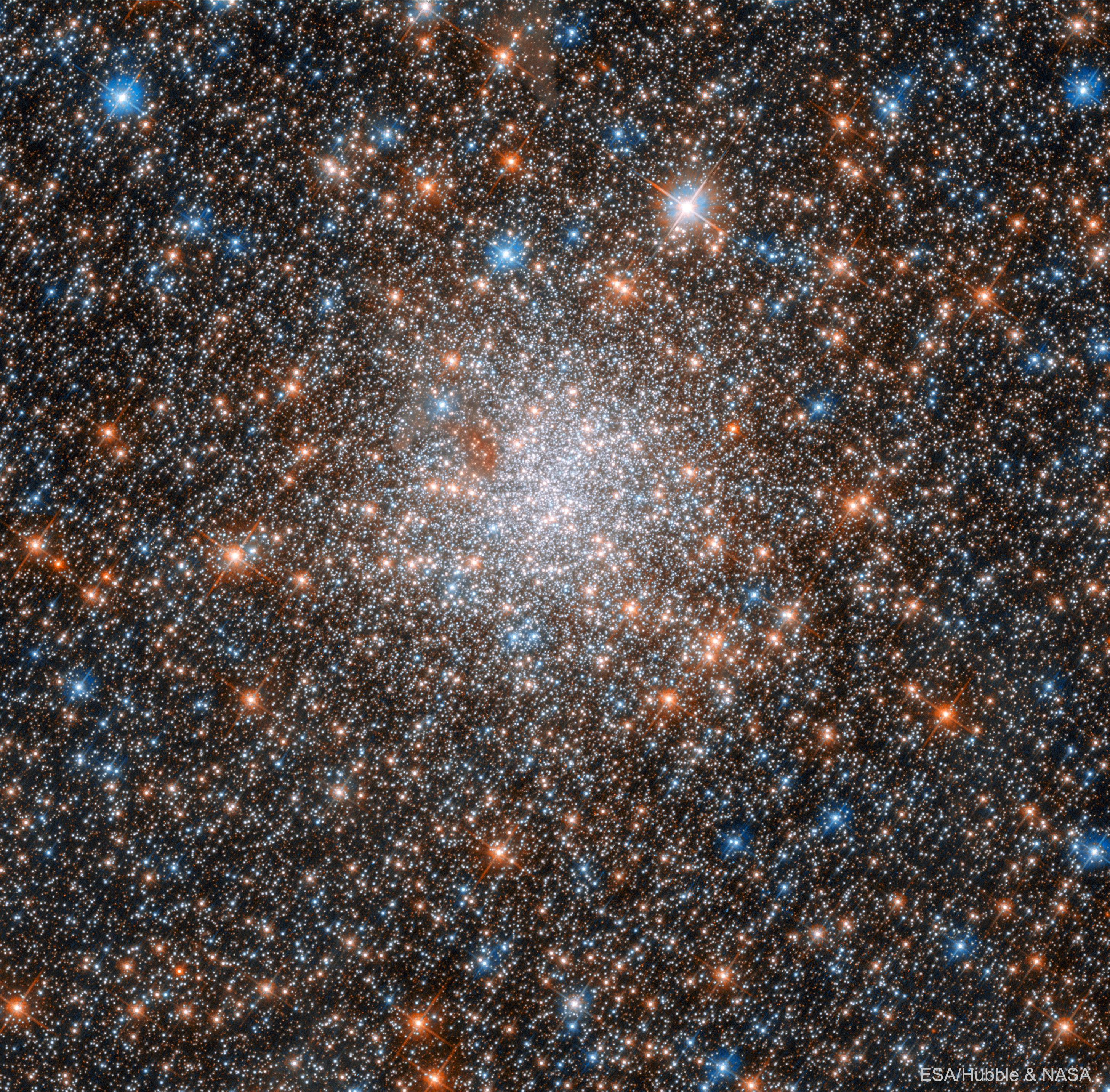
宝石はこれほど明るくは輝きません。輝くのは星だけです。そして、ハッブル宇宙望遠鏡が撮影したこの宝石箱のような画像の中のほぼすべての点が星です。星の中には太陽よりも赤いものもあれば、青いものもありますが、どれもはるか遠くにあります。太陽から地球に光が届くのに約8分かかりますが、NGC 1898は非常に遠くにあるため、光が地球に届くのに約16万年かかります。この巨大な星の球体、NGC 1898は球状星団と呼ばれ、天の川銀河の伴銀河である大マゼラン雲(LMC)の中心棒に位置しています。この特集されている多色画像には赤外線から紫外線までの光が含まれており、NGC 1898の星がすべて同時に形成されたのか、異なる時期に形成されたのかを判断するために撮影されました。ほとんどの球状星団は段階的に星を形成したという証拠が増えつつあり、特にNGC 1898の星は、古代に小マゼラン雲(SMC)や天の川銀河と遭遇した直後に形成されたと考えられています。宇宙望遠鏡ライブ:ハッブルとウェッブは今どこを見ているのか?
原文(English)
Jewels don't shine this bright -- only stars do. And almost every spot in this jewel-box of an image from the Hubble Space Telescope is a star. Now, some stars are more red than our Sun, and some more blue -- but all of them are much farther away. Although it takes light about 8 minutes to reach Earth from the Sun, NGC 1898 is so far away that it takes light about 160,000 years to get here. This huge ball of stars, NGC 1898, is called a globular cluster and resides in the central bar of the Large Magellanic Cloud (LMC) -- a satellite galaxy of our Milky Way Galaxy. The featured multi-colored image includes light from the infrared to the ultraviolet and was taken to help determine if the stars of NGC 1898 all formed at the same time or at different times. There are increasing indications that most globular clusters formed stars in stages, and that, in particular, stars from NGC 1898 formed shortly after ancient encounters with the Small Magellanic Cloud (SMC) and our Milky Way Galaxy. Space Telescopes Live: Where are Hubble and Webb looking right now?
\ この感動を宇宙仲間にシェア /
宇宙をXでシェア
© NASA / APOD