
🚀 宇宙の記憶・カレンダー検索
🚀 象徴的な写真:
APOD第1回
🚀 創造の柱
🚀 スピリット火星着陸
🚀 ハッブル超深宇宙
🚀 地球へようこそ|ブルー・マーブル
🚀 エンケラドス
🚀 ベテルギウス
🚀 火星着陸
🚀 青い夕焼け
🚀 冥王星のハート
🚀 皆既日食
🚀 アースライズ再構築
🚀 ブラックホール
🚀 ウェッブ初画像
🚀 アポロ11着陸
APOD30周年(2025年6月16日)
ハッブル宇宙望遠鏡で撮影された卵星雲
The Egg Nebula from the Hubble Telescope
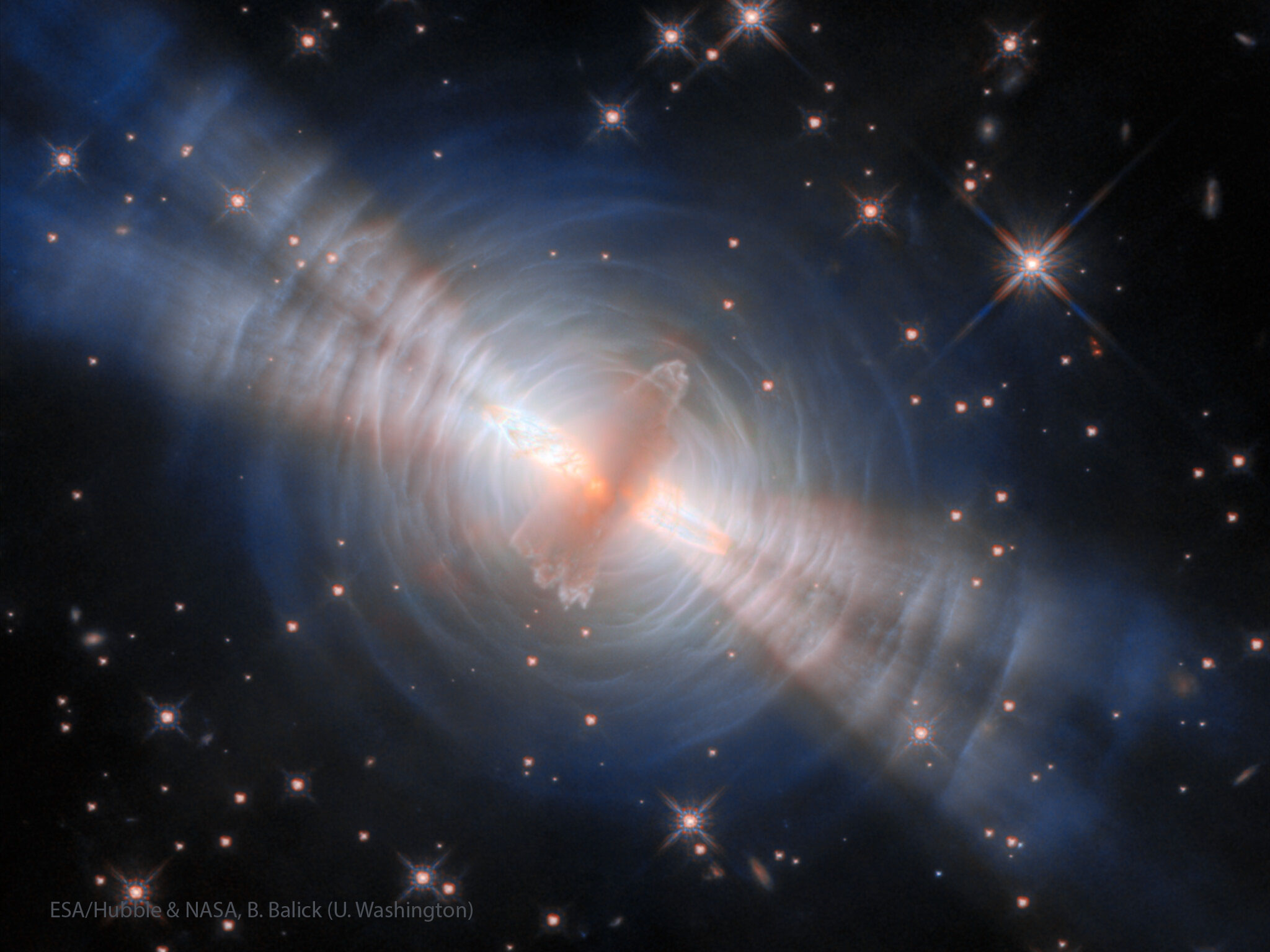
太陽を割ったらどんな風に見えるのか、考えたことはありますか?死にゆく太陽のような星、エッグ星雲は、この疑問を解き明かしてくれるかもしれません。この画像は、ハッブル宇宙望遠鏡で撮影された、この星雲(RAFGL 2688またはCRL 2688としても知られています)の可視光と赤外線画像を合成したものです。この星は外層を放出しており、明るく高温の核(「卵黄」)が、中心を取り囲む乳白色の「卵白」状のガスと塵の殻を照らしています。中心のローブとリングは、最近宇宙空間に放出されたガスと塵の構造で、塵の密度が高いため、恒星の核が見えません。光線は、遮られた核から放射され、星の極から噴出されるより新しく高速なジェットによって、古い放出物質に刻まれた穴を通って外に放出されます。天文学者たちは、この星の進化の短い期間(わずか数千年!)に円盤、ローブ、ジェットが発生する原因を解明しようと今も研究を続けており、この画像は研究対象として非常に優れたものです! APOD トップページ:apod.nasa.gov
原文(English)
ver wonder what it would look like to crack open the Sun? The Egg Nebula, a dying Sun-like star, can unscramble this question. Pictured is a combination of several visible and infrared images of the nebula (also known as RAFGL 2688 or CRL 2688) taken with the Hubble Space Telescope. The star has shed its outer layers, and a bright, hot core (or "yolk") now illuminates the milky "egg white" shells of gas and dust surrounding the center. The central lobes and rings are structures of gas and dust recently ejected into space, with the dust being dense enough to block our view of the stellar core. Light beams emanate from that blocked core, escaping through holes carved in the older ejected material by newer, faster jets expelled from the star’s poles. Astronomers are still trying to figure out what causes the disks, lobes, and jets during this short (only a few thousand years!) phase of the star’s evolution, making this an egg-cellent image to study! APOD Front Page: apod.nasa.gov
\ この感動を宇宙仲間にシェア /
宇宙をXでシェア
© ESA/Hubble &
NASA,
B. Balick
(U. Washington) / APOD