
🚀 宇宙の記憶・カレンダー検索
🚀 象徴的な写真:
APOD第1回
🚀 創造の柱
🚀 スピリット火星着陸
🚀 ハッブル超深宇宙
🚀 地球へようこそ|ブルー・マーブル
🚀 エンケラドス
🚀 ベテルギウス
🚀 火星着陸
🚀 青い夕焼け
🚀 冥王星のハート
🚀 皆既日食
🚀 アースライズ再構築
🚀 ブラックホール
🚀 ウェッブ初画像
🚀 アポロ11着陸
APOD30周年(2025年6月16日)
ウェッブとハッブル:IC 5332
Webb and Hubble: IC 5332
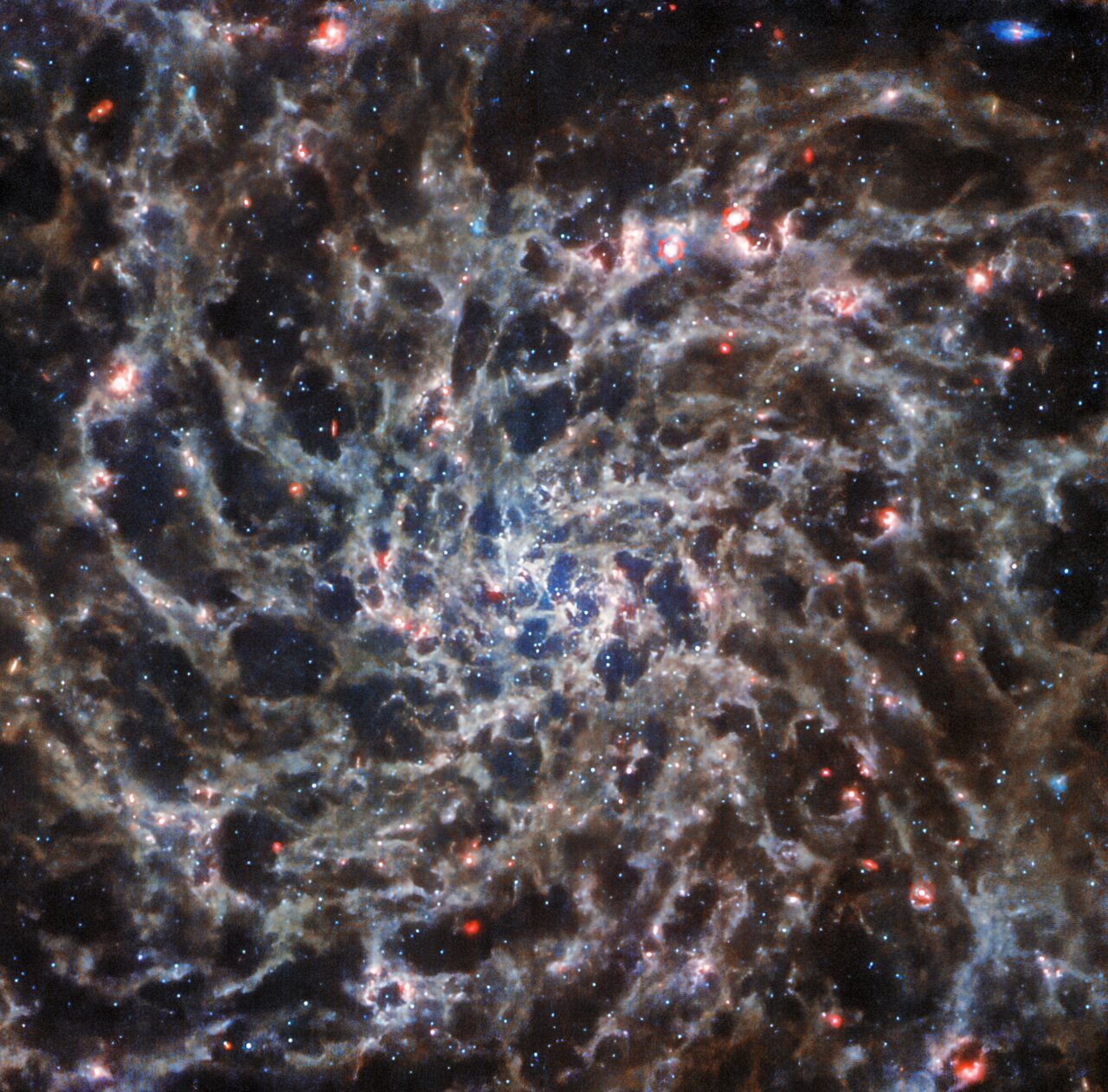
赤外線ゴーグルで宇宙を見ると、どんな様子でしょうか?私たちの目は可視光しか見ることができませんが、天文学者はもっと多くのものを見たいと思っています。今日のAPODは、NASAの2つの望遠鏡、ウェッブ宇宙望遠鏡(中赤外線)とハッブル宇宙望遠鏡(紫外線と可視光)で撮影された渦巻銀河IC 5332を示しています。2つの宇宙からのビューを切り替えるには、カーソルを画像の上にスライドさせるか、このリンクをクリックしてください。ハッブルの画像では、暗い領域によって隔てられた銀河の渦状腕が強調されていますが、ウェッブの画像では、より細かく、より複雑な構造が明らかになっています。星間塵は銀河内の星からの光を散乱および吸収し、ハッブルの画像に見られる暗い塵の帯を作り出し、その後赤外線で熱を放出するため、このウェッブの画像では塵が光っています。ウェッブの中赤外線装置は、-266℃(または-447°F)という極低温で動作する必要があります。そうでないと、望遠鏡自体からの赤外線放射を検出してしまうからです。これらの観測結果を組み合わせることで、天文学者たちはガスや星といった「小さなスケール」と、銀河の構造や進化といった真に大きなスケールを結びつけている。
原文(English)
What does the universe look like through infrared goggles? Our eyes can only see visible light, but astronomers want to see more. Today’s APOD shows spiral galaxy IC 5332 as seen by two NASA telescopes: Webb in mid-infrared and Hubble in ultraviolet and visible light. To toggle between the two space-based views just slide your cursor over the image (or follow this link). The Hubble image highlights the spiral arms of the galaxy separated by dark regions, whereas the Webb image reveals a finer, more tangled structure. Interstellar dust scatters and absorbs light from the stars in the galaxy, causing the dark dust lanes in the Hubble image, and then emits heat in infrared light, so dust glows in this Webb image. The Mid-InfraRed Instrument on Webb needs to operate at a chilling temperature of -266ºC (or - 447ºF), otherwise it would detect infrared radiation from the telescope itself. Combining these observations, astronomers connect the “small scale” of gas and stars to the truly large scale of galactic structure and evolution.
\ この感動を宇宙仲間にシェア /
宇宙をXでシェア
© NASA / APOD