
🚀 宇宙の記憶・カレンダー検索
🚀 象徴的な写真:
APOD第1回
🚀 創造の柱
🚀 スピリット火星着陸
🚀 ハッブル超深宇宙
🚀 地球へようこそ|ブルー・マーブル
🚀 エンケラドス
🚀 ベテルギウス
🚀 火星着陸
🚀 青い夕焼け
🚀 冥王星のハート
🚀 皆既日食
🚀 アースライズ再構築
🚀 ブラックホール
🚀 ウェッブ初画像
🚀 アポロ11着陸
APOD30周年(2025年6月16日)
GL 105C:最もクールな星?
GL 105C: The Coolest Star?
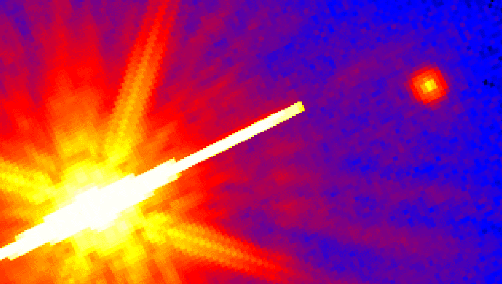
この擬似カラー画像の右上にある暗い星は、考えられる限り最も低温の通常の星なのでしょうか?ハッブル宇宙望遠鏡によるこの最新の画像から、天文学者たちはこの星の質量が、中心部で水素をヘリウムに核融合させるのに十分な大きさであると推定しています。一般的に、天体の質量が大きいほど、中心部の密度と温度が高くなります。ある一定の点を超えると、中心部の激しい環境によって水素原子が非常に速く動き、衝突後に多くの原子がくっついたり「融合」したりして、膨大な量のエネルギーを放出します。この天体の質量がもっと小さければ、重力収縮によって輝き、通常の主系列星ではなく「褐色矮星」と呼ばれるでしょう。左側の星は「最も低温の星」よりもはるかに明るいため、画像に見られる白い筋と劇的な模様を作り出しています。詳細については、宇宙望遠鏡科学研究所のプレスリリースをご覧ください。
原文(English)
Is the dim star to the upper right of this false-color picture the coolest possible normal star? From this recent picture by the Hubble Space Telescope, astronomers have estimated its mass is just high enough for it to fuse hydrogen into helium in its core. In general, the higher an object's mass, the higher it's core density and temperature. Above a certain point, the intense core conditions cause hydrogen atoms to move so fast that many stick or "fuse" after collision, releasing enormous amounts of energy. Were this object less massive, the object would shine by gravitational contraction and so be termed a "brown dwarf" rather than a normal main-sequence "star." The star on the left is so much brighter than the "coolest star" that it creates the white streak and dramatic pattern visible in the image. More information is given by the Space Telescope Scientific Institute's press release.
\ この感動を宇宙仲間にシェア /
宇宙をXでシェア
© NASA / APOD