
🚀 宇宙の記憶・カレンダー検索
🚀 象徴的な写真:
APOD第1回
🚀 創造の柱
🚀 スピリット火星着陸
🚀 ハッブル超深宇宙
🚀 地球へようこそ|ブルー・マーブル
🚀 エンケラドス
🚀 ベテルギウス
🚀 火星着陸
🚀 青い夕焼け
🚀 冥王星のハート
🚀 皆既日食
🚀 アースライズ再構築
🚀 ブラックホール
🚀 ウェッブ初画像
🚀 アポロ11着陸
APOD30周年(2025年6月16日)
彗星の超紫外線画像
An Extreme UltraViolet View of the Comet
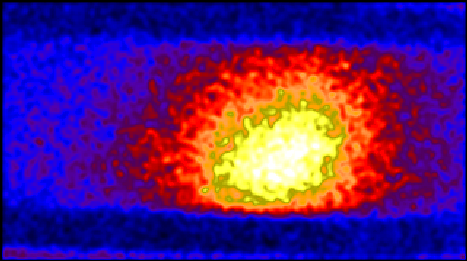
太陽が百武彗星に紫外線を照射すると、コマ内のガスが放射線を散乱させて蛍光を発し、彗星は紫外線の空で明るい光源となります。NASAの極端紫外線探査衛星(EUVE)のデータを使用して作成された上記の画像は、この目に見えない高エネルギー帯における彗星の強度を擬似カラーで表したものです。この画像は高さ約3/4度、幅約2度で、紫外線スペクトルの最高エネルギー帯から得られる、遠方の太陽系からのこの訪問者の組成に関する洞察を提供します。国際紫外線探査衛星(IUE)も彗星からの紫外線を調査し、分子炭素(C2)、一酸化炭素(CO)、二酸化炭素(CO2)イオンによるものなど、多くの分子発光帯の検出と、水(H2O)の生成の急速な増加の兆候を報告しています。最新の百武彗星の画像: JPL、Fayetteville Observer-Times、NASA の彗星の夜、ICSTARS、Crni Vrh Obs.、Cent.ミッチ・U
原文(English)
As the Sun floods Comet Hyakutake with ultraviolet light gases in the coma scatter the radiation and fluoresce making the comet a bright source in the ultraviolet sky. The above image made using data from NASA's Extreme UltraViolet Explorer (EUVE) satellite, represents the intensity of the comet in this invisible high energy band in false color. The image is about 3/4 of a degree high and 2 degress wide and offers insights to the composition of this visitor from the distant solar system that can be obtained from the highest energy bands of the ultraviolet spectrum. The International Ultraviolet Explorer (IUE) satellite has also examined ultraviolet light from the comet and now reports the detection of many bands of molecular emission particularly those due to molecular carbon (C2), carbon monoxide (CO) and caron dioxide (C02) ions as well as indications of a rapid increase in the production of water (H20). Latest Comet Hyakutake images: JPL, Fayetteville Observer-Times, NASA's Night of the Comet, ICSTARS, Crni Vrh Obs., Cent. Mich U.
\ この感動を宇宙仲間にシェア /
宇宙をXでシェア
© NASA / APOD