
🚀 宇宙の記憶・カレンダー検索
🚀 象徴的な写真:
APOD第1回
🚀 創造の柱
🚀 スピリット火星着陸
🚀 ハッブル超深宇宙
🚀 地球へようこそ|ブルー・マーブル
🚀 エンケラドス
🚀 ベテルギウス
🚀 火星着陸
🚀 青い夕焼け
🚀 冥王星のハート
🚀 皆既日食
🚀 アースライズ再構築
🚀 ブラックホール
🚀 ウェッブ初画像
🚀 アポロ11着陸
APOD30周年(2025年6月16日)
火星の球状粒子が入ったベリーボウル
A Berry Bowl of Martian Spherules
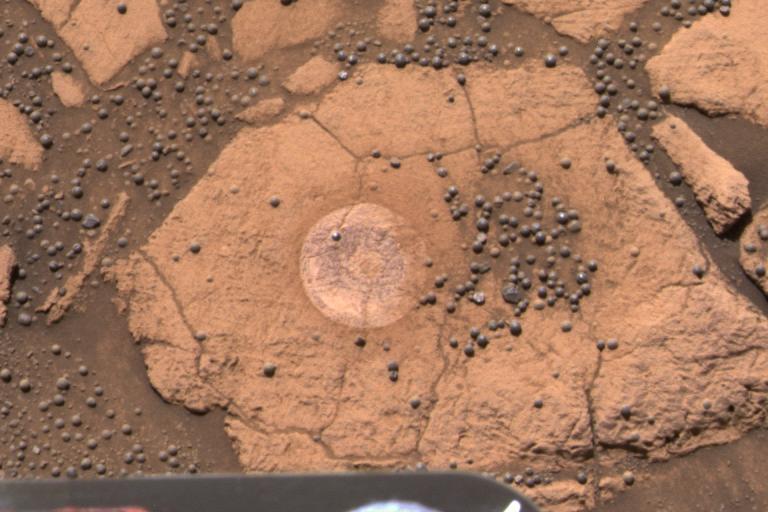
これらの珍しい火星の球状粒子はどのようにしてできたのでしょうか?火星探査車オポチュニティの着陸地点付近の岩石に埋め込まれ、またその周囲に、鉄と岩石でできているが「ブルーベリー」と名付けられた数千個の珍しい灰色の球状粒子が発見されました。その起源を調査するため、オポチュニティは火星の球状粒子が豊富な窪みのある「ベリーボウル」と呼ばれる表面を発見しました。上の写真は、探査車が火星に48日目に到着した際に撮影されたベリーボウルです。ブルーベリーの平均直径は約4ミリメートルです。球状粒子が最も密集している場所の左側の岩石表面の円形部分を分析することで、オポチュニティは、その下にある岩石が赤鉄鉱を多く含むブルーベリーとは全く異なる組成であることを示すデータを取得しました。この情報は、これらの小さく奇妙な灰色の球状粒子が汚れた水からゆっくりと堆積したという、ますます広まっている見解を裏付けるものです。
原文(English)
How were these unusual Martian spherules created? Thousands of unusual gray spherules, made of iron and rock but dubbed blueberries, were found embedded in and surrounding rocks near the landing site of the robot Opportunity rover on Mars. To help investigate their origin, Opportunity found a surface dubbed the Berry Bowl with an indentation that was rich in the Martian orbs. The Berry Bowl is pictured above, imaged during rover's 48th Sol on Mars. The average diameter of a blueberry is only about 4 millimeters. By analyzing a circular patch in the rock surface to the left of the densest patch of spherules, Opportunity obtained data showing that the underlying rock has a much different composition than the hematite rich blueberries. This information contributes to the growing consensus is that these small, strange, gray orbs were slowly deposited from a bath of dirty water.
\ この感動を宇宙仲間にシェア /
宇宙をXでシェア
© NASA / APOD