
🚀 宇宙の記憶・カレンダー検索
🚀 象徴的な写真:
APOD第1回
🚀 創造の柱
🚀 スピリット火星着陸
🚀 ハッブル超深宇宙
🚀 地球へようこそ|ブルー・マーブル
🚀 エンケラドス
🚀 ベテルギウス
🚀 火星着陸
🚀 青い夕焼け
🚀 冥王星のハート
🚀 皆既日食
🚀 アースライズ再構築
🚀 ブラックホール
🚀 ウェッブ初画像
🚀 アポロ11着陸
APOD30周年(2025年6月16日)
コメットC/2002 T7(リニア)
Comet C/2002 T7 (LINEAR)
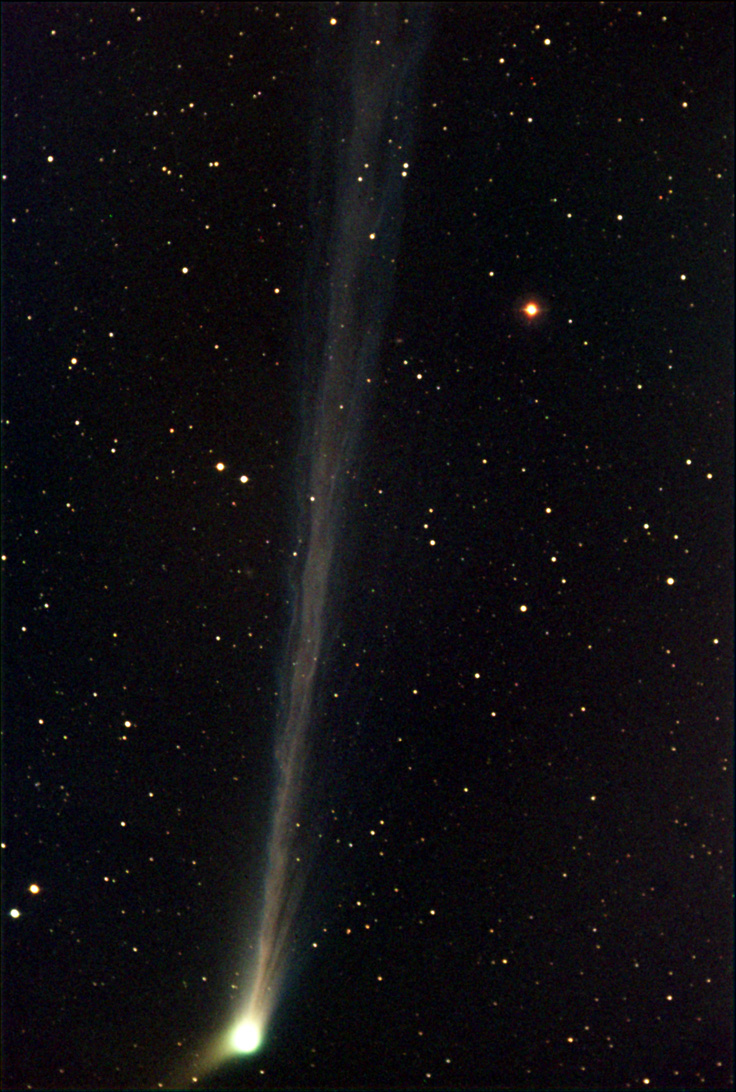
2002 年 10 月にリンカーン近地球小惑星探査 (LINEAR) プロジェクトによって発見された彗星 C/2002 T7 は現在、太陽系の内側を訪れており、明日 4 月 23 日に太陽に最接近します (L. Koehn によるアニメーションを参照)。太陽のまぶしさから現れたこの彗星は、現在、うお座の東の地平線近くの朝の薄明で肉眼でかろうじて見ることができます。昨日の夜明け前に撮影されたこの美しい望遠鏡画像では、明らかに活動的なこの彗星は、太陽とは反対方向に 2 度以上伸びる広範囲で複雑な尾と、顕著な反尾または異常尾を発達させています。来月後半にはこの彗星はさらに明るく見え、5 月 19 日に地球に最接近します。実際、5 月に明るくなると予想される別の肉眼で見える彗星、C/2001 Q4 (NEAT) と南の空を共有する可能性があります。
原文(English)
Discovered by the the Lincoln Near Earth Asteroid Research (LINEAR) project in October of 2002, comet C/2002 T7 is now visiting the inner solar system, making its closest approach (see animation by L. Koehn) to the Sun tomorrow, April 23rd. Emerging from the solar glare, the comet is now just visible to the unaided eye in the constellation Pisces, near the eastern horizon in morning twilight. In this gorgeous telescopic view recorded before dawn yesterday, the clearly active comet has developed an extensive, complex tail extending over 2 degrees in the anti-sunward direction, and a pronounced anti-tail or anomalous tail. Later next month this comet should appear brighter, making its closest approach to planet Earth on May 19th. In fact, it could share southern skies with another naked-eye comet, also anticipated to brighten in May, designated C/2001 Q4 (NEAT).
\ この感動を宇宙仲間にシェア /
宇宙をXでシェア
© NASA / APOD