
🚀 宇宙の記憶・カレンダー検索
🚀 象徴的な写真:
APOD第1回
🚀 創造の柱
🚀 スピリット火星着陸
🚀 ハッブル超深宇宙
🚀 地球へようこそ|ブルー・マーブル
🚀 エンケラドス
🚀 ベテルギウス
🚀 火星着陸
🚀 青い夕焼け
🚀 冥王星のハート
🚀 皆既日食
🚀 アースライズ再構築
🚀 ブラックホール
🚀 ウェッブ初画像
🚀 アポロ11着陸
APOD30周年(2025年6月16日)
コメットC/2001 Q4 (NEAT)
Comet C/2001 Q4 (NEAT)
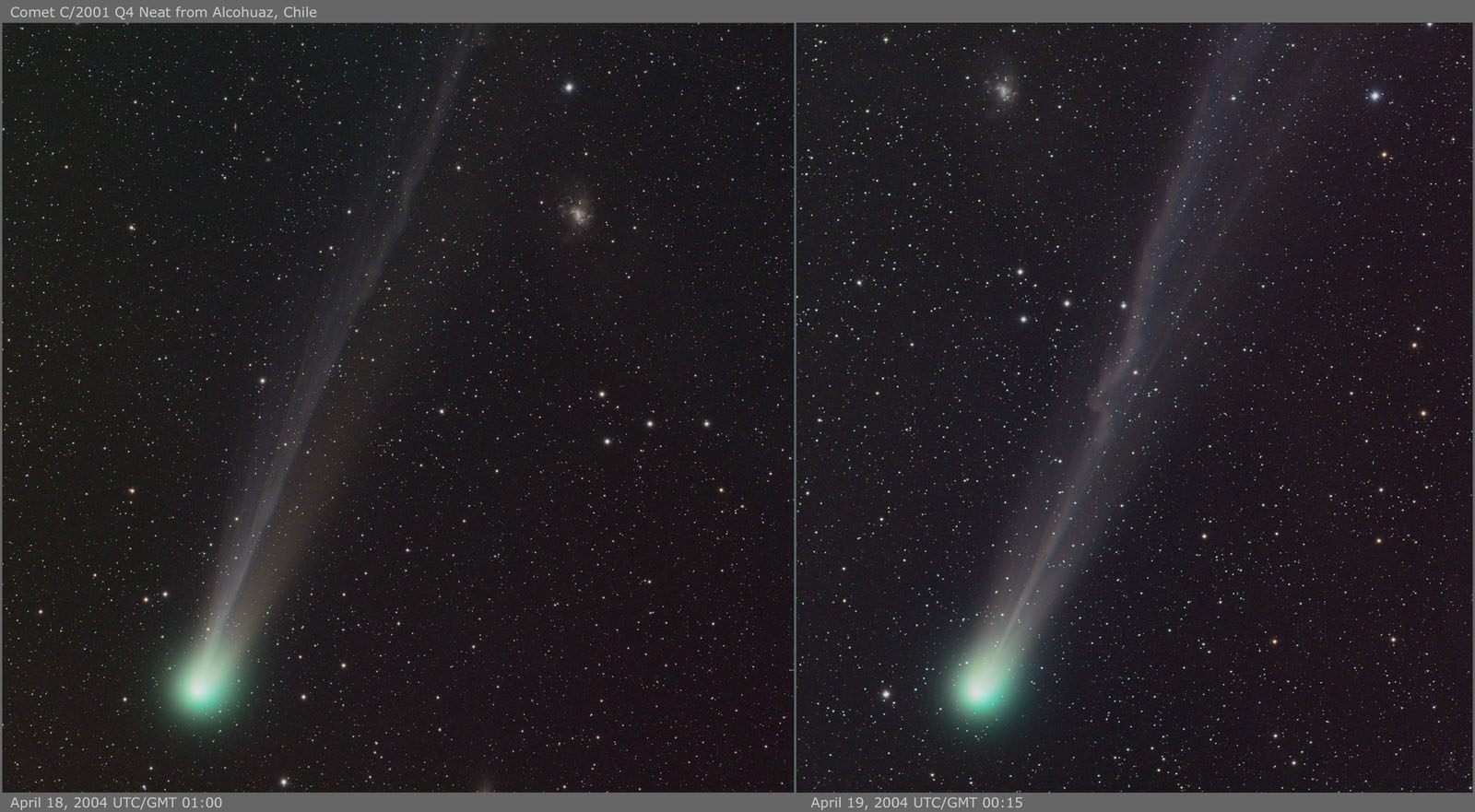
遠い太陽系から接近してきた彗星C/2001 Q4は、まもなく地球の軌道のすぐ内側を通過し、5月に南の空で肉眼で見える2つの明るい彗星のうちの1つとなるはずです。約3年前に地球近傍小惑星追跡(NEAT)プロジェクトによって初めて発見されたQ4は、チリのアルコワス近郊の観測地点でわずか数日前の4月18日(左)と19日に撮影された、この2つの素晴らしい望遠鏡画像に写っています。長く優美な尾の構造の著しい変化は、2枚の写真を比較することで確認でき、4月19日には尾の中央付近に劇的な折れ曲がりが見られます。彗星が空を横切る見かけの動きは、各画像の上部付近にぼやけて見える背景の銀河NGC 1313に対する尾の位置を比較すると明らかです。第4四半期が太陽に最も接近するのは5月15日、地球に最も接近するのは5月7日です(L. Koehnによるアニメーションを参照)。
原文(English)
Inbound from the distant solar system, comet C/2001 Q4 will soon pass just inside planet Earth's orbit and should be one of two bright, naked-eye comets visible in southern skies in May. First picked up nearly three years ago by the Near Earth Asteroid Tracking (NEAT) project Q4 appears in both of these stunning telescopic views recorded only a few days ago, on April 18th (left) and 19th, from a site near Alcohuaz, Chile. Remarkable changes in the structure of the long, graceful tail can be seen by comparing the two photos, including the dramatic kink seen near the tail's midpoint on April 19th. The apparent motion of the comet sweeping across the sky is evident when you compare the position of the tail relative to background galaxy NGC 1313, visible as a smudge near the top of each image. Q4's closest approach to the Sun will be on May 15th while its closest encounter with planet Earth will be on May 7th (see animation by L. Koehn).
\ この感動を宇宙仲間にシェア /
宇宙をXでシェア
© StarryScapes / APOD