
🚀 宇宙の記憶・カレンダー検索
🚀 象徴的な写真:
APOD第1回
🚀 創造の柱
🚀 スピリット火星着陸
🚀 ハッブル超深宇宙
🚀 地球へようこそ|ブルー・マーブル
🚀 エンケラドス
🚀 ベテルギウス
🚀 火星着陸
🚀 青い夕焼け
🚀 冥王星のハート
🚀 皆既日食
🚀 アースライズ再構築
🚀 ブラックホール
🚀 ウェッブ初画像
🚀 アポロ11着陸
APOD30周年(2025年6月16日)
ネプチューン:何年も経っても春は続く
Neptune: Still Springtime After All These Years
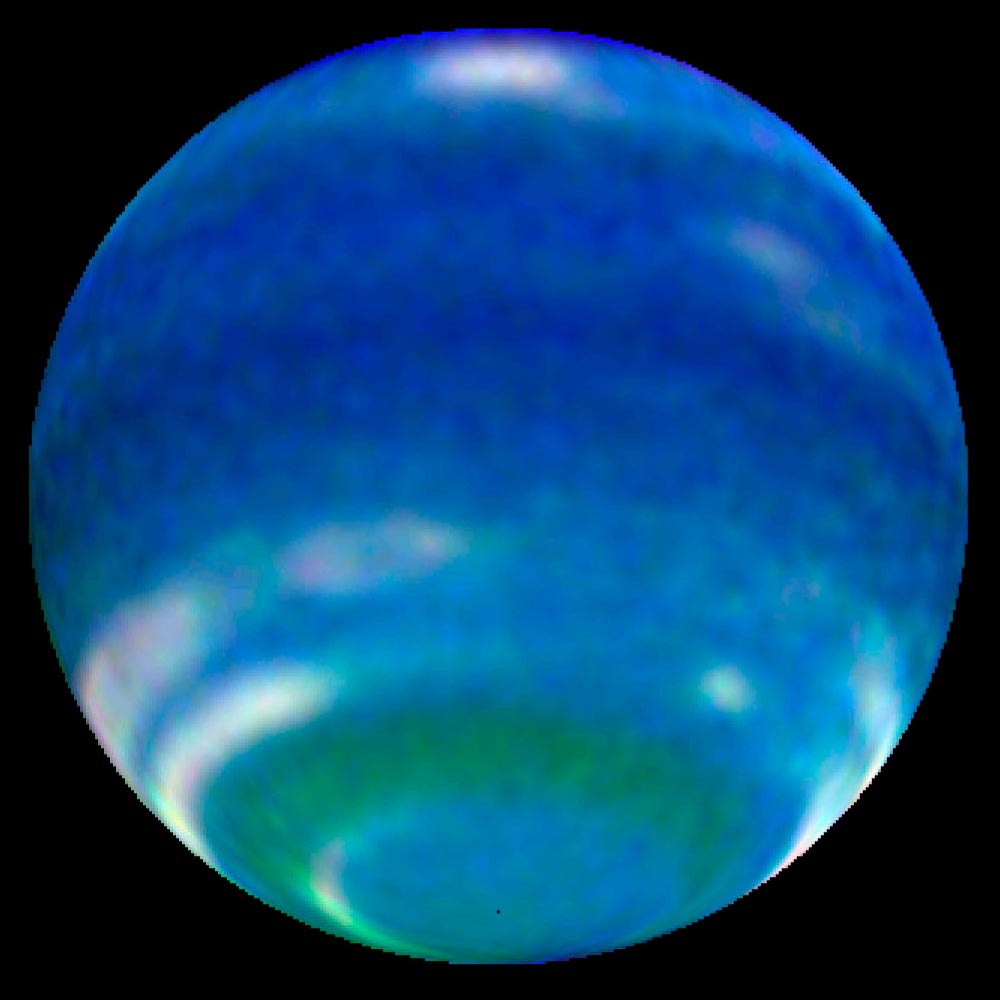
1960年代、太陽系最外縁の巨大ガス惑星である海王星の南半球に春が訪れました。もちろん、海王星は地球の165年ごとに太陽の周りを一周するので、海王星の南半球ではまだ春で、そこでは各季節が40年以上続きます。天文学者たちは、近年、海王星が明るくなっていることを発見しました。これは、2002年に撮影されたハッブル宇宙望遠鏡の画像に示されています。1996年に撮影されたハッブルの画像と比較すると、2002年の画像では、海王星の南半球で反射性の白い雲の帯が劇的に増加していることがわかります。海王星の赤道は軌道面から29度傾いており、これは地球の23.5度とほぼ同じです。そして、遠く離れた巨大ガス惑星である海王星の太陽光は地球の900分の1の強さであるにもかかわらず、海王星の天候は、同様の相対的な季節的な太陽光の増加に劇的に反応しているようです。一方、夏はもうすぐそこまで来ており、2005年には海王星の南半球に到来する。
原文(English)
In the 1960s spring came to the southern hemisphere of Neptune, the Solar System's outermost gas giant planet. Of course, since Neptune orbits the Sun once every 165 earth-years, it's still springtime for southern Neptune, where each season lasts over four decades. Astronomers have found that in recent years Neptune has been getting brighter as illustrated in this Hubble Space Telescope image made in 2002. Compared to Hubble pictures taken as early as 1996, the 2002 image shows a dramatic increase in reflective white cloud bands in Neptune's southern hemisphere. Neptune's equator is tilted 29 degrees from the plane of its orbit, about the same as Earth's 23.5 degree tilt, and Neptune's weather seems to be dramatically responding to the similar relative seasonal increase in sunlight -- even though sunlight is 900 times less intense for the distant gas giant than for planet Earth. Meanwhile, summer is really just around the corner, coming to Neptune's southern hemisphere in 2005.
\ この感動を宇宙仲間にシェア /
宇宙をXでシェア
© NASA / APOD