
🚀 宇宙の記憶・カレンダー検索
🚀 象徴的な写真:
APOD第1回
🚀 創造の柱
🚀 スピリット火星着陸
🚀 ハッブル超深宇宙
🚀 地球へようこそ|ブルー・マーブル
🚀 エンケラドス
🚀 ベテルギウス
🚀 火星着陸
🚀 青い夕焼け
🚀 冥王星のハート
🚀 皆既日食
🚀 アースライズ再構築
🚀 ブラックホール
🚀 ウェッブ初画像
🚀 アポロ11着陸
APOD30周年(2025年6月16日)
ペルセウス座流星群
A Perseid Meteor
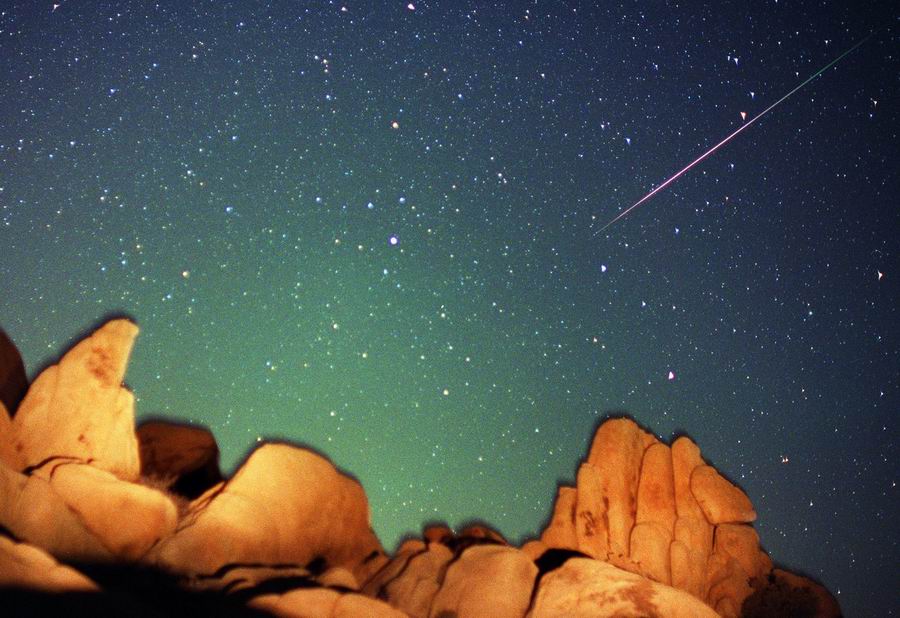
現在進行中のペルセウス座流星群は、今夜と明日の夜に最も活発になる見込みです。流星は一晩中見られるはずですが、観測に最適な時間は毎晩午前2時から夜明けまでです。月明かりのない暗い夜明け前の空では、1時間に数十個の流星が見られるかもしれません。ヨーロッパとアジアの天文愛好家は、協定世界時21時頃に珍しい流星群を目にするかもしれません。スウィフト・タットル彗星から放出された宇宙の砂や砂利の粒が、地球の大気圏に突入する際に蒸発し、空を横切るでしょう。流星の軌跡を逆方向にたどると、経験豊富な天文愛好家はそれらがペルセウス座に集まることに気づきます。これがこの毎年恒例の流星群の名前の由来です。上の写真は、2002年に米国南西部の砂漠の岩層上空で撮影されたペルセウス座流星です。影とぼやけは、10分間の長時間露光によるものです。最も明るいペルセウス座流星群は、ナイトスカイライブカメラから継続的に送られてくる画像を監視することで、地球上のどこからでも見ることができる。
原文(English)
The ongoing Perseid Meteor Shower should be at its strongest tonight and tomorrow night. Although meteors should be visible all night long, the best time to watch will be between 2:00 AM and dawn each night. In dark, moonless, predawn skies you may see dozens of meteors per hour. Sky enthusiasts in Europe and Asia might see an unusual burst of meteors near 2100 hours UT. Grains of cosmic sand and gravel shed from Comet Swift-Tuttle will streak across the sky as they vaporize during entry into Earth's atmosphere. Tracing the meteor trails backwards, experienced skygazers will find they converge on the constellation Perseus, thus this annual meteor shower's name. Pictured above is a Perseid meteor from 2002 over a rock formation in the US Southwest desert. Shadowing and blurring are caused by the long 10-minute exposure. The brightest Perseids can be seen from anywhere on Earth by monitoring the continuously returning images from the Night Sky Live cameras.
\ この感動を宇宙仲間にシェア /
宇宙をXでシェア
© Wally Pacholka (Astropics) / APOD