
🚀 宇宙の記憶・カレンダー検索
🚀 象徴的な写真:
APOD第1回
🚀 創造の柱
🚀 スピリット火星着陸
🚀 ハッブル超深宇宙
🚀 地球へようこそ|ブルー・マーブル
🚀 エンケラドス
🚀 ベテルギウス
🚀 火星着陸
🚀 青い夕焼け
🚀 冥王星のハート
🚀 皆既日食
🚀 アースライズ再構築
🚀 ブラックホール
🚀 ウェッブ初画像
🚀 アポロ11着陸
APOD30周年(2025年6月16日)
ナイトマジック
Night MAGIC
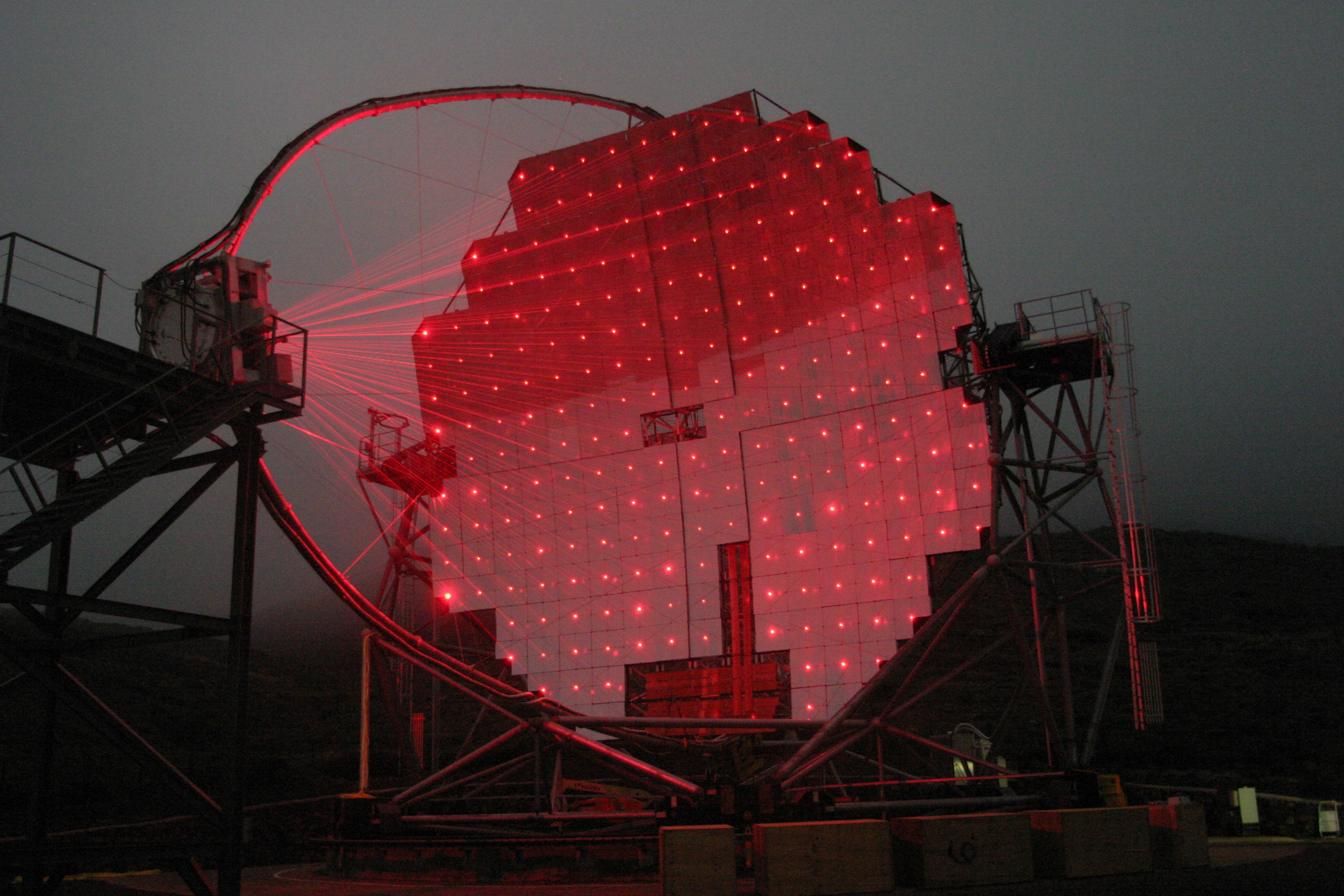
まるで魔法のようだ。珍しい霧の夜、カナリア諸島ラ・パルマ島のロケ・デ・ロス・ムチャチョスにあるMAGIC望遠鏡に、謎めいたレーザー光線が映し出されているように見える。このレーザーは、革新的な17メートル幅の多面鏡望遠鏡の焦点を自動的に調整するために設計されたシステムの一部である。MAGIC(Major Atmospheric Gamma Imaging Cherenkov)望遠鏡自体は、可視光の1000億倍以上のエネルギーを持つ光子であるガンマ線を検出することを目的としている。ガンマ線が上層大気に衝突すると、高エネルギー粒子の空気シャワーが発生する。MAGICカメラは、空気シャワー粒子によって生成されるチェレンコフ光と呼ばれる短い光の閃光を詳細に記録し、最終的に宇宙の極限ガンマ線源に対応する。MAGIC I望遠鏡は今年運用を開始したが、この印象的な写真は、2003年10月にほぼ完成した状態の装置を示している。
原文(English)
Is it magic? On a rare foggy night, mysterious laser beams seem to play across the MAGIC telescope at Roque de los Muchachos on the Canary Island of La Palma. The lasers are actually part of a system designed to automatically adjust the focusing of the innovative, seventeen meter wide, multi-mirrored instrument. The MAGIC (Major Atmospheric Gamma Imaging Cherenkov) telescope itself is intended to detect gamma rays - photons with over 100 billion times the energy of visible light. As the gamma rays impact the upper atmosphere they produce air showers of high-energy particles. The MAGIC camera records in detail the brief flashes of optical light, called Cherenkov light, created by the air shower particles that ultimately correspond to cosmic sources of extreme gamma-rays. While the MAGIC I telescope became operational this year, the dramatic picture shows the nearly completed version of the instrument in October 2003.
\ この感動を宇宙仲間にシェア /
宇宙をXでシェア
© NASA / APOD