
🚀 宇宙の記憶・カレンダー検索
🚀 象徴的な写真:
APOD第1回
🚀 創造の柱
🚀 スピリット火星着陸
🚀 ハッブル超深宇宙
🚀 地球へようこそ|ブルー・マーブル
🚀 エンケラドス
🚀 ベテルギウス
🚀 火星着陸
🚀 青い夕焼け
🚀 冥王星のハート
🚀 皆既日食
🚀 アースライズ再構築
🚀 ブラックホール
🚀 ウェッブ初画像
🚀 アポロ11着陸
APOD30周年(2025年6月16日)
ケレスのオッカトル・クレーターで明るい斑点が解明される
Bright Spots Resolved in Occator Crater on Ceres
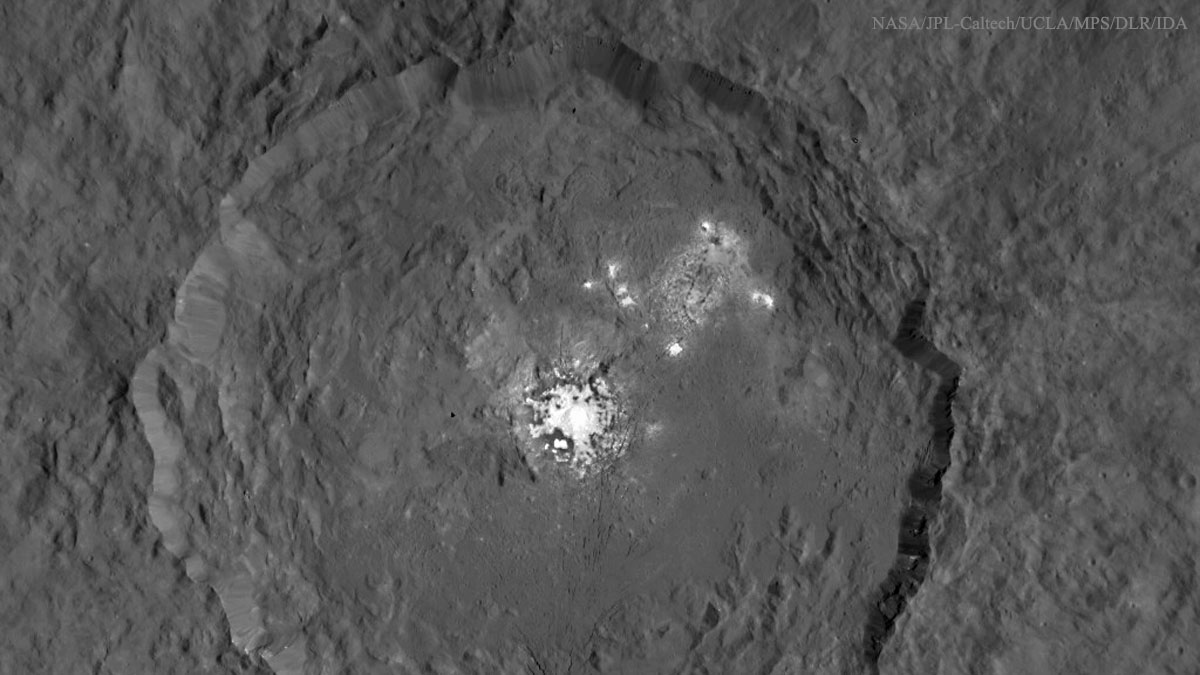
ケレスのこれらの明るい斑点は何が原因なのでしょうか?これらの斑点は、2月にロボット探査機ドーンが小惑星帯最大の天体であるケレスに接近した際に初めて確認され、高解像度画像によってすぐに謎が解明されると期待されていました。しかし、ドーンが3月にケレスに到着した後も、謎は解けませんでした。驚くべきことに、先月撮影された合成画像を含む画像は、オッカトル・クレーター内部の多くの詳細を明らかにしていますが、謎は解明されていません。最近のもう一つの手がかりは、クレーターの明るい斑点の上に淡い霞が発生していることです。ドーンはケレスに向かって螺旋状に降下を続け、いくつかの新しい方法で準惑星をスキャンする予定です。これにより、この地域の化学組成が特定され、最終的に斑点の性質と歴史が明らかになることが期待されています。数年後、電力が尽きた後も、ドーンはケレスの周回軌道を永久に回り続け、人工衛星として人類探査の永続的な記念碑となるでしょう。年間天文学レビュー:APOD編集者が1月にフィラデルフィアとニューヨーク市で講演
原文(English)
What created these bright spots on Ceres? The spots were first noted as the robotic Dawn spacecraft approached Ceres, the largest object in the asteroid belt, in February, with the expectation that the mystery would soon be solved in higher resolution images. However, even after Dawn arrived at Ceres in March, the riddle remained. Surprisingly, although images including the featured composite taken in the last month do resolve many details inside Occator crater, they do not resolve the mystery. Another recent clue is that a faint haze develops over the crater's bright spots. Dawn is scheduled to continue to spiral down toward Ceres and scan the dwarf planet in several new ways that, it is hoped, will determine the chemical composition of the region and finally reveal the nature and history of the spots. In several years, after running out of power, Dawn will continue to orbit Ceres indefinitely, becoming an artificial satellite and an enduring monument to human exploration. Yearly Astronomy Review: APOD editor to speak in January in Philadelphia and New York City
\ この感動を宇宙仲間にシェア /
宇宙をXでシェア
© NASA / APOD