
🚀 宇宙の記憶・カレンダー検索
🚀 象徴的な写真:
APOD第1回
🚀 創造の柱
🚀 スピリット火星着陸
🚀 ハッブル超深宇宙
🚀 地球へようこそ|ブルー・マーブル
🚀 エンケラドス
🚀 ベテルギウス
🚀 火星着陸
🚀 青い夕焼け
🚀 冥王星のハート
🚀 皆既日食
🚀 アースライズ再構築
🚀 ブラックホール
🚀 ウェッブ初画像
🚀 アポロ11着陸
APOD30周年(2025年6月16日)
ハーシェルのオリオン座
Herschel's Orion
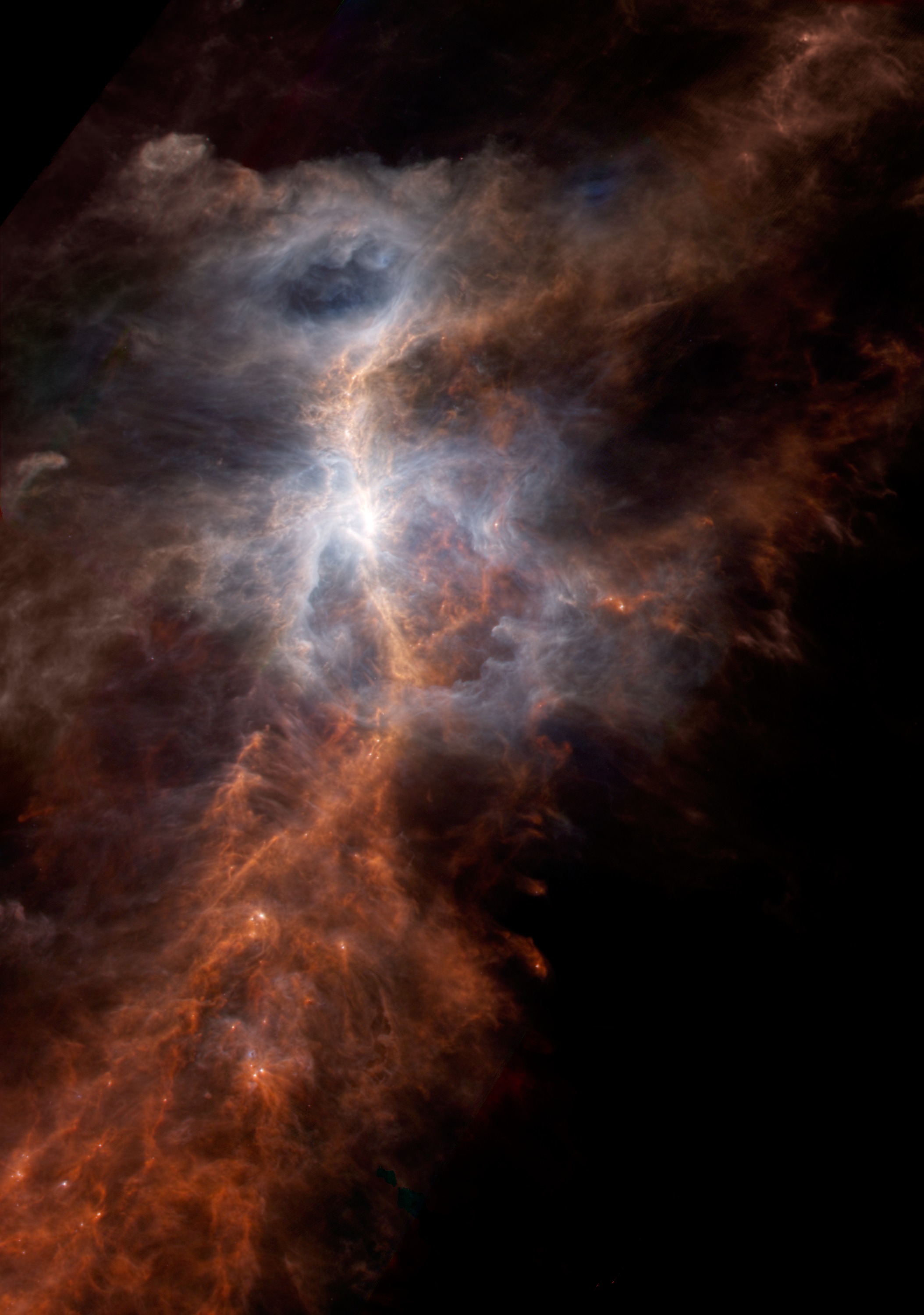
この印象的な画像は、最も近い大規模な星形成領域であるオリオン星雲(M42)の内部を捉えたものです。ハーシェル宇宙望遠鏡の赤外線波長のデータを用いて合成されたこの擬似カラー画像は、わずか1,500光年離れた誕生したばかりの宇宙雲を探索しています。可視光では暗く見える冷たく密度の高い塵のフィラメントは、赤みがかった色で表示されています。数光年にも及ぶこれらのフィラメントは、崩壊する原始星の領域に対応する明るい点を織り成しています。フレーム上部付近の最も明るい青みがかった領域は、星雲の可視光も発している高温のトラペジウム星団の星々によって加熱された、より暖かい塵です。ハーシェルのデータは最近、高温の生まれたばかりの星々からの紫外線が、生命の基本構成要素である炭素水素分子の生成に寄与している可能性が高いことを示唆しています。このハーシェル画像は、空の約3度の範囲を捉えています。これは、オリオン星雲までの距離で約80光年に相当します。
原文(English)
This dramatic image peers within M42, the Orion Nebula, the closest large star-forming region. Using data at infrared wavelengths from the Herschel Space Observatory, the false-color composite explores the natal cosmic cloud a mere 1,500 light-years distant. Cold, dense filaments of dust that would otherwise be dark at visible wavelengths are shown in reddish hues. Light-years long, the filaments weave together bright spots that correspond to regions of collapsing protostars. The brightest bluish area near the top of the frame is warmer dust heated by the hot Trapezium cluster stars that also power the nebula's visible glow. Herschel data has recently indicated ultraviolet starlight from the hot newborn stars likely contributes to the creation of carbon-hydrogen molecules, basic building blocks of life. This Herschel image spans about 3 degrees on the sky. That's about 80 light-years at the distance of the Orion Nebula.
\ この感動を宇宙仲間にシェア /
宇宙をXでシェア
© ESA/Herschel/PACS/SPIRE / APOD