
🚀 宇宙の記憶・カレンダー検索
🚀 象徴的な写真:
APOD第1回
🚀 創造の柱
🚀 スピリット火星着陸
🚀 ハッブル超深宇宙
🚀 地球へようこそ|ブルー・マーブル
🚀 エンケラドス
🚀 ベテルギウス
🚀 火星着陸
🚀 青い夕焼け
🚀 冥王星のハート
🚀 皆既日食
🚀 アースライズ再構築
🚀 ブラックホール
🚀 ウェッブ初画像
🚀 アポロ11着陸
APOD30周年(2025年6月16日)
M89:外殻と噴煙を持つ楕円銀河
M89: Elliptical Galaxy with Outer Shells and Plumes
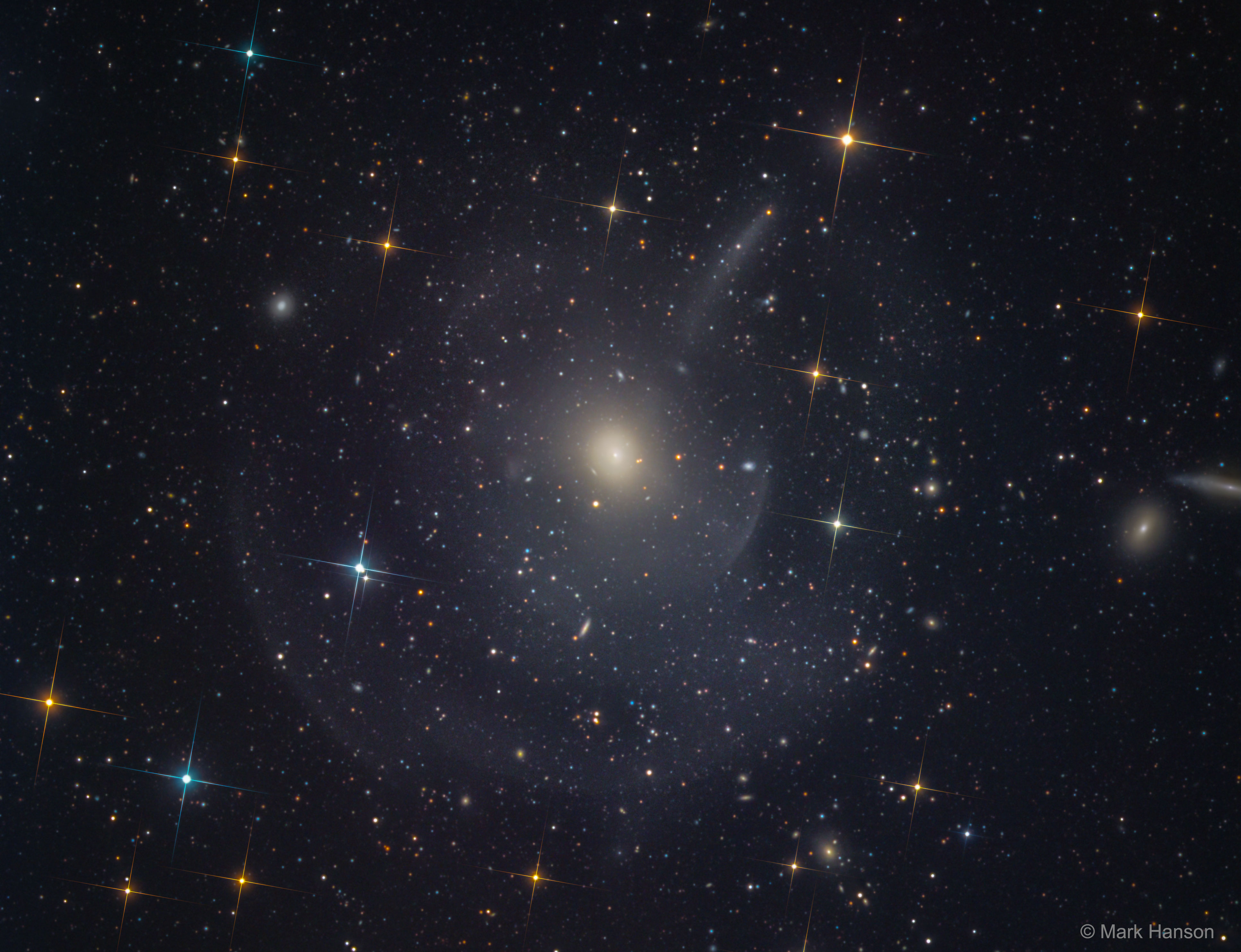
見えますか?この有名なメシエ天体M89は、一見単純な楕円銀河ですが、かすかな殻と噴煙に囲まれています。殻の原因は現在不明ですが、過去10億年の間に多数の小さな銀河を吸収した際に残った残骸に関連した潮汐尾である可能性があります。あるいは、殻は池の水面に広がる波紋のようなもので、最近別の大きな銀河との衝突によって密度波が発生し、この巨大な銀河全体に波紋が広がったのかもしれません。実際の原因が何であれ、この画像は、少なくとも一部の楕円銀河は比較的最近に形成されたこと、そしてほとんどの大きな銀河の外側のハローは実際には滑らかではなく、近くの小さな銀河との頻繁な相互作用とそれらの降着によって複雑な構造になっているという、ますます高まっている共通認識を強調しています。私たちの天の川銀河のハローは、このような予想外の複雑さの一例です。M89は、約5000万光年離れた近くにあるおとめ座銀河団のメンバーです。 APODをフォローするには、Facebook、Google Plus、Instagram、またはTwitterをご覧ください。
原文(English)
Can you see them? This famous Messier object M89, a seemingly simple elliptical galaxy, is surrounded by faint shells and plumes. The cause of the shells is currently unknown, but possibly tidal tails related to debris left over from absorbing numerous small galaxies in the past billion years. Alternatively the shells may be like ripples in a pond, where a recent collision with another large galaxy created density waves that ripple through this galactic giant. Regardless of the actual cause, the featured image highlights the increasing consensus that at least some elliptical galaxies have formed in the recent past, and that the outer halos of most large galaxies are not really smooth but have complexities induced by frequent interactions with -- and accretions of -- smaller nearby galaxies. The halo of our own Milky Way Galaxy is one example of such unexpected complexity. M89 is a member of the nearby Virgo cluster of galaxies which lies about 50 million light years distant. Follow APOD on: Facebook, Google Plus, Instagram, or Twitter
\ この感動を宇宙仲間にシェア /
宇宙をXでシェア
© Mark Hanson / APOD