
🚀 宇宙の記憶・カレンダー検索
🚀 象徴的な写真:
APOD第1回
🚀 創造の柱
🚀 スピリット火星着陸
🚀 ハッブル超深宇宙
🚀 地球へようこそ|ブルー・マーブル
🚀 エンケラドス
🚀 ベテルギウス
🚀 火星着陸
🚀 青い夕焼け
🚀 冥王星のハート
🚀 皆既日食
🚀 アースライズ再構築
🚀 ブラックホール
🚀 ウェッブ初画像
🚀 アポロ11着陸
APOD30周年(2025年6月16日)
酸素、水素、硫黄で見たオリオン星雲
Orion Nebula in Oxygen, Hydrogen, and Sulfur
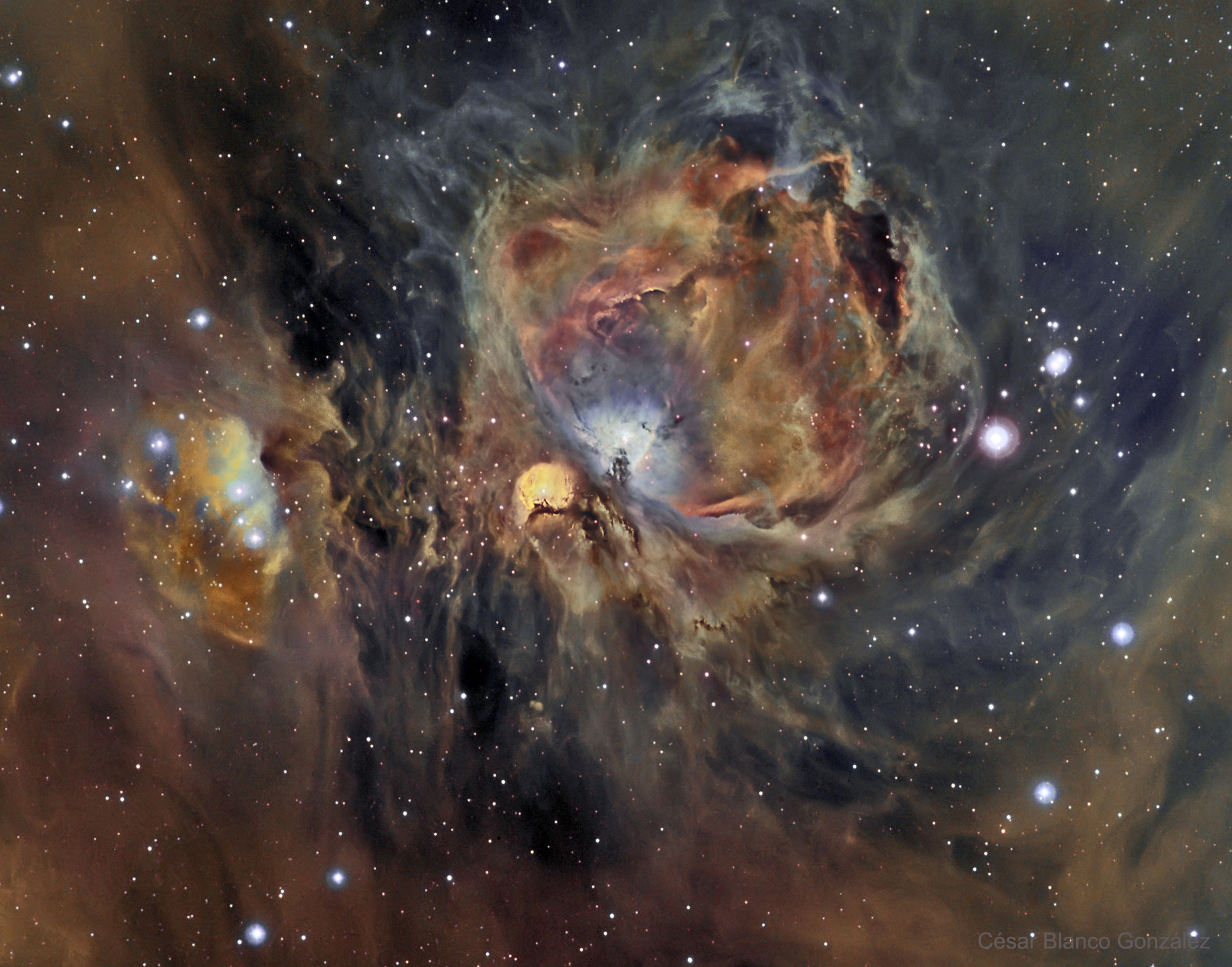
天体観測で、オリオン星雲として知られる近くの星形成領域ほど想像力を掻き立てるものは少ない。この星雲の輝くガスは、巨大な星間分子雲の端にある高温の若い星々を取り囲んでいる。掲載画像に見られるフィラメント状構造の多くは、実際には衝撃波、つまり高速で移動する物質が低速で移動するガスに遭遇した際の波面である。オリオン星雲は約40光年にわたって広がり、太陽と同じ銀河の渦状腕に約1500光年離れた位置にある。オリオン大星雲は、人気の星座オリオン座の容易に識別できる3つの星の帯のすぐ下、左側に肉眼で見ることができる。この画像は、水素、酸素、硫黄ガスによって放出される3つの色で星雲を示している。馬頭星雲を含むオリオン星雲の雲複合体全体は、今後10万年かけてゆっくりと拡散していく。
原文(English)
Few astronomical sights excite the imagination like the nearby stellar nursery known as the Orion Nebula. The Nebula's glowing gas surrounds hot young stars at the edge of an immense interstellar molecular cloud. Many of the filamentary structures visible in the featured image are actually shock waves - fronts where fast moving material encounters slow moving gas. The Orion Nebula spans about 40 light years and is located about 1500 light years away in the same spiral arm of our Galaxy as the Sun. The Great Nebula in Orion can be found with the unaided eye just below and to the left of the easily identifiable belt of three stars in the popular constellation Orion. The image shows the nebula in three colors specifically emitted by hydrogen, oxygen, and sulfur gas. The whole Orion Nebula cloud complex, which includes the Horsehead Nebula, will slowly disperse over the next 100,000 years.
\ この感動を宇宙仲間にシェア /
宇宙をXでシェア
© César Blanco González / APOD