
🚀 宇宙の記憶・カレンダー検索
🚀 象徴的な写真:
APOD第1回
🚀 創造の柱
🚀 スピリット火星着陸
🚀 ハッブル超深宇宙
🚀 地球へようこそ|ブルー・マーブル
🚀 エンケラドス
🚀 ベテルギウス
🚀 火星着陸
🚀 青い夕焼け
🚀 冥王星のハート
🚀 皆既日食
🚀 アースライズ再構築
🚀 ブラックホール
🚀 ウェッブ初画像
🚀 アポロ11着陸
APOD30周年(2025年6月16日)
M2-9:蝶の羽星雲
M2-9: Wings of a Butterfly Nebula
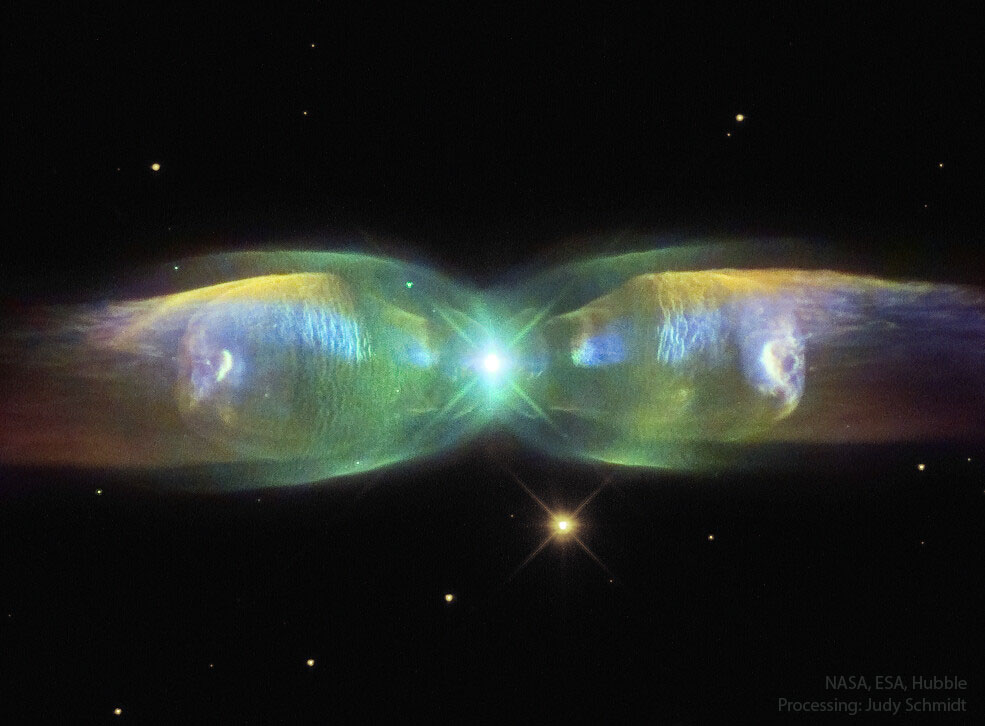
星は死後の方が芸術的だと評価されるのでしょうか?実際には、星は死を迎える時に最も芸術的な姿を見せることが多いのです。太陽やここに掲載されているM2-9のような低質量星の場合、星は外側のガス層を放出することで、通常の星から白色矮星へと変化します。放出されたガスは、しばしば惑星状星雲と呼ばれる印象的な光景を形成し、数千年かけて徐々に消えていきます。代表的な色で示されている、2100光年離れた蝶のような形をした惑星状星雲M2-9は、奇妙だが不完全な物語を語る翼を持っています。中心部では、2つの星が冥王星の軌道の10倍の軌道を持つガス円盤の中を公転しています。死にゆく星から放出された外層が円盤から飛び出し、双極のような外観を作り出しています。惑星状星雲の形成と形作りに関わる物理的プロセスについては、まだ多くのことが解明されていません。
原文(English)
Are stars better appreciated for their art after they die? Actually, stars usually create their most artistic displays as they die. In the case of low-mass stars like our Sun and M2-9 pictured here, the stars transform themselves from normal stars to white dwarfs by casting off their outer gaseous envelopes. The expended gas frequently forms an impressive display called a planetary nebula that fades gradually over thousands of years. M2-9, a butterfly planetary nebula 2100 light-years away shown in representative colors, has wings that tell a strange but incomplete tale. In the center, two stars orbit inside a gaseous disk 10 times the orbit of Pluto. The expelled envelope of the dying star breaks out from the disk creating the bipolar appearance. Much remains unknown about the physical processes that cause and shape planetary nebulae.
\ この感動を宇宙仲間にシェア /
宇宙をXでシェア
© NASA / APOD