
🚀 宇宙の記憶・カレンダー検索
🚀 象徴的な写真:
APOD第1回
🚀 創造の柱
🚀 スピリット火星着陸
🚀 ハッブル超深宇宙
🚀 地球へようこそ|ブルー・マーブル
🚀 エンケラドス
🚀 ベテルギウス
🚀 火星着陸
🚀 青い夕焼け
🚀 冥王星のハート
🚀 皆既日食
🚀 アースライズ再構築
🚀 ブラックホール
🚀 ウェッブ初画像
🚀 アポロ11着陸
APOD30周年(2025年6月16日)
川の中の銀河
Galaxies in the River
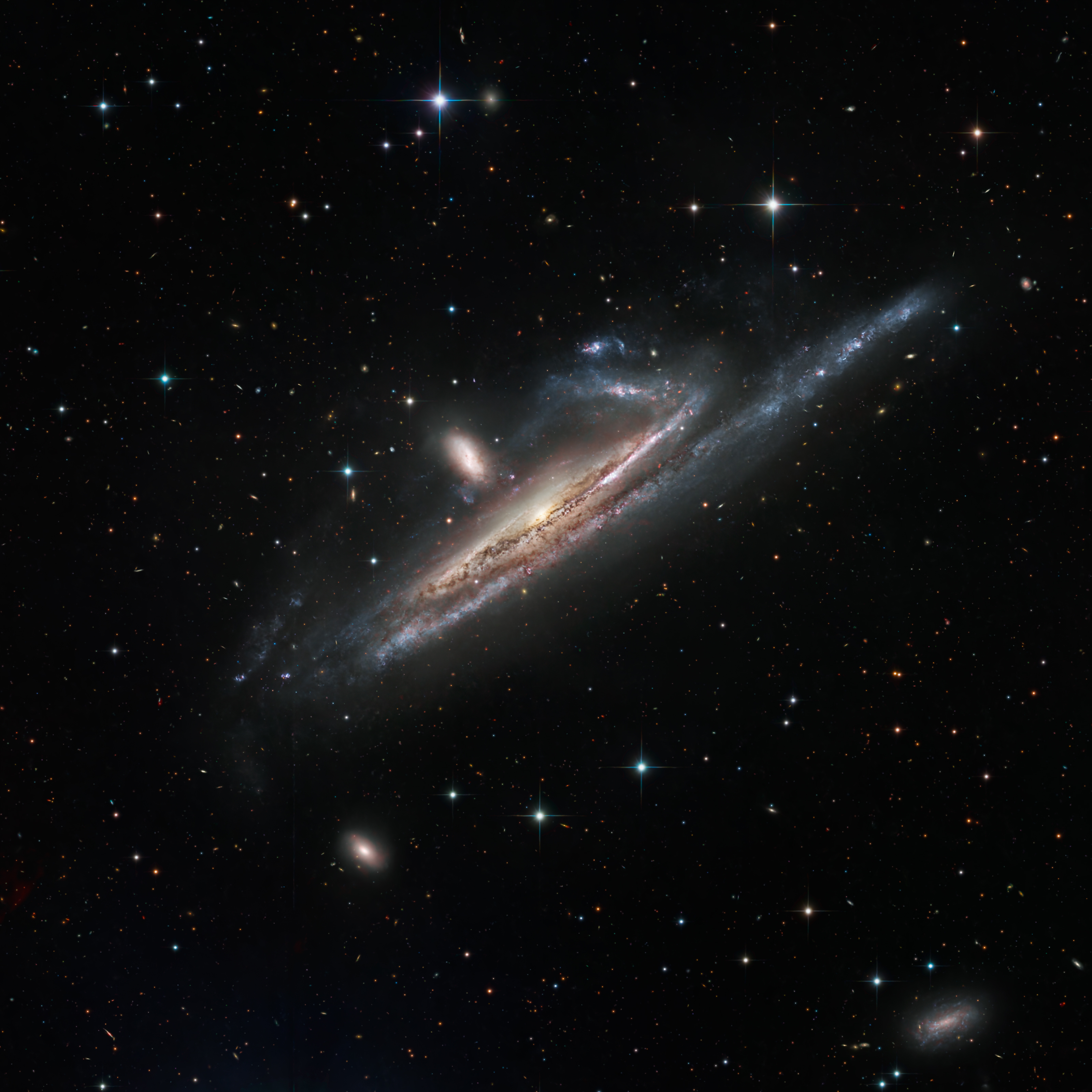
大きな銀河は小さな銀河を飲み込むことで成長します。私たちの銀河でさえ、銀河の共食いのようなことをしており、近すぎて天の川の重力に捕らえられた小さな銀河を吸収しています。実際、この行為は宇宙では一般的で、南天の星座エリダヌス座の岸辺から見えるこの印象的な相互作用する銀河のペアによって示されています。5000万光年以上離れた場所に位置する、大きく歪んだ渦巻銀河NGC 1532は、矮小銀河NGC 1531と重力闘争を繰り広げており、この闘争には最終的に小さな銀河が敗れるでしょう。この鮮明な画像でほぼ真横から見える渦巻銀河NGC 1532は、約10万光年にわたって広がっています。NGC 1532/1531ペアは、よく研究されている正面向きの渦巻銀河と小さな伴銀河のシステムであるM51に似ていると考えられています。
原文(English)
Large galaxies grow by eating small ones. Even our own galaxy engages in a sort of galactic cannibalism, absorbing small galaxies that are too close and are captured by the Milky Way's gravity. In fact, the practice is common in the universe and illustrated by this striking pair of interacting galaxies from the banks of the southern constellation Eridanus, The River. Located over 50 million light years away, the large, distorted spiral NGC 1532 is seen locked in a gravitational struggle with dwarf galaxy NGC 1531, a struggle the smaller galaxy will eventually lose. Seen nearly edge-on in this sharp image, spiral NGC 1532 spans about 100,000 light-years. The NGC 1532/1531 pair is thought to be similar to the well-studied system of face-on spiral and small companion known as M51.
\ この感動を宇宙仲間にシェア /
宇宙をXでシェア
© Vikas Chander / APOD