白色矮星はかっこいい
White Dwarfs Cool
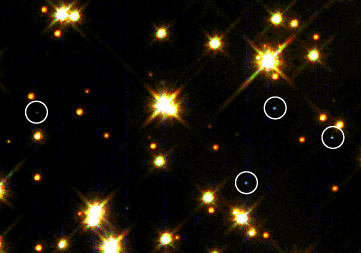
上の写真で丸で囲まれた星々は、宇宙では見つけるのが難しい白色矮星の一種です。この写真は、M4と呼ばれる球状星団の中心付近の小さな領域を捉えたものです。ハッブル宇宙望遠鏡を用いた研究者たちは、M4に白色矮星が密集していることを発見しました。これは予想されていたことで、太陽を含む低質量星は白色矮星へと進化することが知られています。白色矮星は通常それ以上進化せず、高温から徐々に冷えていきます。これらの星がどのように冷えていくかを研究することで、星の年齢、親星団の年齢、そしてひいては宇宙の年齢までもより深く理解できると期待されています。
原文(English)
The circled stars in the above picture are from a class that is hard to see in the cosmos: white dwarfs. The entire photo covers a small region near the center of a globular cluster known as M4. Researchers using the Hubble Space Telescope discovered a large concentration of white dwarfs in M4. This was expected - low mass stars, including the Sun, are known to evolved to the white dwarf stage. White dwarfs do not usually evolve further, they just gradually cool down from their high temperatures. It is hoped that studying how these stars cool could lead to a better understanding of their ages, of the age of their parent globular cluster, and hopefully even the age of our universe!
\ この感動を宇宙仲間にシェア /
宇宙をXでシェア
© NASA / APOD