百武:1996年の大彗星?
Hyakutake: The Great Comet of 1996?
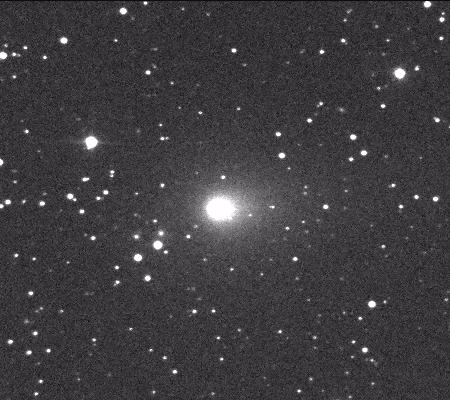
現代天文学史上、最も印象的でありながら最も予想されていなかった光のショーの一つに備えましょう。来月、新たに発見された百武彗星が、近年のどの彗星よりも地球に接近します。1996年1月30日に百武雄二氏によって発見されるまで知られていなかったこの彗星は、上の写真のぼやけた点であり、望遠鏡なしでも肉眼で見えるほど明るくなると予測されています。彗星の振る舞いは非常に多様であるため、予測はしばしば不正確ですが、控えめな予測でも、この彗星は人々を魅了する可能性が高いとされています。例えば、百武彗星が物理的に変化しなかったとしても、1996年3月下旬の地球への接近によって、明るさは3等級程度まで増し、肉眼でも見えるほど明るくなるはずです。しかし、今後2ヶ月間、彗星は太陽に接近し続けるため、さらに明るくなるでしょう。楽観的な予測では、百武彗星は物理的に変化し、コマと尾が大きくなり、劇的に明るくなり、一晩のうちに空を著しく移動し、最終的には「1996年の大彗星」として知られるようになるかもしれないとされている。ヘール・ボップ彗星はもう過去のものになるかもしれない!
原文(English)
Get ready for one of the most impressive but least anticipated light shows in modern astronomical history. Next month, newly discovered Comet Hyakutake will pass closer to the Earth than any recent comet. Unknown before its discovery by Yuji Hyakutake on 30 January 1996, the fuzzy spot in the above photograph is a comet now predicted to become bright enough to see without a telescope. Although comets act in such diverse ways that predictions are frequently inaccurate, even conservative estimates indicate that this comet is likely to impress. For example, even if Comet Hyakutake remains physically unchanged, its close pass near the Earth in late March 1996 should cause it to appear to brighten to about 3rd magnitude - still bright enough to see with the unaided eye. In the next two months, though, the comet will continue to approach the Sun and hence should become brighter still. Optimistic predictions include that Comet Hyakutake will change physically, develop a larger coma and tail, brighten dramatically, move noticeably in the sky during a single night, and may ultimately become known as the "The Great Comet of 1996." Move over Hale-Bopp!
\ この感動を宇宙仲間にシェア /
宇宙をXでシェア
© Gordon
Garradd. Used with permission. / APOD